Libyan Airlines
Libyan Airlines
About
Libyan Airlines is the flag carrier of Libya and one of the older state-owned carriers operating across North Africa, occupying a strategically significant position at the crossroads of sub-Saharan African transit routes, Mediterranean connectivity, and Middle Eastern air corridors. Operating under IATA code LN and ICAO designator LAA, the airline represents the primary instrument of Libyan civil aviation policy and remains the dominant scheduled carrier serving the country’s international and domestic markets, despite the profound operational disruptions that have shaped its recent history.
The airline traces its origins to 1964, when it was established as the Kingdom of Libya Airlines under royal patronage before being restructured following the 1969 revolution that brought Muammar Gaddafi to power. Rebranded as Libyan Arab Airlines and subsequently as Libyan Airlines, the carrier has undergone multiple identity and structural changes that mirror the country’s turbulent political trajectory. It is wholly state-owned, operating under the authority of the Libyan government, though the fractured governance environment that has persisted since 2011 has complicated questions of effective oversight and strategic direction.
In recent years, efforts have been made by Libyan aviation authorities to stabilise and modernise the carrier’s operations, with discussions around partial commercialisation and improved regulatory alignment with international standards forming part of a broader civil aviation reform agenda. The airline continues to function as a lifeline carrier for Libyan citizens, particularly given the limited competition on many domestic routes.
Bases and Hubs
Tripoli International Airport (TIP) — The airline’s principal hub and primary base of operations, serving as the main gateway for international arrivals and departures to and from western Libya.
Benina International Airport, Benghazi (BEN) — A key secondary hub serving eastern Libya, functioning as a focus city for both domestic connectivity and select regional international routes.
Misrata Airport (MRA) — A secondary focus city that supports domestic services and has periodically served as an operational alternative during periods of disruption at Tripoli.
Fleet
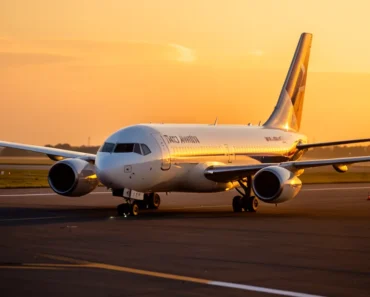
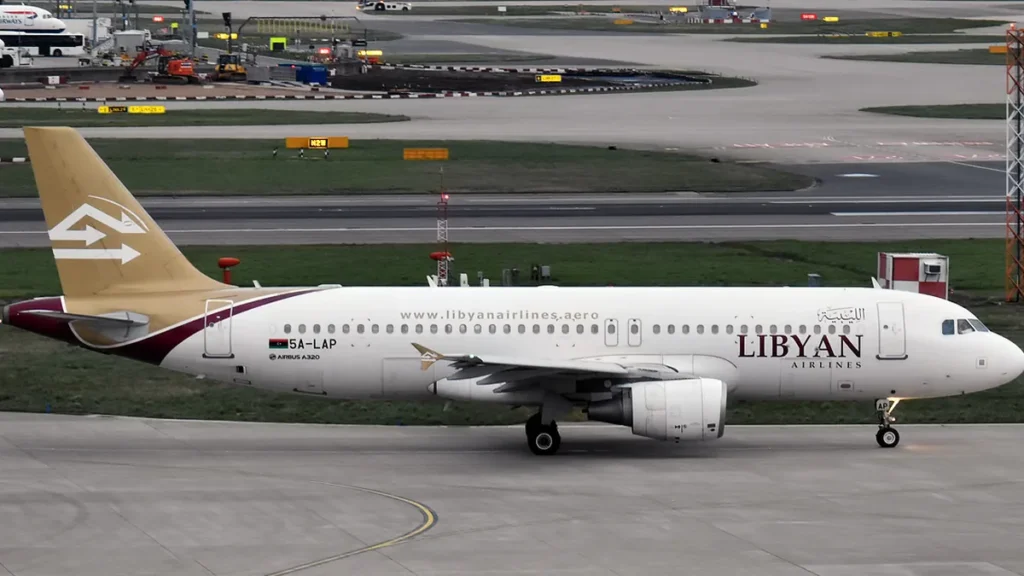
According to publicly disclosed fleet data and industry tracking sources, Libyan Airlines operates a mixed narrowbody fleet centred on Airbus A320-family aircraft, which form the backbone of its short- and medium-haul network. The carrier has historically also operated Bombardier Q-series turboprops on thinner domestic routes where jet economics are less favourable. Older Boeing 737 Classic variants have featured in the fleet at various points, though the airline has been working to rationalise its aircraft types in line with maintenance capacity and crew qualification constraints.
Fleet renewal has been a stated priority for Libyan aviation authorities, with industry estimates suggesting the active fleet remains modest in size relative to pre-2011 levels. Discussions around the introduction of more fuel-efficient narrowbody types have been reported in regional aviation media, though no firm publicly confirmed order had been announced as of early 2026. The airline’s maintenance, repair, and overhaul capacity remains partially dependent on third-party providers in neighbouring countries.
Destinations
Libyan Airlines operates a network that is primarily oriented around regional and intercontinental routes connecting Libya to the Arab world, Europe, and sub-Saharan Africa. The domestic network links Tripoli with Benghazi, Misrata, Sebha, and other secondary Libyan cities, providing essential connectivity in a country where road infrastructure between major centres is limited.
Regionally, the airline serves key Arab League destinations including Cairo (CAI), Tunis (TUN), Amman (AMM), and Istanbul (IST), which functions as a major connecting hub for Libyan passengers travelling onward to Europe and Asia. European services have historically included routes to Rome (FCO), Malta (MLA), and other Mediterranean capitals, reflecting Libya’s deep economic and diaspora ties to southern Europe. Select sub-Saharan African routes, including services to cities such as Khartoum, have featured in the network, underlining the airline’s role as a corridor carrier for transit passengers moving between Africa and the Mediterranean basin.
Codeshare and Alliance
Libyan Airlines is not a member of any of the three major global airline alliances — Star Alliance, SkyTeam, or oneworld — and as of early 2026 no accession process had been publicly announced. The airline has maintained bilateral codeshare and interline arrangements with select regional carriers, including Tunisair and other Arab carriers, to facilitate passenger connectivity across its network. The absence of a major alliance affiliation limits the airline’s ability to offer seamless frequent-flyer reciprocity and global connectivity, a gap that industry observers have noted as a competitive disadvantage as Libya’s aviation market gradually reopens to broader international participation.
Notable Incidents
Libyan Airlines has a historical safety record that includes incidents from earlier decades of operation, most notably the Afriqiyah Airways crash of 2010, which, while involving a separate Libyan carrier, drew wider international scrutiny to Libyan civil aviation oversight standards. With respect to Libyan Airlines specifically, the airline has not had a major hull-loss accident on its public safety record in recent years, according to available aviation safety databases. The broader operational environment — including infrastructure degradation, conflict-related airport closures, and regulatory gaps — has nonetheless been flagged by international bodies as a systemic risk factor for Libyan civil aviation as a whole, rather than an airline-specific safety failing.
Financial and Operational Situation
As a wholly state-owned enterprise operating in one of Africa’s most challenging political economies, Libyan Airlines does not publish audited financial results in a form accessible to international investors or analysts. Industry estimates suggest the airline operates under significant financial strain, with revenues constrained by a reduced network, limited passenger volumes relative to pre-conflict levels, and the high cost of maintaining an ageing mixed fleet in a market with restricted access to international financing and aircraft leasing. State subsidies are widely understood to underpin the carrier’s continued operation, though the precise fiscal relationship between the airline and the Libyan government remains opaque given the country’s divided institutional landscape.
Operational reliability has improved incrementally as Tripoli’s airport infrastructure has been progressively restored, but the airline continues to face challenges around crew retention, spare parts supply chains, and insurance costs that reflect the elevated risk profile assigned to Libyan operations by international underwriters.
Recent Developments
The period from 2024 to early 2026 has been one of cautious operational expansion for Libyan Airlines, as relative stabilisation in western Libya allowed for the resumption and frequency increase of several suspended international routes. Tripoli’s air links to Istanbul and Cairo have seen increased scheduling, reflecting strong demand from Libyan travellers seeking onward connections. Discussions with European aviation regulators regarding the conditions under which Libyan carriers might eventually be removed from or have their status reviewed on the EU Air Safety List have continued, representing a significant regulatory milestone that the airline and Libyan authorities have publicly identified as a strategic priority.
On the fleet side, reports in regional aviation trade media have indicated ongoing negotiations with aircraft lessors and manufacturers regarding the introduction of additional Airbus A320-family capacity, though no binding agreements had been confirmed publicly as of the time of writing. The Libyan Civil Aviation Authority has also been engaged in a broader modernisation programme, supported by technical assistance from international partners, aimed at bringing Libyan aviation regulation closer to ICAO standards — a process in which Libyan Airlines’ operational practices are a central consideration.
Related Research
- Libya Expert Briefing — full country profile, political economy, and investment environment
- African Airlines — the complete pillar covering carriers across the continent
- African Airports — infrastructure profiles, capacity data, and development pipelines
- Country Comparison Tool — benchmark Libya against peer markets across key aviation and economic indicators