Bestfly Angola
Bestfly Angola
About
Bestfly Angola occupies a distinctive niche in southern African aviation: a privately operated charter carrier registered in Angola that serves the demanding logistics and passenger needs of one of sub-Saharan Africa’s most resource-intensive economies. Operating under ICAO code BFL and headquartered in Luanda, Bestfly has built its reputation not on mass-market scheduled routes but on the kind of flexible, on-demand air services that Angola’s oil, mining, and humanitarian sectors require — a model that places it closer in character to operators such as Execujet Africa or Cavok Air than to the continent’s flag carriers.
The airline was established in Angola in the early 2000s, a period when the country was emerging from decades of civil conflict and international operators were beginning to re-engage with Luanda’s rapidly expanding energy sector. Bestfly positioned itself from the outset as a locally anchored alternative to foreign charter providers, offering Angolan-registered aircraft and crews familiar with the country’s complex airspace and remote airstrip infrastructure.
Ownership of Bestfly Angola is understood to be privately held, with Angolan interests at its core — a structure that has allowed the carrier to navigate the country’s regulatory environment with a degree of agility not always available to foreign-majority operators. The company has over the years expanded its service portfolio beyond pure passenger charter to encompass cargo, medevac, and VIP executive transport, reflecting the diversified demand profile of its principal client base in the extractive industries.
In recent years, Bestfly has undertaken measured corporate consolidation, strengthening its operational management structure and investing in compliance frameworks aligned with ICAO standards — moves consistent with a broader trend among mid-tier African charter operators seeking to attract institutional clients with stringent aviation safety audit requirements.
Bases and Hubs
Luanda Quatro de Fevereiro International Airport (LAD) — Bestfly’s principal hub and administrative base, serving as the operational centre for the majority of its charter departures and the home of its maintenance and crew scheduling functions.
Soyo Airport (SZA) — A key secondary focus point given Soyo’s role as a hub for Angola’s offshore oil and gas operations in the Cabinda corridor, generating consistent demand for crew-rotation and logistics flights.
Catumbela Airport (CBT) / Benguela — Serves as a southern operational node, supporting charter activity into Angola’s central and southern provinces where scheduled connectivity remains limited.
Fleet
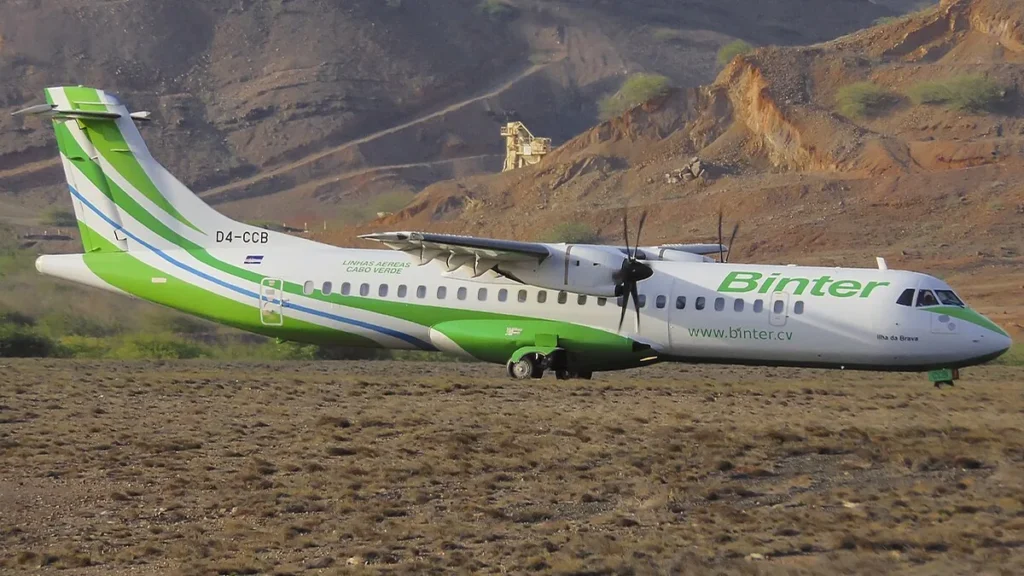
According to publicly disclosed fleet data and industry tracking sources, Bestfly Angola has historically operated a mixed fleet suited to the short-to-medium-haul charter environment, with turboprop and regional jet types forming the backbone of its operations. Aircraft from the ATR family — notably the ATR 42 and ATR 72 — have featured in the carrier’s inventory, well matched to Angola’s combination of paved international airports and shorter, sometimes unprepared, provincial strips. The carrier has also operated jet equipment at the lighter end of the spectrum to serve VIP and executive charter requirements.
Industry estimates suggest the fleet has remained modest in size, consistent with the carrier’s charter-focused business model, which prioritises utilisation flexibility over network scale. Any recent fleet renewal activity or additions would be subject to confirmation through Angola’s INAVIC civil aviation authority registry, which publishes aircraft registration data periodically.
Destinations
As a charter operator, Bestfly Angola does not publish a fixed scheduled network in the conventional sense. Its destination footprint is instead shaped by client contracts and on-demand requests, with the heaviest concentration of activity within Angola itself — connecting Luanda to provincial capitals and resource extraction sites across a country whose road infrastructure remains underdeveloped in many regions.
Key route categories include oil-industry crew rotations between Luanda and offshore support bases such as Soyo and Malongo; humanitarian and NGO charters into interior provinces; VIP and government executive transport across the region; and ad hoc cargo lifts supporting construction and mining logistics. Cross-border charter activity into neighbouring Democratic Republic of Congo, Namibia, and Zambia has also been reported in industry directories, reflecting the regional reach that larger extractive-sector clients sometimes require.
Codeshare and Alliance
Bestfly Angola is not a member of any of the three major global airline alliances — Star Alliance, SkyTeam, or oneworld — a status consistent with its charter operating model, which does not lend itself to the interline ticketing and frequent-flyer reciprocity arrangements that define alliance membership. No formal codeshare agreements with scheduled carriers have been publicly disclosed. The carrier’s commercial relationships are understood to be primarily contractual, structured around corporate accounts and broker arrangements rather than airline-to-airline partnership frameworks.
Notable Incidents
No major safety incidents involving Bestfly Angola aircraft appear on the publicly accessible records maintained by the Aviation Safety Network or comparable authoritative databases as of the time of writing. Researchers and journalists seeking a definitive safety history should consult INAVIC, Angola’s Instituto Nacional de Aviação Civil, and cross-reference with ASN and the Bureau of Aircraft Accidents Archives (B3A) for the most current and verified information.
Financial and Operational Situation
As a privately held charter operator, Bestfly Angola does not publish audited financial statements in the public domain, and no verified revenue or profitability figures are available for independent citation. Qualitatively, the carrier operates in a market segment — oil-sector aviation services in Angola — that has historically demonstrated resilience relative to scheduled passenger aviation, given that energy companies tend to maintain crew-rotation contracts even during periods of broader economic stress. Angola’s sustained position as one of Africa’s leading crude oil producers provides a structural demand floor for the kind of services Bestfly supplies.
That said, the Angolan aviation market has faced headwinds in recent years, including currency repatriation constraints, fuel cost volatility, and the broader rationalisation of operating budgets among international oil majors. Industry observers note that charter operators serving the energy sector have had to demonstrate increasingly rigorous safety audit compliance — including IS-BAO and BARS certification standards — to retain contracts with major clients, adding to operational overhead. Whether Bestfly has pursued or achieved such certifications is a matter researchers should verify directly with the operator or through Angola’s civil aviation authority.
Recent Developments
Within the past 24 months, Bestfly Angola has operated against a backdrop of significant change in the Angolan aviation landscape, most notably the ongoing restructuring and rebranding of TAAG Angola Airlines and the Angolan government’s broader push to liberalise and modernise the country’s air transport sector under its National Development Plan framework. For a charter operator of Bestfly’s profile, such macro-level shifts create both opportunity — as gaps in scheduled connectivity persist in provincial markets — and competitive pressure, as new entrants and reformed incumbents compete for corporate and government contracts.
Specific recent developments attributed to Bestfly Angola in verified trade press or regulatory filings were not available for independent confirmation at the time of publication. Investors and journalists are encouraged to consult INAVIC’s operator registry, the African Airlines Association (AFRAA) membership directory, and Angola’s Ministry of Transport communications for the most current operational and licensing status of the carrier.
Related Research
- Angola Expert Briefing — full country profile covering economy, infrastructure, and aviation regulatory environment
- African Airlines — the africa-research.org carrier directory and analysis hub
- African Airports — infrastructure profiles including Luanda Quatro de Fevereiro International (LAD)
- Country Comparison Tool — benchmark Angola’s aviation market against regional peers