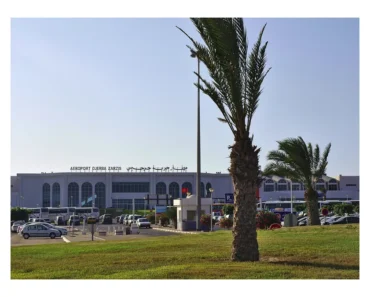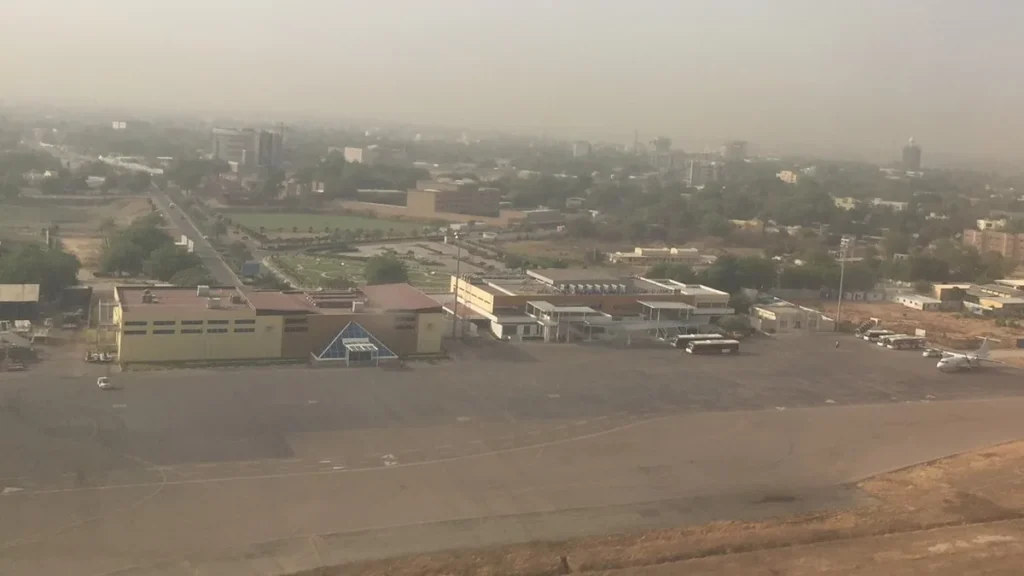
N’Djamena International Airport
N’Djamena International Airport
N’Djamena International Airport (NDJ) — Airport Profile
N’Djamena International Airport (IATA: NDJ / ICAO: FTTJ) is the principal gateway to the Republic of Chad and one of the strategically significant air hubs in the Sahel corridor of Central Africa. Sitting at the crossroads of sub-Saharan and North African air routes, the airport connects a landlocked nation of considerable geopolitical weight to the wider world — linking humanitarian operators, diplomatic missions, business travellers, and an emerging regional passenger base to destinations across Africa, the Middle East, and Europe.
About
N’Djamena International Airport is located on the western edge of Chad’s capital city, N’Djamena, positioned close to the confluence of the Chari and Logone rivers and the border with Cameroon. Its geographic placement makes it a natural staging point for flights threading between West Africa, Central Africa, and the Arab world. For a country with limited surface infrastructure, the airport functions as far more than a transit hub — it is a critical artery for trade, aid delivery, and national connectivity.
The airport’s origins trace to the French colonial era, when the facility was developed to serve what was then French Equatorial Africa. Following Chadian independence in 1960, the airport was progressively transferred to national authority and expanded to accommodate jet-age aircraft. Ownership and operational oversight rests with the Chadian state, administered through the national civil aviation authority — the Agence Nationale de l’Aviation Civile et de la Météorologie (ANAC-MET). The airport has undergone several phases of infrastructure improvement over the decades, with notable works carried out in the 2000s and 2010s to upgrade the terminal building, apron capacity, and navigational aids.
A further modernisation phase has been discussed and partially advanced in recent years, reflecting both the Chadian government’s ambitions for economic diversification and pressure from international partners — including the African Development Bank and bilateral donors — to improve trade facilitation infrastructure. The airport remains classified as a medium-capacity international facility by regional standards, capable of handling widebody aircraft on its primary runway.
Country
Chad is a landlocked republic in north-central Africa, bordered by Libya to the north, Sudan to the east, the Central African Republic to the south, Cameroon and Nigeria to the southwest, and Niger to the west. N’Djamena serves as the national capital and by far the largest urban centre in a country whose population is estimated at well over 17 million people — a figure that has grown rapidly in recent decades. Chad occupies a pivotal position in Sahelian geopolitics, hosting significant international military presences and serving as a base for regional peacekeeping and humanitarian operations. Its economy is shaped by oil revenues, subsistence agriculture, and a substantial aid sector, all of which generate consistent demand for air transport. → Read the Chad expert briefing
Airlines Based Here
Chad has historically struggled to sustain a viable national carrier. Toumaï Air Tchad, a Chadian private airline, has operated domestic and limited regional services and uses N’Djamena as its home base and operational hub. The carrier has faced the financial and regulatory pressures common to small African airlines, and its schedule and fleet should be verified against current IATA or airline authority sources before travel planning. On the visiting carrier side, N’Djamena is served by several significant African and international airlines that treat NDJ as a point-to-point destination rather than a hub. Ethiopian Airlines, one of the continent’s dominant network carriers, maintains scheduled service to N’Djamena as part of its pan-African route map. Air France has historically operated flights connecting N’Djamena to Paris Charles de Gaulle, reflecting the enduring Franco-Chadian relationship and the substantial French diplomatic and military presence in the country. Camair-Co, the Cameroonian national carrier, has linked N’Djamena with Douala and Yaoundé. Turkish Airlines has also served the route to Istanbul, providing an important connection to the broader Turkish Airlines global network. The precise current schedules of all carriers should be confirmed directly with airlines or through GDS platforms, as service frequencies in this market are subject to change.
Flights and Destinations
N’Djamena International Airport supports a network that spans continental African routes, intercontinental services to Europe and the Middle East, and shorter regional hops to neighbouring capitals. Representative destinations served from NDJ include Addis Ababa (Ethiopian Airlines), Paris Charles de Gaulle (Air France), Istanbul (Turkish Airlines), Douala (multiple carriers), Yaoundé, Khartoum, Lagos, Abuja, Casablanca, and Cairo. The intercontinental segment is anchored by the Paris and Istanbul routes, which carry the bulk of long-haul passenger volume and are particularly important for the diplomatic, NGO, and business communities. The African network provides connectivity to major hubs from which onward connections across the continent are available. Domestic services within Chad, linking N’Djamena to provincial centres such as Abéché, Moundou, and Sarh, are operated on an irregular basis and are subject to aircraft availability and demand. The overall network is modest by continental standards but strategically coherent given Chad’s landlocked position and the profile of its traveller base.
Facilities and Capacity
N’Djamena International Airport operates with a single primary runway — designated 05/23 — which is capable of accommodating widebody jet aircraft, including types commonly operated on African international routes. The terminal building is a single-structure facility that handles both departing and arriving international passengers, with a domestic section serving internal Chadian routes. The terminal has been progressively upgraded but remains compact relative to major African hub airports; passenger processing capacity is adequate for current traffic volumes, though peak periods — particularly around military charter movements and humanitarian flight surges — can place pressure on facilities. Cargo handling infrastructure is present and operationally important given the volume of humanitarian and commercial freight moving through the airport; dedicated cargo apron space supports both belly-hold and freighter operations. According to publicly disclosed traffic data and industry estimates, NDJ handles passenger volumes that place it in the small-to-medium international hub category by African standards — significantly below the traffic levels of Addis Ababa, Nairobi, or Lagos, but comparable to other Sahelian capitals. Planned expansion works, discussed in the context of broader Chadian infrastructure investment programmes, have included proposals for terminal enlargement and apron expansion, though confirmed timelines and budgets should be sourced from official Chadian government or ANAC-MET announcements.
Visa Regulations
Travellers arriving at N’Djamena International Airport should be aware that Chad operates a relatively restrictive visa regime by regional standards. As of 2026, most nationalities — including citizens of the United States, the United Kingdom, and European Union member states — are generally required to obtain a visa prior to travel, and Chad does not currently operate a widely available eVisa system comparable to those of Kenya or Ethiopia. Visa on arrival has been available in certain circumstances, particularly for holders of diplomatic or official passports and for some African Union member state passport holders, but this is not uniformly guaranteed and conditions have changed over time. Travellers from some CEMAC (Economic and Monetary Community of Central Africa) member states benefit from simplified entry arrangements. All travellers are strongly advised to consult the nearest Chadian embassy or consulate well in advance of travel, and to verify current requirements with official sources. Visa rules change frequently and without advance notice. → Check the live visa requirements lookup
Recent Developments
Over the 24 months to mid-2026, N’Djamena International Airport has seen a number of operationally significant developments. Turkish Airlines consolidated its presence on the Istanbul–N’Djamena route, reflecting growing Turkish commercial and diplomatic engagement with the Sahel. Ethiopian Airlines has maintained and in periods expanded its frequency to NDJ, consistent with its broader strategy of deepening African network coverage. The airport has continued to handle a high volume of charter and special mission flights associated with the United Nations Multidimensional Integrated Stabilization Mission in Mali (MINUSMA) drawdown logistics, regional peacekeeping reconfigurations, and bilateral military arrangements — traffic that does not appear in standard commercial schedules but is operationally significant. On the infrastructure side, works to improve airside lighting, navigation systems, and terminal passenger processing have been reported by regional aviation observers, though comprehensive official disclosure of project scope and completion status remains limited. The broader political transition in Chad following the death of President Idriss Déby in 2021 and the subsequent transitional governance period has had implications for foreign investment confidence, including in aviation infrastructure, though international airline services have remained broadly stable.
News and Reports
Ongoing operational and regulatory news relating to N’Djamena International Airport can be sourced from several authoritative channels. The Agence Nationale de l’Aviation Civile et de la Météorologie (ANAC-MET) of Chad is the primary regulatory body and periodically issues notices to airmen (NOTAMs) and official communications relevant to the airport’s operations. IATA’s Africa regional office publishes periodic market analysis and safety oversight reports that cover NDJ within broader Sahelian and Central African assessments. The ICAO Western and Central African Regional Office (WACAF), based in Dakar, maintains oversight of safety and standards compliance across the region and is a key source for regulatory developments. Regional aviation trade publications — including Aviation Week’s Africa coverage, ch-aviation, and the African Airlines Association (AFRAA) communications — provide route news, airline updates, and market intelligence. For humanitarian and peacekeeping flight activity, the UN Humanitarian Air Service (UNHAS) publishes operational updates that frequently reference N’Djamena as a staging point. Researchers and journalists are advised to cross-reference multiple sources given the limited volume of official public disclosure from Chadian aviation authorities.
Related Research
- Chad Expert Briefing — in-depth political, economic, and security analysis for researchers and professionals
- Chad Statistics — key demographic, economic, and infrastructure data
- African Airports Directory — profiles of international airports across the continent
- African Airlines Guide — carrier profiles, route maps, and fleet data
- Visa Requirements Lookup — live, country-by-country entry requirement data
- Country Comparison Tool — benchmark Chad against regional peers across key indicators