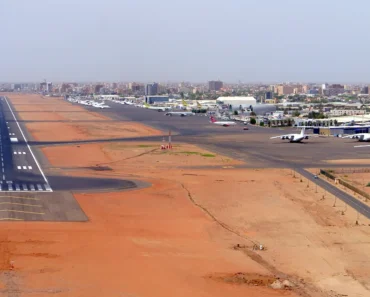
Pemba Airport
Pemba Airport
Pemba Airport (POL / FQPB) — Airport Profile
Pemba Airport (IATA: POL | ICAO: FQPB) serves the coastal city of Pemba in Cabo Delgado Province, northern Mozambique. As one of the country’s key provincial gateways, it plays a disproportionately significant role in connecting a strategically sensitive region to the national capital and to the wider East African corridor. For travellers, journalists, and analysts tracking Mozambique’s evolving security landscape, humanitarian operations, and natural-resource economy, Pemba Airport is frequently the first and last point of contact with the country’s north.
About
Pemba Airport occupies a position in African regional aviation that is larger than its physical footprint might suggest. Situated on the Indian Ocean coast, it functions as the principal air access point for Cabo Delgado Province — a region that has drawn sustained international attention due to its offshore liquefied natural gas reserves, its humanitarian situation, and the presence of international security and development actors. The airport is classified as a domestic facility, though its operational reality encompasses a mix of scheduled domestic services, charter operations, and humanitarian and corporate aviation that gives it a de facto regional character.
The airport’s origins trace to the colonial-era infrastructure developed under Portuguese administration, when Pemba — then known as Porto Amélia — served as a provincial administrative centre. Following Mozambican independence in 1975, the facility passed to national control and has since been managed under the authority of the Mozambique Airports company, known by its Portuguese acronym ADM (Aeroportos de Moçambique, E.P.), the state-owned enterprise responsible for the country’s principal airport network. ADM operates Pemba Airport alongside major hubs including Maputo International and Beira Airport.
Over the decades, the airport has undergone incremental improvements rather than transformative expansion. Upgrades to the terminal building, apron areas, and navigational aids have been recorded at various points, often linked to periods of increased commercial or humanitarian activity in the province. The intensification of activity around the Rovuma Basin gas projects from the mid-2010s onward brought renewed pressure on the airport’s capacity, prompting discussions about infrastructure investment. The civil aviation authority, Instituto de Aviação Civil de Moçambique (IACM), has oversight responsibility for safety and regulatory compliance at the facility.
Country
Mozambique is a southeastern African nation of approximately 33 million people, with its capital in Maputo on the country’s southern tip. Stretching more than 2,500 kilometres along the Indian Ocean coastline, it shares borders with Tanzania, Malawi, Zambia, Zimbabwe, South Africa, and Eswatini, giving it a pivotal position in the SADC (Southern African Development Community) regional bloc. The country’s economy is anchored in agriculture, fisheries, and an expanding extractive sector, with significant offshore gas discoveries in the north reshaping its long-term economic trajectory. Mozambique remains one of the lower-income economies on the continent by per-capita measures, though its strategic geography and resource endowment attract sustained investor and diplomatic attention. → Read the Mozambique expert briefing
Airlines Based Here
Pemba Airport is not a hub in the conventional sense for any single carrier, but it is a focus-city destination for Mozambique’s national airline, LAM Mozambique Airlines (Linhas Aéreas de Moçambique). LAM operates scheduled domestic services connecting Pemba to Maputo and other provincial centres, and it remains the dominant scheduled carrier at the airport. In addition to LAM, the airport is regularly served by smaller Mozambican charter and regional operators, including companies catering to the oil-and-gas sector workforce and humanitarian organisations. Fastjet, which has operated in the Mozambican market at various points, has been among the visiting carriers providing connectivity on the Maputo–Pemba corridor, though its service levels have fluctuated with the airline’s broader commercial circumstances. Corporate and charter aviation linked to the LNG project consortia — involving major international energy companies — represents a significant and consistent segment of movements at the airport, often operated by specialist charter providers rather than scheduled airlines.
Flights and Destinations
The scheduled network at Pemba Airport is primarily domestic in character, with Maputo (MPM) serving as the anchor route and the most frequently operated connection. Beyond the capital, services link Pemba to other Mozambican provincial cities including Nampula (APL), Beira (BEW), and Lichinga (VXC), supporting the internal connectivity that is essential in a country where road infrastructure across long distances remains challenging. Tete (TET) and Quelimane (UEL) appear in the network on a seasonal or demand-driven basis. On the regional side, charter and ad hoc services have historically connected Pemba to Dar es Salaam in Tanzania and to Nairobi in Kenya, reflecting the cross-border movement of professionals and goods in the northern Mozambique corridor. Intercontinental scheduled services do not operate directly from Pemba; travellers connecting onward to Europe, the Gulf, or Asia typically route through Maputo or, in some cases, through Nairobi or Johannesburg.
Facilities and Capacity
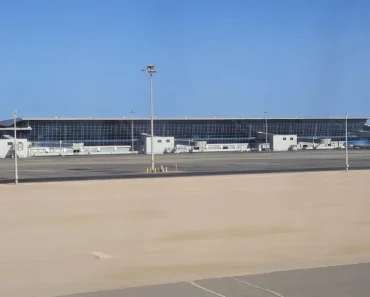
Pemba Airport operates a single terminal building that handles both arriving and departing passengers, with the functional separation typical of smaller African provincial airports. The facility includes a modest check-in hall, a departure lounge, and basic airside amenities. The airport is served by a single paved runway — designated to accommodate turboprop and narrowbody jet aircraft of the type operated by LAM and regional carriers — with instrument approach procedures in place to support operations in reduced visibility conditions. Cargo handling is available but limited in scale, oriented primarily toward general freight, humanitarian supplies, and equipment movements associated with the energy sector. By international classification standards, Pemba Airport falls within the small regional hub category, with passenger throughput that, according to publicly disclosed traffic data from ADM and IACM, reflects the province’s population base and the episodic surges associated with project-related activity. Apron capacity accommodates a small number of simultaneous aircraft stands. Industry observers have noted that the airport’s infrastructure has at times been stretched during peak operational periods, particularly when humanitarian and commercial traffic coincide.
Visa Regulations
Travellers arriving at Pemba Airport are subject to Mozambique’s national visa regime, administered by the Serviço Nacional de Migração (SENAMI). As of 2026, Mozambique offers a visa-on-arrival facility for nationals of a range of countries, including the United States, the United Kingdom, and most European Union member states, typically issued for short-stay tourism and business purposes. An eVisa system has been progressively developed to allow pre-travel authorisation, reducing processing time at the port of entry. Nationals of many SADC member states benefit from visa-free or simplified entry arrangements under regional agreements, though the specific conditions vary by passport. Travellers are advised that visa regulations, fees, and eligible nationalities are subject to change and should be verified before travel. → Check the live visa requirements lookup
Recent Developments
The past 24 months at Pemba Airport have been shaped by the broader dynamics of Cabo Delgado Province. The partial resumption of LNG project activities by international energy consortia following earlier security disruptions has maintained elevated levels of charter and corporate aviation at the airport, sustaining demand that might otherwise have contracted. Humanitarian aviation, coordinated through UN agencies and international NGOs operating in the province, has continued to use Pemba as a logistics node. On the scheduled services side, LAM has worked to stabilise its domestic network following financial and operational pressures that have affected the carrier in recent years, with the Maputo–Pemba route remaining a priority corridor. Infrastructure discussions regarding apron expansion and terminal improvements have been reported in Mozambican aviation and business media, though the timeline and funding arrangements for any significant capital works remain subject to government budget processes and potential development-finance involvement. Regulatory oversight by IACM has continued in line with Mozambique’s obligations under ICAO standards.
News and Reports
Ongoing operational and commercial news relating to Pemba Airport can be tracked through several authoritative sources. ADM (Aeroportos de Moçambique) publishes institutional updates and press releases through its official communications channels. The Instituto de Aviação Civil de Moçambique (IACM) is the primary regulatory body and issues notices, safety directives, and statistical summaries relevant to all Mozambican airports including Pemba. At the continental level, IATA’s Africa and Middle East regional office produces periodic market analysis and airline performance reports that contextualise Mozambique within broader African aviation trends. The ICAO Regional Office for Eastern and Southern Africa (ESAF), based in Nairobi, covers Mozambique within its safety oversight and implementation support programmes. Specialist aviation trade publications including ch-aviation, Anna.Aero, and the African Business Aviation Association (AfBAA) provide commercially oriented coverage of route developments and operator activity in the region. Mozambican business and general news outlets, including Carta de Moçambique and Club of Mozambique, regularly report on aviation-related developments in the country’s northern provinces.
Related Research
- Mozambique Expert Briefing — in-depth country analysis for researchers and investors
- Mozambique Statistics — key economic, demographic, and infrastructure data
- African Airports Directory — profiles of airports across the continent
- African Airlines Directory — carrier profiles, routes, and fleet data
- Visa Requirements Lookup — live, country-by-country entry requirement checker
- Country Comparison Tool — benchmark Mozambique against regional peers