Benina International Airport
Benina International Airport
About
Benina International Airport (IATA: BEN / ICAO: HLLB) serves Benghazi, Libya’s second-largest city and the historic commercial capital of the country’s eastern region. Positioned along the southern Mediterranean rim, the airport functions as a critical gateway for passengers, cargo operators, and humanitarian logistics across north-eastern Africa — a role that has grown in strategic importance as Libya’s aviation sector works to rebuild connectivity following years of conflict and institutional disruption. For travellers, journalists, and aviation analysts tracking African air transport, Benina represents both a barometer of Libya’s stabilisation trajectory and a node in the broader network linking sub-Saharan Africa to Europe and the Middle East.
The airport takes its name from the Benina district east of Benghazi city centre, where the facility was originally developed during the mid-twentieth century. Its origins trace to military-era infrastructure, later converted and expanded for civilian international operations. The site’s long runways — a legacy of its earlier strategic role — have historically allowed it to accommodate wide-body commercial aircraft, giving it a physical capacity that has often exceeded the volume of scheduled services actually using it.
Ownership and operational authority over the airport falls under the Libyan Civil Aviation Authority (LCAA), the state body responsible for regulating and managing civil aviation infrastructure across the country. Like much of Libya’s public infrastructure, the airport has experienced periods of closure, partial operation, and contested administrative control since 2011. Efforts to restore full international certification and attract returning carriers have been ongoing, with the airport periodically reopening to scheduled international traffic as security and regulatory conditions have permitted.
Country
Libya is a North African state bordering the Mediterranean Sea, with Tripoli as its internationally recognised capital. The country holds one of Africa’s largest proven oil reserves and commands a coastline stretching more than 1,700 kilometres, giving it significant geostrategic weight in regional trade and migration dynamics. With a population estimated in the tens of millions and a territory spanning parts of the Sahara Desert, Libya’s internal geography makes air transport particularly important for connecting its dispersed population centres. The country’s political landscape has remained complex since 2011, with competing governmental authorities influencing infrastructure investment and international engagement across different regions, including Benghazi and the east.
→ Read the Libya expert briefing
Airlines Based Here
Benina International Airport’s carrier base reflects the fragmented but recovering state of Libyan civil aviation. Libyan Airlines, the national flag carrier, has historically treated Benghazi as a secondary hub alongside Tripoli’s Mitiga International Airport, operating domestic routes and, where international permissions have been secured, regional services. Buraq Air, another Libyan carrier, has also operated services through Benina, particularly on routes connecting eastern Libya to destinations in the Arab world. Both carriers operate under the oversight of the LCAA and have faced recurring challenges related to fleet availability, insurance certification, and international regulatory compliance. Visiting international carriers have included airlines from neighbouring Arab states and Turkey, though the roster of active foreign operators has fluctuated significantly depending on prevailing security assessments and bilateral air service agreements.
Flights and Destinations
When operating at fuller capacity, Benina supports a network that spans domestic Libyan routes, regional Arab-world connections, and limited European services. Domestically, services to Tripoli and Misrata have been among the most consistent links. Regionally, destinations including Cairo (Egypt), Amman (Jordan), Istanbul (Turkey), Dubai (United Arab Emirates), and Tunis (Tunisia) have featured in the airport’s published schedules at various points in recent years, reflecting the strong demand corridors driven by business travel, medical tourism, and diaspora movement. Seasonal and charter services have also connected Benghazi to destinations in Saudi Arabia, particularly during the Hajj and Umrah periods, given the significant religious travel demand from eastern Libya. European connectivity — historically including routes to cities such as Rome and Malta — has been more intermittent, subject to the security advisories issued by European Union member states regarding Libyan airspace and ground operations.
Facilities and Capacity
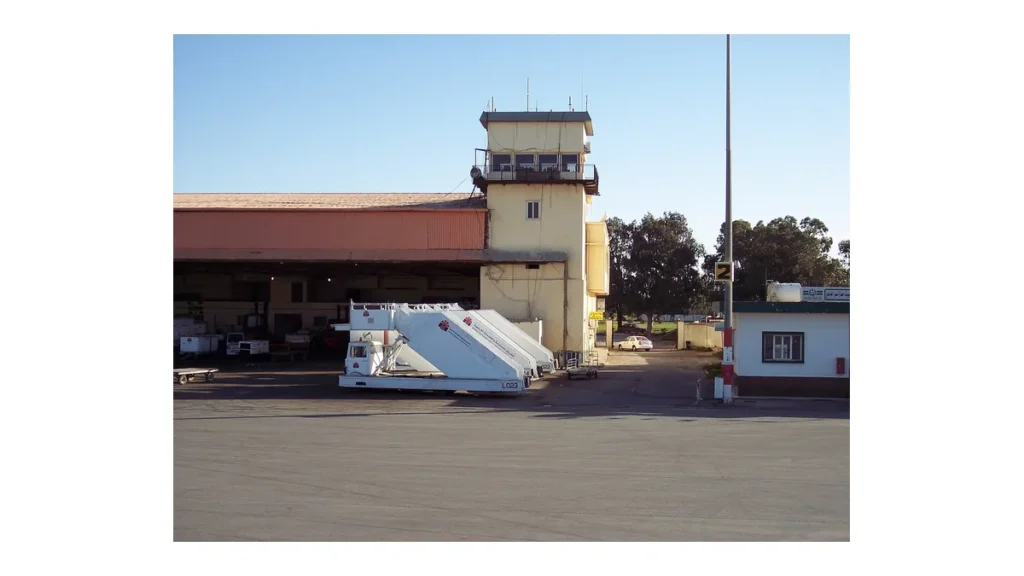
Benina International Airport operates with a primary terminal building that handles both international and domestic departures, though the facility’s layout and operational condition have been subject to the broader wear and disruption experienced across Libyan public infrastructure since 2011. The airport is served by two runways, with the main runway long enough to accommodate wide-body jet operations — a specification that dates to the airport’s earlier military and heavy-transport heritage. Cargo handling facilities exist on site, serving both commercial freight and the humanitarian supply chains that have been a consistent feature of Libyan logistics in recent years. By African aviation benchmarks, Benina is classified as a medium-scale international airport in terms of physical footprint, though its actual passenger throughput — according to publicly disclosed traffic data from the LCAA and industry estimates — has operated well below the facility’s theoretical capacity during periods of reduced scheduled service. Expansion and rehabilitation plans have been discussed at various points by Libyan authorities, though confirmed project timelines and budgets should be verified against current official announcements.
Visa Regulations
Libya operates a relatively restrictive visa regime for most international travellers arriving at Benina International Airport. Citizens of the United States, United Kingdom, and European Union member states are generally required to obtain a visa in advance through a Libyan diplomatic mission, as Libya does not currently offer a widely available visa-on-arrival or eVisa system for Western passport holders. Travellers from Arab League member states have historically benefited from more streamlined entry arrangements, though specific conditions vary by nationality and are subject to change. African passport holders face a similarly varied landscape, with entry conditions depending on bilateral agreements between Libya and the traveller’s country of origin. All travellers should note that visa regulations in Libya are subject to change at short notice given the country’s evolving administrative and political situation. For current, verified entry requirements applicable to your specific nationality, consult your country’s foreign ministry and check the live lookup tool at /visa-requirements/.
Recent Developments
Over the past 24 months, Benina International Airport has continued its gradual effort to restore and expand its international scheduled service offering. Industry observers and regional aviation media have reported on the resumption and suspension of various routes as carriers respond to shifting security assessments and commercial demand signals. Turkish carriers and Arab-world airlines have been among the more active participants in reopening or maintaining services to Benghazi during this period. The LCAA has engaged with ICAO’s regional office on compliance and safety oversight matters, a prerequisite for encouraging international carriers to return at scale. Terminal maintenance and airside infrastructure works have been reported as ongoing priorities, though the pace of physical improvements has been constrained by the broader challenges of public investment in Libya’s current environment. Travellers and analysts are advised to monitor LCAA communications and international aviation safety databases for the most current operational status.
News and Reports
Ongoing operational and regulatory news relating to Benina International Airport can be tracked through several authoritative sources. The Libyan Civil Aviation Authority publishes official notices, NOTAMs, and periodic operational updates through its official channels, and represents the primary source for ground-truth information on airport status and route authorisations. ICAO’s Middle East and Africa regional offices produce safety oversight and audit documentation relevant to Libyan aviation infrastructure. IATA’s Africa-focused publications and its Safety Audit of Foreign Aircraft (SAFA) equivalent reporting provide additional context for analysts assessing carrier compliance at the airport. Regional aviation trade media — including outlets covering Arab-world and African aviation markets — offer timely reporting on route launches, suspensions, and airline announcements. Journalists and researchers should cross-reference multiple sources given the complexity of information flows in the Libyan context.