Mozambique — Expert Briefing
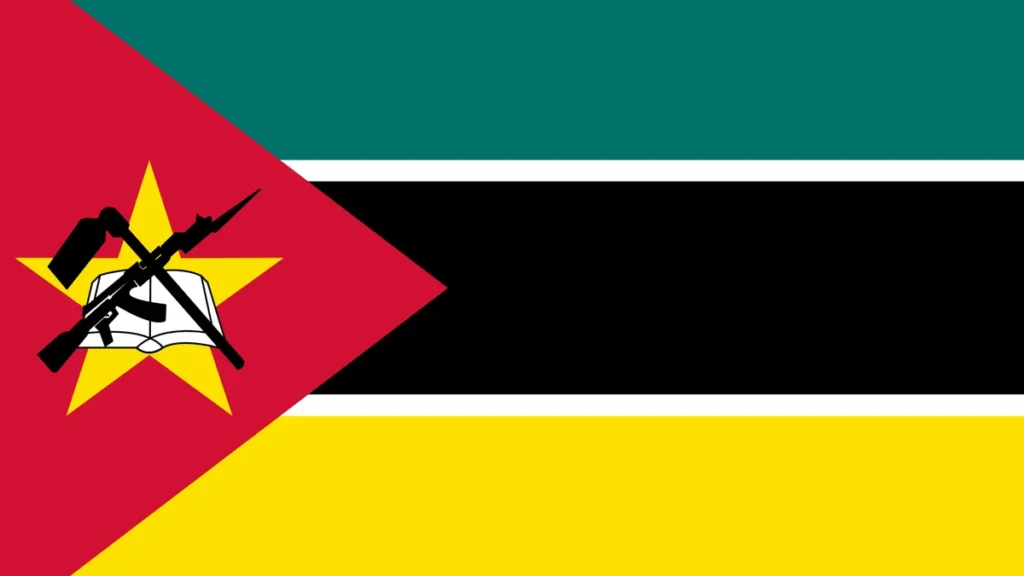
Mozambique at a glance: A resource-rich southeastern African nation navigating a fragile peace, a nascent LNG economy, and one of the continent’s most acute insurgency crises simultaneously.
Overview
Capital: Maputo. Population: approximately 34.3 million (World Bank, 2024 estimate), making Mozambique one of the more populous nations in southern Africa. Official language: Portuguese. Currency: Mozambican metical (MZN). GDP per capita: roughly USD 550–600, placing the country firmly in the low-income bracket by World Bank classification. Mozambique sits at the intersection of several of the continent’s most consequential dynamics in 2026: it holds some of the world’s largest untapped natural gas reserves in the Rovuma Basin, yet remains among the ten poorest countries globally by per capita income. Its trajectory over the next decade — whether it manages the resource transition equitably, contains the Cabo Delgado insurgency, and stabilises its political institutions — will have significant implications for southern African security architecture and for global LNG supply chains.
Government and Politics
Mozambique is a presidential republic. The president serves as both head of state and head of government, elected by popular vote for a five-year term. Daniel Chapo assumed the presidency in January 2025 following the October 2024 general elections, succeeding Filipe Nyusi who had served the constitutional maximum of two terms. Chapo, a former governor of Inhambane Province, is a member of Frelimo — the Frente de Libertação de Moçambique — which has governed the country without interruption since independence from Portugal in 1975. The October 2024 elections were deeply contested: Frelimo’s declared victory triggered some of the most serious post-election violence the country has seen in decades, with opposition candidate Venâncio Mondlane — running as an independent with backing from Podemos — refusing to accept the results and calling his supporters into the streets. Dozens of people were killed in protests that continued into early 2025. The legislature, the Assembleia da República, is a unicameral body of 250 seats. Frelimo retains a commanding parliamentary majority, though the opposition Renamo — the former rebel movement turned political party — and newer formations continue to contest space. No significant constitutional changes have been enacted in the immediate term, though pressure for electoral reform and greater judicial independence has intensified following the 2024 crisis. The next general elections are scheduled for 2029.
Economy
Mozambique’s GDP stood at approximately USD 20–21 billion in nominal terms in 2024, with real growth estimated at around 5 percent — a figure that masks deep structural vulnerabilities. Agriculture remains the backbone of livelihoods, employing the majority of the population and producing cashews, tobacco, sugar, cotton, and prawns for export. However, the single most consequential economic story of the past 24 months is the partial resumption of activity at TotalEnergies’ Mozambique LNG project in Cabo Delgado, which was suspended in April 2021 following a major insurgent attack on Palma. TotalEnergies declared force majeure at that time, and the project — valued at approximately USD 20 billion and representing one of the largest private investments in sub-Saharan African history — has remained in a state of suspended animation, with the company monitoring security conditions before committing to a restart timeline. ExxonMobil’s separate Rovuma LNG project has similarly stalled. The metical has faced persistent depreciation pressure, and the Bank of Mozambique has maintained relatively tight monetary policy to contain inflation, which has hovered in the high single digits. Mozambique carries a substantial external debt burden, a legacy partly of the “hidden debts” scandal of 2013–2016, in which state-backed loans of approximately USD 2 billion were contracted without parliamentary approval, triggering a prolonged rupture with the IMF and international donors that took years to repair. Aluminium smelting at Mozal, near Maputo, remains a significant export earner, as does coal from Tete Province, though coal’s long-term outlook is constrained by global decarbonisation pressures. Donor aid continues to finance a substantial share of the state budget.
Demographics and Society
Mozambique’s population is young — the median age is estimated at around 17–18 years — and growing at approximately 2.8 percent annually, which places significant pressure on education, health, and employment systems. The country is ethnically and linguistically diverse, with the Makhuwa-Lomwe group representing the largest single cluster in the north, alongside the Tsonga, Sena, Ndau, Shona-related groups, and many others. While Portuguese is the official language, it is a first language for a relatively small urban minority; the majority of Mozambicans speak one of more than 40 Bantu languages as their primary tongue. Emakhuwa alone is spoken by an estimated 25–30 percent of the population. Religiously, the country is roughly divided between Christianity (predominantly Catholic and various Protestant denominations), Islam — concentrated heavily in the northern coastal provinces, including Cabo Delgado, Nampula, and Zambezia — and traditional beliefs, with significant overlap between categories. Urbanisation is accelerating: Maputo and its satellite city Matola together form a metropolitan area of over 2.5 million people, and secondary cities including Beira, Nampula, and Quelimane are growing rapidly. The defining social trend of the current moment is internal displacement: the Cabo Delgado insurgency has displaced an estimated 700,000 to 1 million people since 2017, creating one of the continent’s most significant humanitarian crises and fundamentally reshaping demographic patterns in the north.
Key Issues Right Now
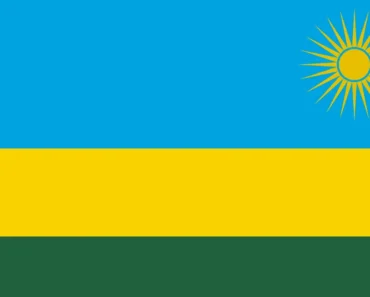
The Cabo Delgado insurgency and regional military presence. The jihadist insurgency in Cabo Delgado Province — carried out by a group locally known as Al-Shabaab (unrelated to the Somali organisation) and affiliated with Islamic State Central Africa Province (ISCAP) — has been active since October 2017. At its peak in 2021, insurgents seized the port town of Mocímboa da Praia and briefly held Palma. The intervention of Rwandan forces from mid-2021 and the Southern African Development Community Mission in Mozambique (SAMIM) from the same period helped recapture key towns and reduce the insurgency’s territorial control. However, the group has not been defeated: it has adapted to a more dispersed, rural guerrilla posture, and attacks on villages, beheadings, and displacement continue into 2025 and 2026. The security situation remains the primary obstacle to LNG project resumption and to humanitarian stabilisation in the north.
Post-election political instability. The fallout from the October 2024 elections continues to shape Mozambique’s political environment in 2026. The scale of the post-election protests — and the state’s use of lethal force against demonstrators — drew sharp international criticism and raised serious questions about Frelimo’s democratic legitimacy and the independence of the Constitutional Council. Opposition figure Venâncio Mondlane, who spent much of the protest period outside the country, remains a polarising figure with a significant social media following, particularly among younger urban Mozambicans. The new Chapo administration faces the dual challenge of consolidating authority and demonstrating a credible break from the governance failures associated with the Nyusi era, including corruption and the unresolved legacies of the hidden debts scandal.
Climate vulnerability and cyclone exposure. Mozambique is consistently ranked among the world’s most climate-vulnerable countries. The devastating back-to-back cyclones Idai and Kenneth in 2019 killed over 1,000 people and caused billions of dollars in damage to Beira and the Zambezi Delta region. The 2022–2023 cyclone seasons brought further destruction. Mozambique’s long Indian Ocean coastline, low-lying river deltas, and limited adaptive infrastructure make it acutely exposed to intensifying tropical cyclone activity, flooding, and drought. Climate finance and disaster risk reduction remain central to the country’s engagement with international development partners, and the reconstruction of Beira — once described as the most climate-exposed city in Africa — is an ongoing, underfunded process.
Travel and Connectivity
Mozambique’s principal international gateway is Maputo International Airport (MPM), which handles the majority of international traffic and connects to Johannesburg, Nairobi, Addis Ababa, Lisbon, and Dubai, among other destinations. Beira Airport (BEW) in Sofala Province serves as the main hub for central Mozambique and handles some regional traffic. Pemba Airport (POL) in Cabo Delgado is the key access point for the north and has seen increased military and humanitarian traffic in recent years; its commercial connectivity remains limited. Principal cities beyond Maputo include Beira (the country’s second city and a critical regional port for landlocked Zimbabwe and Zambia), Nampula (the commercial hub of the north), Quelimane, Tete, and Pemba. Tourism is a modest but growing sector, centred on Mozambique’s exceptional Indian Ocean coastline, coral reefs, and marine biodiversity — the Bazaruto Archipelago and Quirimbas Archipelago are internationally recognised dive and leisure destinations. The Cabo Delgado security situation has effectively closed the Quirimbas to most tourism since 2020. Internet penetration stands at approximately 25–30 percent of the population, with mobile connectivity far outpacing fixed-line infrastructure. Mobile money has achieved significant adoption, with M-Pesa (operated by Vodacom Mozambique) the dominant platform; mobile financial services are increasingly central to remittances, small business transactions, and rural financial inclusion in a country where formal banking access remains limited.
Further Research
Analysts, journalists, and investors seeking to deepen their understanding of Mozambique should consult the following institutions and resources. The Bank of Mozambique (Banco de Moçambique) publishes monetary policy statements, inflation data, and financial sector reports that are essential for any economic analysis. The Instituto Nacional de Estatística (INE) — Mozambique’s National Statistics Institute — is the primary source for demographic, poverty, and national accounts data. The World Bank’s Mozambique country page provides regularly updated macro data, project documentation, and the influential Country Economic Memoranda that frame the country’s development challenges. The Africa Center for Strategic Studies (based in Washington, D.C.) has produced some of the most rigorous open-source analysis of the Cabo Delgado insurgency, ISCAP’s regional network, and SAMIM’s operational record. The Club of Mozambique is a well-regarded English-language news aggregator covering business, politics, and security, useful for day-to-day monitoring. Finally, the Crisis Group (International Crisis Group) has published detailed field-based reporting on the northern insurgency and the political crisis following the 2024 elections, and its Mozambique reporting is among the most reliable available to non-specialist readers.