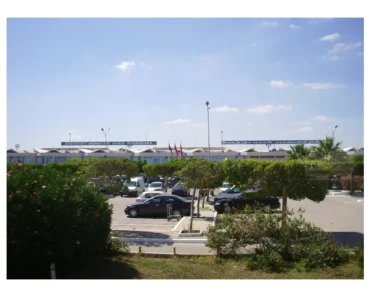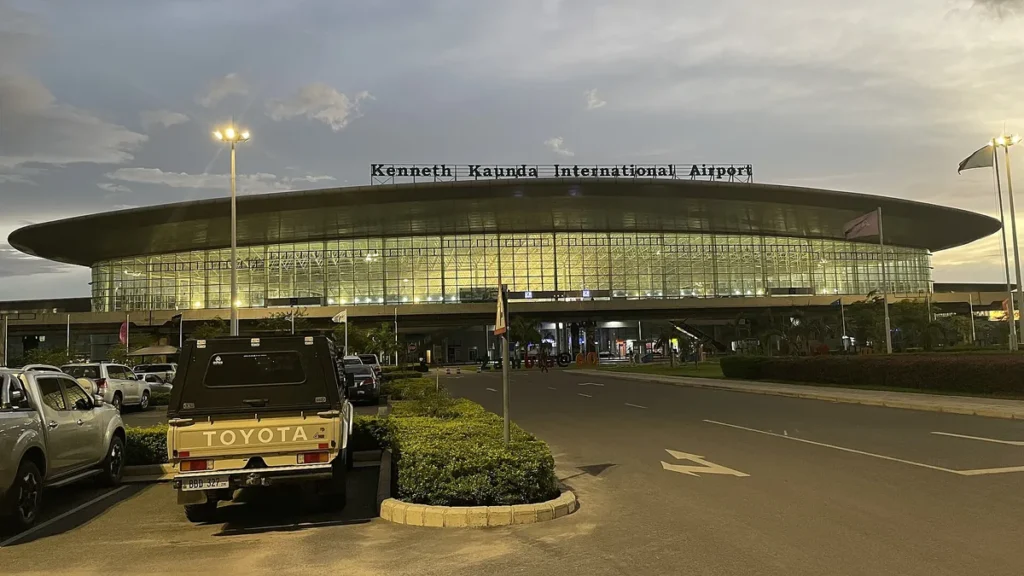
Kenneth Kaunda International Airport
Kenneth Kaunda International Airport
Kenneth Kaunda International Airport (LUN) — Lusaka, Zambia
Kenneth Kaunda International Airport (IATA: LUN | ICAO: FLKK) is Zambia’s principal international gateway, serving the capital Lusaka and functioning as the country’s primary hub for both passenger and cargo aviation. Positioned at the geographic heart of sub-Saharan Africa, the airport plays a structurally important role in connecting landlocked Zambia to regional trade corridors, humanitarian supply chains, and the broader global aviation network. For travellers, journalists, and researchers tracking African infrastructure, LUN represents both the opportunities and the persistent challenges that define mid-tier aviation hubs across the continent.
About
Kenneth Kaunda International Airport takes its name from Zambia’s founding president, who led the country from independence in 1964 until 1991. The airport’s origins date to the colonial era, when the facility served as Lusaka’s primary aerodrome under British administration. Following independence, the site was progressively developed to meet the demands of a newly sovereign state, and it has since been formally designated as Zambia’s flag-carrier hub and primary point of entry for international visitors.
The airport is owned by the Government of the Republic of Zambia and has historically been managed under the oversight of the Zambia Airports Corporation Limited (ZACL), the state body responsible for operating Zambia’s four main airports. Over the decades, ZACL has undertaken successive rounds of infrastructure investment, including runway rehabilitation works and terminal upgrades, though the pace of modernisation has at times lagged behind growth in passenger demand. A significant milestone came with the completion of a new international terminal, which substantially expanded the airport’s processing capacity and improved the passenger experience compared to the older facilities it supplemented.
The airport sits at an elevation of approximately 3,779 feet above sea level on the Lusaka plateau, a factor that influences aircraft performance calculations and fuel planning for operators. Its single main runway — oriented roughly east to west — has been the subject of periodic rehabilitation programmes to maintain international airworthiness standards. The airport holds Category 1 instrument landing status, enabling operations in reduced-visibility conditions, and is certified to handle wide-body aircraft including the Boeing 777 and Airbus A330 families.
Country
Zambia is a landlocked nation in south-central Africa, bordered by eight countries including the Democratic Republic of Congo, Tanzania, Zimbabwe, and Mozambique. Lusaka, the capital, is also the country’s largest city and its commercial centre. With a national population estimated in the tens of millions and a young demographic profile, Zambia occupies a strategically significant position within the Southern African Development Community (SADC) and the Common Market for Eastern and Southern Africa (COMESA). Its economy has historically been anchored by copper mining, though diversification into agriculture, tourism, and services has gained momentum in recent years.
→ Read the Zambia expert briefing
Airlines based here
Proflight Zambia, the country’s longest-operating private carrier, uses Kenneth Kaunda International Airport as its operational base and primary hub. The airline provides the backbone of domestic connectivity, linking Lusaka to provincial destinations including Livingstone, Ndola, Mfuwe, and Solwezi, while also operating select regional routes. Proflight has been the de facto national carrier in practical terms for much of the past decade, filling a gap left by the collapse of Zambia Airways in the 1990s and the subsequent failure of later attempts to establish a state-owned flag carrier.
International carriers visiting LUN as a point on their African networks include Ethiopian Airlines, Kenya Airways, South African Airways, Emirates, and Rwandair, among others. Ethiopian Airlines in particular operates a high-frequency service connecting Lusaka to Addis Ababa Bole International Airport, providing onward connectivity to intercontinental destinations across its extensive hub-and-spoke network. These visiting carriers treat LUN as a spoke destination rather than a base, but their combined schedules give the airport a meaningful intercontinental reach.
Flights and destinations
Kenneth Kaunda International Airport supports a network that spans domestic, regional African, and intercontinental routes, though its intercontinental offer is largely mediated through connecting hubs rather than direct long-haul services. Within Zambia, Proflight Zambia connects Lusaka to Livingstone (the gateway to Victoria Falls), Ndola in the Copperbelt, and tourism-oriented destinations such as Mfuwe in the South Luangwa area. Regionally, scheduled services link Lusaka to Nairobi (Kenya), Addis Ababa (Ethiopia), Johannesburg (South Africa), Harare (Zimbabwe), Dar es Salaam (Tanzania), and Kigali (Rwanda). Emirates operates a service connecting Lusaka to Dubai, providing a key intercontinental artery for business travellers and the Zambian diaspora. The combined network means that a traveller departing LUN can reach major African capitals and intercontinental hubs — including London, Amsterdam, and destinations across Asia — typically with one connection.
Facilities and capacity
The airport operates a primary international terminal that was developed as part of a major infrastructure upgrade programme, alongside a domestic terminal handling Proflight Zambia’s internal network. The international terminal features immigration and customs halls, retail concessions, VIP lounges, and airside food and beverage facilities, representing a material improvement over the airport’s earlier processing infrastructure. Cargo handling facilities are present on site, supporting both belly-hold freight carried on passenger services and dedicated freighter operations — the latter being particularly significant given Zambia’s role as a copper exporter and its dependence on imported goods across a landlocked supply chain.
The airport’s single primary runway limits simultaneous operations and creates a structural constraint on capacity growth during peak periods. According to publicly disclosed traffic data and industry estimates, LUN falls within the medium-hub category by African standards — handling volumes that are substantial for a landlocked sub-Saharan capital but modest when compared to the continent’s major gateway airports such as Johannesburg O.R. Tambo, Cairo, or Nairobi Jomo Kenyatta. Expansion planning has been discussed at various points by ZACL and the Zambian government, with proposals including apron expansion and terminal capacity increases, though the status and financing of specific projects should be verified against current official disclosures.
Visa regulations
Zambia operates a relatively accessible visa regime for international arrivals at Kenneth Kaunda International Airport. Citizens of many countries — including the United States, the United Kingdom, and most European Union member states — are eligible to obtain a visa on arrival or to apply in advance through Zambia’s eVisa system, which allows travellers to secure authorisation before departure. Citizens of a number of regional African countries, particularly within SADC and COMESA, may benefit from visa-free arrangements or simplified entry procedures, though the precise list of eligible nationalities is subject to bilateral agreements and periodic revision. Travellers are strongly advised to confirm their specific visa category before travel, as requirements can change at short notice. For a live and regularly updated lookup tool, visit the visa requirements page.
Recent developments
In the period leading into 2026, Kenneth Kaunda International Airport has seen a number of operationally significant developments. RwandAir has consolidated its Lusaka service as part of its broader southern African expansion strategy, adding competitive pressure on the Lusaka–Kigali corridor and improving onward connectivity to West Africa via Kigali. Ethiopian Airlines has maintained its high-frequency Addis Ababa service, reinforcing that route’s role as the primary intercontinental gateway for many Zambian travellers. Domestically, Proflight Zambia has continued to develop its provincial network, with route adjustments reflecting both demand patterns and the operational economics of serving remote destinations.
Infrastructure works at the airport have continued under ZACL oversight, with apron and taxiway maintenance forming part of ongoing airworthiness compliance efforts. The Zambian government has signalled interest in attracting private sector participation in airport infrastructure financing, a trend consistent with broader moves across the continent toward public-private partnership models for aviation assets. Journalists and analysts tracking these developments should monitor official communications from ZACL and the Zambia Civil Aviation Authority (ZCAA) for authoritative updates on project status and timelines.
News and reports
Ongoing operational and regulatory news relating to Kenneth Kaunda International Airport is best sourced through a combination of official and industry channels. The Zambia Airports Corporation Limited publishes press releases and operational updates through its official communications platforms. The Zambia Civil Aviation Authority (ZCAA) is the relevant regulatory body and issues safety directives, licensing decisions, and policy statements that affect the airport’s operating environment. At the continental level, IATA’s Africa regional office produces periodic reports on African aviation market performance, route development, and infrastructure investment that provide useful benchmarking context for LUN. The ICAO regional office for Eastern and Southern Africa (ESAF), based in Nairobi, is the appropriate reference point for safety oversight assessments and compliance reporting. Aviation trade publications including ch-aviation, Cirium, and the African Business Aviation Association (AfBAA) also provide timely commercial intelligence on route changes and airline developments at the airport.
Related research
- Zambia Expert Briefing — in-depth country analysis for researchers and investors
- Zambia Statistics — key demographic, economic, and infrastructure data
- African Airports — comparative profiles across the continent
- African Airlines — carrier profiles, route maps, and fleet data
- Visa Requirements — live lookup tool for entry requirements by nationality
- Country Comparison — benchmark Zambia against peer economies and aviation markets