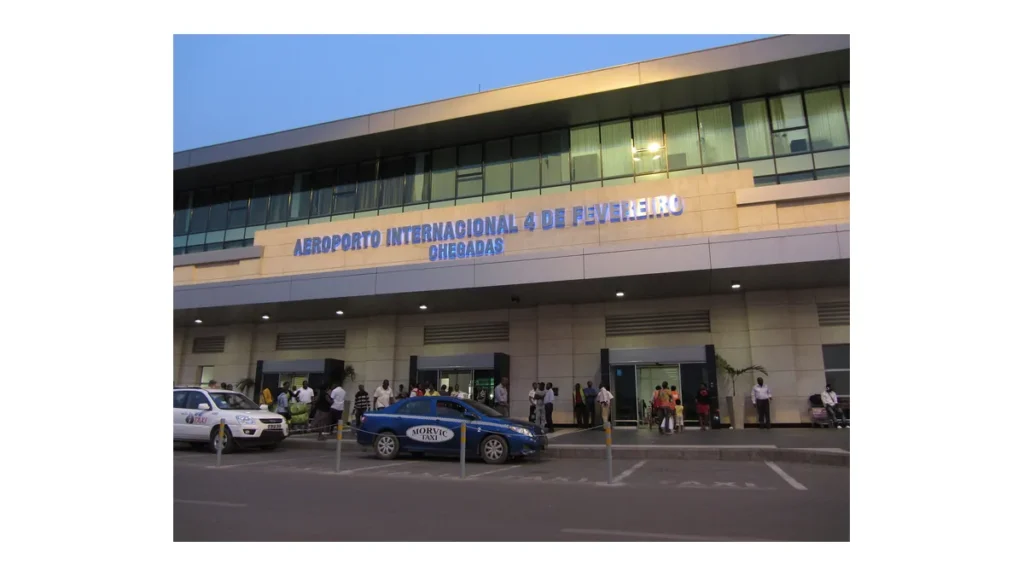
Quatro de Fevereiro International Airport
Quatro de Fevereiro International Airport
About
Quatro de Fevereiro International Airport — IATA code LAD, ICAO code FNLU — is Angola’s principal gateway and one of sub-Saharan Africa’s most strategically positioned aviation hubs. Sitting on the Atlantic coast at the edge of Luanda, the airport connects one of Africa’s largest oil-producing economies to Europe, the Americas, the Middle East, and the wider African continent. For travellers, journalists, and aviation analysts tracking the development of African air transport, LAD represents a compelling case study: a facility under sustained pressure from rapid economic growth, a recovering post-conflict nation rebuilding its infrastructure, and an airline industry in transition.
The airport takes its name from the date of Angola’s independence movement — 4 February 1961 — lending it a political resonance that goes beyond mere geography. Originally developed during the Portuguese colonial era, the facility has served as Luanda’s primary commercial airport for decades. Following Angolan independence in 1975 and the long civil war that ended in 2002, the airport emerged as a critical logistics node not only for commercial aviation but also for humanitarian and cargo operations serving a country rebuilding from conflict.
Ownership and operational oversight sit with the Angolan state. ENANA — Empresa Nacional de Exploração de Aeroportos e Navegação Aérea — has historically managed the airport’s infrastructure and air navigation services, operating under the authority of Angola’s Ministry of Transport. The airport has undergone a series of expansion and rehabilitation phases over the years, driven by rising passenger demand linked to Angola’s oil sector and a growing middle class. Separately, Angola has been developing the Luanda International Airport project at Bom Jesus, intended eventually to supplement or replace Quatro de Fevereiro as the city’s primary hub, though as of 2026 Quatro de Fevereiro remains the operational centre of Angolan commercial aviation.
Country
Angola is a southern African republic bordered by the Democratic Republic of Congo to the north and east, Zambia to the east, Namibia to the south, and the South Atlantic Ocean to the west. Luanda, the capital, is home to a population that industry and demographic estimates place in the several millions, making it one of the most populous cities on the continent. Angola’s broader national population is estimated at over 35 million people as of the mid-2020s. The country holds significant geopolitical weight in the Southern African Development Community (SADC) region, and its oil and gas revenues have historically shaped both its domestic economy and its external trade relationships. Angola’s aviation market reflects this: Luanda is a destination of genuine commercial importance, not merely a transit point.
→ Read the Angola expert briefing
Airlines based here
TAAG Angola Airlines is the flag carrier of Angola and the dominant home-based carrier at Quatro de Fevereiro. Operating under the IATA code DT, TAAG uses LAD as its primary hub for both domestic routes across Angola’s provincial cities and international long-haul services. The airline is state-owned and has historically operated a mixed fleet including Boeing 777 and Boeing 737 family aircraft. TAAG’s network gives the airport much of its intercontinental reach, particularly to Europe and Brazil.
Beyond TAAG, a range of international carriers operate scheduled services into LAD as visiting airlines. These have included Ethiopian Airlines, which connects Luanda to Addis Ababa and onward to its extensive global network; Kenya Airways, linking Luanda to Nairobi; and South African Airways and its successors serving the Johannesburg corridor. European carriers with documented or recent service to LAD have included TAP Air Portugal — historically the most significant European operator given the Lusophone connection — as well as Turkish Airlines serving the Istanbul hub. Emirates has also operated services connecting Luanda to Dubai. Travellers and analysts should verify current schedules directly with carriers, as African route networks remain subject to commercial review.
Flights and destinations
Quatro de Fevereiro supports a network that spans domestic Angolan routes, regional African connections, and intercontinental services to Europe, South America, and the Middle East. Domestically, TAAG operates frequent services to provincial capitals including Lubango, Huambo, Cabinda, and Benguela, reflecting Angola’s geographic scale and the importance of air travel in a country where road infrastructure remains uneven.
On the continental level, Luanda is connected to Johannesburg, Nairobi, Addis Ababa, Lagos, and Kinshasa — a set of routes that reflects both Angola’s SADC membership and its broader commercial ties across sub-Saharan Africa. Intercontinentally, Lisbon is the single most important European destination, served by both TAAG and TAP Air Portugal, a route underpinned by deep historical, linguistic, and economic ties between Angola and Portugal. São Paulo in Brazil represents another significant long-haul market, reflecting the Lusophone Atlantic triangle. Istanbul and Dubai serve as onward connection hubs for passengers routing to Asia and beyond. Industry observers note that the Luanda–Lisbon corridor is among the busiest Lusophone aviation routes in Africa by frequency.
Facilities and capacity
Quatro de Fevereiro operates with a single primary passenger terminal that has been extended and refurbished in phases over the years. The airport has two runways — the main instrument runway oriented broadly northeast-southwest, capable of handling wide-body jet operations including Boeing 777 and Airbus A330 class aircraft — giving it the physical infrastructure to support long-haul international services. Cargo facilities are present on site, serving both commercial freight and the oil-sector logistics that are a significant component of Luanda’s air cargo economy.
In terms of passenger throughput, LAD is generally classified within the medium-to-large hub category for sub-Saharan Africa, though it is not among the continent’s highest-volume airports by passenger count. According to publicly disclosed traffic data from ENANA and ICAO regional reporting, the airport handles millions of passengers annually, with precise figures varying year to year in line with oil sector cycles and broader economic conditions. The long-anticipated Luanda Bom Jesus International Airport project — a purpose-built facility intended to serve the city at greater scale — has been in development for a number of years; industry estimates suggest it would significantly expand Luanda’s total aviation capacity once operational, though completion timelines have shifted over successive planning cycles.
Visa regulations
Angola operates a visa regime that travellers arriving at Quatro de Fevereiro must navigate carefully. As of 2026, Angola has made efforts to liberalise access for certain categories of visitor, including the introduction of an eVisa system that allows eligible nationals to apply online in advance of travel. Citizens of a number of African Union member states may benefit from simplified or visa-free arrangements under bilateral agreements, though coverage is not uniform across the continent. Travellers holding US, UK, or EU passports have generally been required to obtain a visa prior to arrival, either through Angolan embassies or consulates abroad or, where eligible, through the eVisa portal. Visa-on-arrival arrangements have existed in limited form but are not universally available to all nationalities.
Visa policy is subject to change with limited notice, and requirements can differ based on the purpose of travel — tourism, business, journalism, or research — as well as the applicant’s nationality. Travellers are strongly advised to verify current requirements with the nearest Angolan diplomatic mission or through official Angolan government channels before booking. For a live lookup of current visa requirements for your nationality, see our visa requirements tool.
Recent developments
The past 24 months at Quatro de Fevereiro have been characterised by a combination of network recovery, route development, and continued infrastructure discussion. TAAG Angola Airlines has been working to stabilise and selectively expand its international network following the disruptions of the early 2020s, with renewed attention to European and South American frequencies. The airline has also engaged in fleet planning discussions, with industry sources noting interest in modernising its long-haul capacity.
On the infrastructure side, the Bom Jesus airport project has remained a subject of active government commentary, with Angolan authorities reaffirming commitment to the development while industry analysts continue to monitor progress against stated timelines. At the existing Quatro de Fevereiro facility, operational improvements to passenger processing and airside management have been reported in Angolan transport ministry communications. The broader regulatory environment for Angolan aviation has also attracted attention, with ICAO and IATA engagement on safety oversight and operational standards forming part of the ongoing dialogue between Angola’s civil aviation authority and international bodies.
News and reports
Researchers and journalists tracking developments at Quatro de Fevereiro and in Angolan aviation more broadly have several authoritative sources to consult. ENANA, the national airports and air navigation enterprise, periodically releases operational updates and press communications through official Angolan government channels. The Instituto Nacional de Aviação Civil (INAVIC) — Angola’s civil aviation authority — is the primary regulatory body and publishes safety and licensing information. At the regional and global level, IATA’s Africa and Middle East regional office produces periodic market analysis and traffic reports covering sub-Saharan African airports, including LAD. ICAO’s African regional office, based in Dakar, maintains oversight documentation and safety audit records relevant to Angolan aviation. Aviation trade publications including ch-aviation, Cirium, and the African Business Aviation Association (AfBAA) also cover the Luanda market with varying degrees of frequency. Travellers seeking real-time operational information — delays, terminal notices, and service disruptions — should consult TAAG Angola Airlines directly or check with their operating carrier.