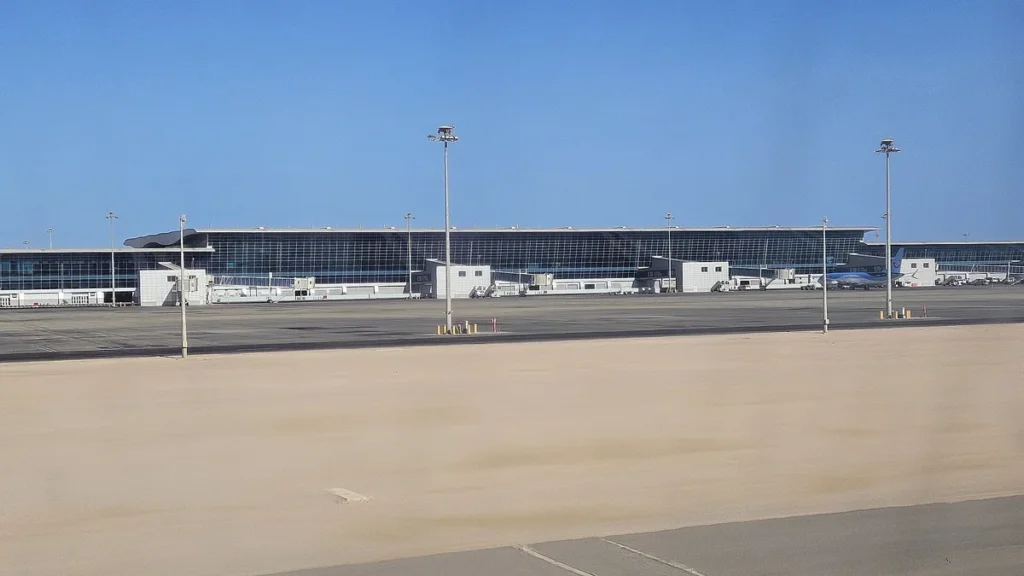
Hurghada International Airport
Hurghada International Airport
About
Hurghada International Airport (IATA: HRG / ICAO: HEGN) is one of Egypt’s busiest and most strategically important aviation gateways, functioning as the primary air access point for the Red Sea Riviera and serving as a significant node in African leisure aviation. Positioned on Egypt’s northeastern Red Sea coast, the airport channels millions of sun-seeking travellers from Europe, the Gulf, and beyond into one of Africa’s most visited resort destinations. Its role extends beyond simple point-to-point tourism: HRG acts as a barometer for Egyptian aviation health, a proving ground for charter and low-cost carrier models on the continent, and a key revenue driver for Egypt’s broader tourism economy.
The airport traces its origins to the mid-twentieth century, when Hurghada’s airfield served primarily domestic and limited regional traffic. Commercial international operations expanded substantially from the 1980s onward as Egypt’s government invested in Red Sea tourism infrastructure. The airport was developed and is operated under the authority of the Egyptian Airports Company (EAC), a state-owned entity that manages the majority of Egypt’s civil airports under the oversight of the Egyptian Ministry of Civil Aviation.
Significant infrastructure upgrades were carried out in the 1990s and 2000s to accommodate the surge in European charter traffic, including terminal expansions and runway reinforcement. A further modernisation phase was undertaken in the 2010s, improving passenger processing capacity, airside retail, and ground handling facilities. The airport today operates with two passenger terminal buildings and is classified by industry analysts as a medium-volume international hub, with capacity oriented heavily toward seasonal and charter demand rather than year-round scheduled network traffic.
Country
Egypt is a transcontinental republic bridging northeastern Africa and the Sinai Peninsula of western Asia, with Cairo as its capital. Home to a population estimated at over 105 million people, it is among the most populous nations in Africa and the Arab world. Egypt occupies a pivotal geopolitical position — bordering Libya, Sudan, Israel, and the Gaza Strip, and commanding the Suez Canal, one of the world’s most critical maritime trade corridors. Its economy is diversified across hydrocarbons, remittances, Suez Canal revenues, and tourism, the last of which makes airports such as HRG central to national economic planning. Egypt is a member of the African Union, the Arab League, and maintains bilateral air service agreements with dozens of countries globally.
→ Read the Egypt expert briefing
Airlines based here
Hurghada International Airport does not function as a primary hub for any single national carrier in the conventional sense, but EgyptAir — Egypt’s flag carrier and a Star Alliance member — maintains a meaningful scheduled presence at HRG, operating domestic connections to Cairo International Airport (CAI) and select regional routes. EgyptAir’s subsidiary and charter-oriented operations have historically used HRG as a focus point for leisure-market flying.
The airport’s traffic profile is dominated by visiting carriers rather than home-based operators. European charter and leisure-focused airlines have long been the backbone of HRG’s international traffic. TUI fly (operating under various national banners including TUI fly Germany, TUI fly Belgium, and TUI Airways in the UK), Condor, Corendon Airlines, and Smartwings have all maintained regular seasonal programmes to Hurghada. Low-cost carriers including Wizz Air and Ryanair have also operated routes to HRG, reflecting the airport’s appeal as a cost-competitive leisure destination. Gulf carriers including flydubai and Air Arabia have provided connectivity to the UAE and broader GCC markets, serving both leisure travellers and Egyptian diaspora communities.
Flights and destinations
The route network at Hurghada International Airport is heavily weighted toward European leisure markets, with strong seasonal programming across winter sun and summer beach travel periods. Representative destinations served from HRG include London (Gatwick and Stansted), Frankfurt, Amsterdam Schiphol, Warsaw Chopin, Budapest, Moscow (historically a major source market, subject to geopolitical disruption), Vienna, Zurich, Brussels, and Dubai. Domestic connectivity to Cairo is maintained year-round and represents a critical link for transit passengers and business travellers.
Intercontinental traffic beyond Europe and the Gulf remains limited, reflecting the airport’s specialist leisure positioning rather than a broad network hub model. Intra-African scheduled connectivity is sparse, with most sub-Saharan African travellers routing through Cairo. Regional Arab-world connections, including to Amman, Beirut, and Jeddah, have featured in various carriers’ schedules. The airport’s network expands and contracts significantly with seasonal demand, and airline programmes should be verified directly with carriers or through current GDS data.
Facilities and capacity
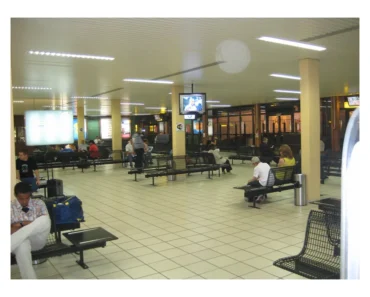
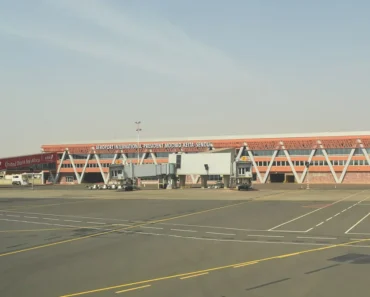
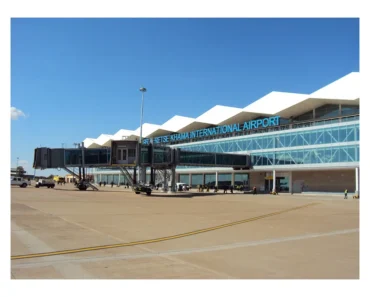
Hurghada International Airport operates two passenger terminal buildings. Terminal 1 handles the majority of international charter and scheduled traffic, while Terminal 2 has historically been used for additional overflow capacity and domestic operations, though terminal assignments are subject to operational reallocation by the Egyptian Airports Company. The airport is served by two asphalt runways — the primary runway oriented to accommodate wide-body aircraft operations including Boeing 767, 777, and Airbus A330 types commonly deployed on European leisure routes.
Cargo facilities at HRG are present but modest relative to the airport’s passenger throughput, reflecting the leisure-market orientation of its traffic base. Ground handling services are provided by a combination of EgyptAir Ground Services and contracted third-party handlers. According to publicly disclosed traffic data reviewed by industry analysts, HRG processes several million passengers annually, placing it firmly in the medium-hub category for African airports, though precise current-year figures should be sourced from the Egyptian Airports Company or ICAO traffic statistics. Ongoing and planned capacity investments have been signalled by Egyptian aviation authorities as part of broader national infrastructure programmes, though specific budget figures and completion timelines should be confirmed against official Ministry of Civil Aviation announcements.
Visa regulations
Travellers arriving at Hurghada International Airport are subject to Egypt’s national visa regime, administered by the Ministry of Interior. As of current published guidance, Egypt offers a visa-on-arrival facility to nationals of a wide range of countries, including the United States, United Kingdom, and European Union member states, typically valid for up to 30 days and available for a fee payable in major currencies at the airport. Egypt’s eVisa system, operated through the official government portal, allows eligible travellers to obtain a single-entry or multiple-entry visa in advance of travel, which is strongly recommended during peak season to reduce processing time on arrival. Nationals of many Arab League countries and certain African states may benefit from simplified entry arrangements or visa-free access under bilateral agreements, though conditions vary significantly by passport. It is important to note that visa regulations are subject to change without notice — fee structures, eligible nationalities, and permitted stay durations have been revised periodically by Egyptian authorities.
→ For the current live visa lookup tool, visit africa-research.org/visa-requirements/
Recent developments
Over the 24 months to early 2026, Hurghada International Airport has seen a gradual but notable recovery and expansion of its European route network, following the disruptions of the early 2020s. Several European carriers that had suspended or reduced Hurghada services have reinstated or grown their programmes, responding to robust demand for Red Sea holidays. Wizz Air, in particular, has expanded its presence in the Egyptian market broadly, with HRG featuring in its network planning. The resumption and growth of Russian tourist traffic — a historically dominant source market — has remained subject to geopolitical and airspace constraints, creating both challenges and opportunities for alternative source market development, with Polish, Czech, and Hungarian carriers increasing relative frequency.
On the infrastructure side, Egyptian aviation authorities have publicly referenced ongoing works to improve terminal passenger flow, security screening capacity, and airside commercial offerings at HRG, consistent with Egypt’s wider Vision 2030-aligned tourism targets. New ground handling agreements and upgrades to apron capacity have also been reported in Egyptian civil aviation authority communications. Industry estimates suggest that the airport’s management is actively pursuing additional scheduled carrier agreements to reduce dependence on purely charter-model traffic and diversify its revenue base.
News and reports
Researchers, journalists, and aviation analysts tracking Hurghada International Airport should consult several authoritative primary and secondary sources. The Egyptian Airports Company (EAC) publishes operational announcements and periodic traffic summaries through its official communications channels. The Egyptian Ministry of Civil Aviation issues policy statements, bilateral air service agreement updates, and infrastructure programme notifications relevant to HRG and the broader national airport network. The Egyptian Civil Aviation Authority (ECAA) is the primary regulatory body and publishes safety, licensing, and operational data in line with ICAO standards.
At the international level, IATA’s Africa regional reports and the ICAO Middle East and Africa Regional Office provide comparative traffic analysis, safety oversight findings, and connectivity assessments that contextualise HRG’s performance within the continental aviation landscape. Trade publications including Aviation Week Network, ch-aviation, and The Air Current provide ongoing commercial route and airline strategy coverage. For academic and policy research, the African Development Bank’s infrastructure reports and the World Bank’s transport sector analyses offer macroeconomic framing for Egyptian airport investment.