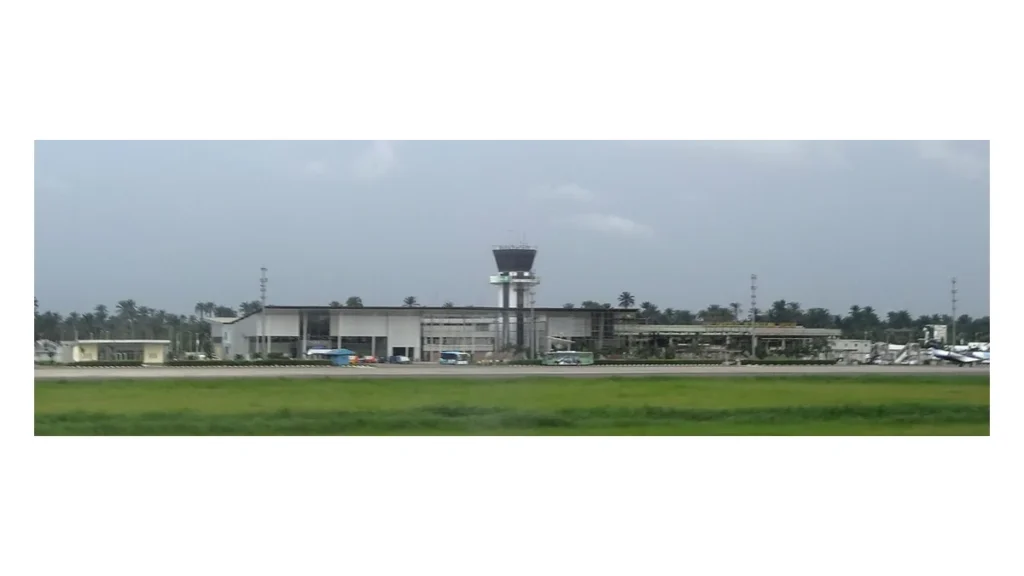
Port Harcourt International Airport
Port Harcourt International Airport
Port Harcourt International Airport (PHC / DNPO)
Port Harcourt International Airport — IATA code PHC, ICAO code DNPO — serves as the principal gateway to Rivers State and the broader Niger Delta region of southern Nigeria. Positioned at the heart of one of Africa’s most commercially significant energy corridors, the airport connects the oil-and-gas capital of Nigeria to domestic hubs, West African neighbours, and intercontinental routes. For travellers, journalists, and aviation analysts tracking African infrastructure, PHC represents a compelling case study in the intersection of resource-driven demand, federal airport management, and the evolving ambitions of Nigerian aviation.
About
Port Harcourt International Airport occupies a strategic position in Nigeria’s aviation network, ranking among the country’s busiest airports alongside Murtala Muhammed International Airport in Lagos and Nnamdi Azikiwe International Airport in Abuja. Its catchment area extends well beyond Rivers State, drawing passengers from Bayelsa, Delta, and Imo states — a combined population base that, together with the concentration of multinational energy companies operating in the region, sustains consistent year-round demand for both passenger and cargo services.
The airport’s origins trace to the mid-twentieth century, with its development accelerating during Nigeria’s post-independence oil boom. The facility was progressively upgraded through the 1970s and 1980s as petroleum revenues transformed Port Harcourt into a city of continental economic importance. Ownership and operational oversight rests with the Federal Airports Authority of Nigeria (FAAN), the federal parastatal responsible for managing all designated international airports across the country. FAAN operates under the policy direction of the Federal Ministry of Aviation and Aerospace Development, which has in recent years articulated ambitions to modernise Nigeria’s airport infrastructure as part of broader national development frameworks.
The airport has undergone several rounds of infrastructure investment over the decades, including terminal refurbishments and airside upgrades. A dedicated international terminal and a domestic terminal serve distinct passenger flows, though capacity pressures — particularly during peak oil-industry travel periods — have periodically prompted calls for more substantive expansion. The Nigerian government has at various points announced concession and public-private partnership frameworks intended to accelerate capital investment at PHC and peer airports, though the pace of implementation has drawn scrutiny from industry observers.
Country
Nigeria, with its capital at Abuja, is Africa’s most populous nation — home to an estimated 220 million or more people according to recent demographic projections — and the continent’s largest economy by GDP in several measurement frameworks. Situated in West Africa and bordered by Benin, Niger, Chad, and Cameroon, Nigeria exerts outsized influence on regional trade, migration, and aviation demand. Its federal structure, encompassing 36 states and the Federal Capital Territory, creates a distributed pattern of air travel need that airports such as PHC are central to meeting. → Read the Nigeria expert briefing
Airlines Based Here
Port Harcourt International Airport functions primarily as a focus city rather than a hub in the strict network-carrier sense, though several Nigerian carriers treat it as a core point in their domestic schedules. Air Peace, Nigeria’s largest privately owned carrier and the dominant force in Nigerian commercial aviation, operates frequent services through PHC and has used the airport as a launchpad for both domestic and regional expansion. Arik Air, despite the operational difficulties it has faced in recent years under AMCON receivership, has historically maintained a presence at the airport. Ibom Air, the Akwa Ibom State-backed carrier that has grown rapidly since its 2019 launch, serves PHC as part of its expanding domestic network. United Nigeria Airlines is another domestic operator with scheduled services through Port Harcourt. On the international side, PHC attracts visiting rather than based carriers: African carriers and Gulf operators have at various points served the route, with the airport’s international schedule reflecting the demand patterns of the energy sector workforce.
Flights and Destinations
The airport’s network is anchored by high-frequency domestic services to Lagos (Murtala Muhammed) and Abuja (Nnamdi Azikiwe), which together account for the majority of seat capacity. Beyond these trunk routes, PHC connects to other Nigerian cities including Owerri, Enugu, and Kano. Regionally, the airport has supported services to destinations across West and Central Africa, with Accra (Ghana), Douala (Cameroon), and Libreville (Gabon) among the African points that have featured in schedules — reflecting the cross-border movement of energy-sector personnel and traders. Intercontinental connectivity, while more limited than Lagos, has included services oriented toward the Gulf states, which serve as both transit hubs and direct destinations for the Nigerian diaspora and expatriate workforce. Industry estimates suggest that the airport’s international schedule remains sensitive to oil-price cycles and the staffing decisions of multinational operators in the Niger Delta.
Facilities and Capacity
Port Harcourt International Airport operates with two principal terminal buildings: an international terminal handling inbound and outbound international traffic, and a domestic terminal serving Nigerian carriers on internal routes. The airport is served by two runways, configured to accommodate a range of aircraft types from narrow-body jets to wide-body intercontinental aircraft, enabling it to handle the Boeing 737 and Airbus A320 family aircraft that dominate Nigerian domestic operations as well as larger types on international services. Cargo facilities exist on site, serving the logistics needs of the oil-and-gas sector, though the cargo infrastructure is generally regarded by industry analysts as underdeveloped relative to the volume of high-value goods moving through the region. By African aviation benchmarks, PHC is classified as a medium-sized international hub — significant within its national context and the West African sub-region, but operating below the traffic volumes of Lagos or the continent’s largest gateway airports. According to publicly disclosed traffic data reviewed by aviation analysts, the airport handles millions of passengers annually, with precise figures varying year to year in line with economic conditions and airline capacity decisions.
Visa Regulations
Travellers arriving at Port Harcourt International Airport are subject to Nigeria’s national visa regime, administered by the Nigeria Immigration Service. Nigeria operates an eVisa system — the Nigeria Visa on Arrival and the online pre-approval eVisa portal — that has broadened access for nationals of many countries, including citizens of the United States, United Kingdom, and European Union member states, who are generally required to obtain a visa prior to or upon arrival rather than travelling visa-free. Citizens of a number of African countries benefit from more favourable arrangements under ECOWAS protocols and bilateral agreements, with nationals of ECOWAS member states typically enjoying visa-free access to Nigeria. However, visa policies are subject to revision, and travellers are strongly advised to verify current requirements before booking. → Check the live visa requirements lookup
Recent Developments
In the period leading into 2026, Port Harcourt International Airport has been the subject of ongoing attention from both federal aviation authorities and the private sector. FAAN has continued to advance discussions around the concession of major Nigerian airports to private operators, a policy direction that, if implemented, would have significant implications for capital investment at PHC. New route announcements by Air Peace — which has pursued an aggressive international expansion strategy — have periodically included PHC-originating services, reflecting the airline’s stated ambition to deepen connectivity from secondary Nigerian hubs. Regulatory activity by the Nigerian Civil Aviation Authority (NCAA) has also touched on safety oversight and operational standards at the airport, consistent with the authority’s broader mandate. Infrastructure works, including airside maintenance and terminal improvement projects, have been reported at various stages of planning and execution, though the completion timelines for larger capital projects have historically extended beyond initial projections.
News and Reports
Researchers and journalists tracking developments at Port Harcourt International Airport will find the most authoritative operational updates through several primary channels. The Federal Airports Authority of Nigeria publishes press releases and notices through its official communications channels, covering infrastructure, operational changes, and policy announcements. The Nigerian Civil Aviation Authority (NCAA) issues safety directives, airline licensing decisions, and regulatory guidance relevant to all airports under its oversight, including PHC. At the continental level, IATA’s Africa and Middle East regional office produces periodic reports on African aviation market trends, capacity, and infrastructure investment that contextualise PHC within the broader landscape. The ICAO West and Central Africa Regional Office (WACAF) is the relevant body for international standards compliance and safety oversight reporting. Nigerian aviation trade media and national newspapers with dedicated aviation desks — including outlets that cover the energy sector, given its centrality to PHC’s traffic base — provide ongoing day-to-day coverage of route changes, airline developments, and airport operations.
Related Research
- Nigeria Expert Briefing — in-depth political, economic, and sectoral analysis
- Nigeria Statistics — population, GDP, trade, and infrastructure data
- African Airports — comparative profiles across the continent
- African Airlines — carrier profiles, routes, and fleet data
- Visa Requirements — live lookup tool for entry requirements by nationality
- Country Comparison — benchmark Nigeria against peer economies and aviation markets