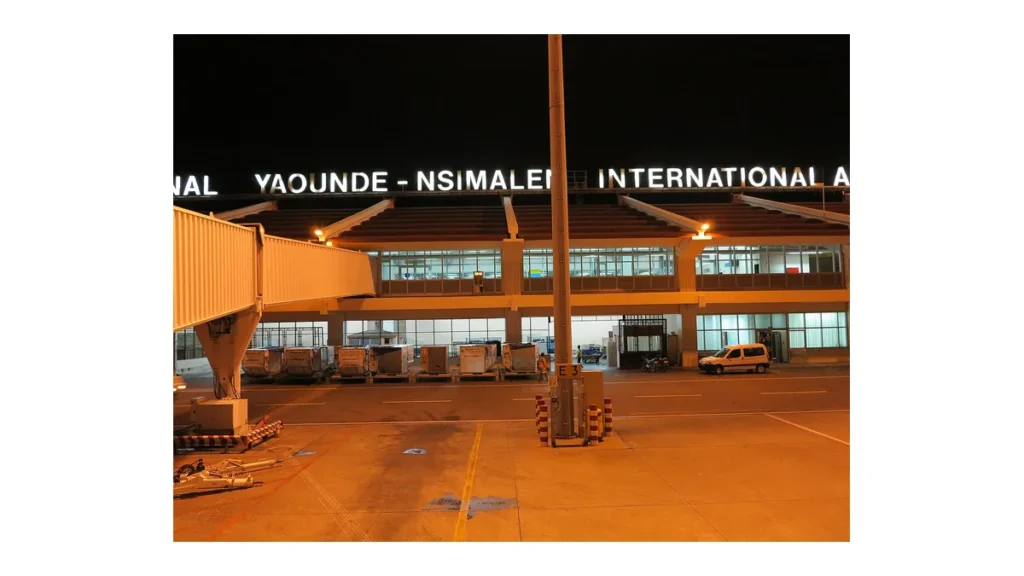
Yaoundé Nsimalen International Airport
Yaoundé Nsimalen International Airport
About
Yaoundé Nsimalen International Airport (IATA: NSI / ICAO: FKYS) serves as the principal international gateway to Cameroon’s political capital, Yaoundé, and occupies a strategically important position within Central African aviation. Situated approximately 25 kilometres south of the city centre in the Nsimalen locality, the airport connects Cameroon’s seat of government to a network of African and intercontinental destinations, functioning as a complement to the country’s busier commercial hub at Douala International Airport. For travellers, journalists, and analysts tracking aviation development across the continent, NSI represents a telling case study in how a mid-tier African capital airport navigates the pressures of growing regional demand, infrastructure investment cycles, and the evolving competitive landscape of African air transport.
The airport was inaugurated in 1989, replacing the older Yaoundé Ville Airport as the city’s primary facility for international operations. It was developed under the oversight of the Cameroonian state and has since been managed within the framework of Aéroports du Cameroun (ADC), the national airports authority responsible for the country’s principal civil aviation infrastructure. ADC operates under the broader regulatory supervision of the Autorité Aéronautique du Cameroun (AAC), which aligns its standards with ICAO frameworks applicable to the Central African region.
Since its opening, Nsimalen has undergone periodic infrastructure improvements aimed at expanding its handling capacity and modernising passenger-facing facilities. While it has not undergone the scale of transformation seen at some West African peers, the airport has benefited from targeted upgrades to its terminal building, apron areas, and ground-handling systems. Industry observers have noted that further expansion discussions have been linked to Cameroon’s broader infrastructure development agenda, though specific project timelines and budgets should be verified against official government or ADC disclosures rather than assumed from secondary reporting.
Country
Cameroon is a Central African nation bordered by Nigeria to the west, Chad to the northeast, the Central African Republic to the east, and the Republic of Congo, Gabon, and Equatorial Guinea to the south. Often described as “Africa in miniature” for its geographic and cultural diversity, the country has a population estimated in the tens of millions and operates as a bilingual state with both French and English as official languages. Yaoundé serves as the political capital, while Douala functions as the economic and commercial centre. Cameroon’s relative stability within a turbulent sub-regional neighbourhood, combined with its role in CEMAC (the Economic and Monetary Community of Central Africa), gives it an outsized diplomatic and logistical importance in the region. → Read the Cameroon expert briefing
Airlines Based Here
Camair-Co, the Cameroonian national carrier, has historically used Yaoundé Nsimalen as a primary base of operations alongside Douala, reflecting the airport’s role as the capital’s flag-carrier hub. The airline has faced well-documented financial and operational difficulties over the years, and its schedule and fleet status should be confirmed against current airline disclosures before travel planning. Beyond the national carrier, Nsimalen attracts a range of visiting international carriers that treat the airport as a destination point rather than a hub. Airlines including Air France, Ethiopian Airlines, Kenya Airways, and Brussels Airlines have at various times operated scheduled services into NSI, connecting Yaoundé to their respective hub networks in Paris, Addis Ababa, Nairobi, and Brussels. The precise current schedules of these carriers should be verified directly with the airlines or through global distribution systems, as route networks across African airports remain subject to seasonal and commercial adjustment.
Flights and Destinations
Yaoundé Nsimalen supports a network that spans continental African routes, intercontinental long-haul services, and shorter regional connections. Intercontinental routes have historically linked NSI to European capitals, most notably Paris Charles de Gaulle and Brussels, reflecting Cameroon’s Francophone ties and its diaspora communities in Europe. Within Africa, the airport connects Yaoundé to major hub cities including Addis Ababa, Nairobi, Lagos, Libreville, Malabo, Bangui, and N’Djamena, among others. These routes serve a mix of business travellers, government officials, humanitarian workers, and regional traders. Domestic connectivity between Yaoundé and Douala, while sometimes served by road given the relatively short distance, has also been supported by air services. The overall network positions NSI as a medium-range hub with meaningful intercontinental reach through partner airline connections, rather than a point of origin for ultra-long-haul direct services.
Facilities and Capacity
Yaoundé Nsimalen operates with a single passenger terminal building that handles both international and domestic traffic. The airport is served by a single paved runway, which according to publicly available aeronautical data is oriented to accommodate standard commercial jet operations, including widebody aircraft on appropriate weight and performance conditions. The apron can accommodate multiple aircraft simultaneously, though its capacity is more suited to the traffic volumes of a medium-sized African capital airport than to the high-frequency operations of a major continental hub. Cargo handling facilities are present on site, supporting both belly-hold freight carried on passenger services and, to a more limited extent, dedicated freighter operations that serve Cameroon’s export sectors. According to industry estimates, NSI falls within the category of a small-to-medium international hub by African standards, with annual passenger throughput that, while not publicly disaggregated in all reporting periods, is understood to be significantly lower than Douala. Expansion and modernisation plans have been referenced in government infrastructure frameworks, and travellers and analysts are advised to consult ADC’s official communications for the most current project status.
Visa Regulations
Travellers arriving at Yaoundé Nsimalen International Airport are subject to Cameroon’s national visa regime, which as of 2026 requires advance visas for the majority of international visitors. Citizens of the United States, the United Kingdom, and most European Union member states are generally required to obtain a visa prior to travel, typically through a Cameroonian embassy or consulate in their country of residence. Cameroon has made progress in developing an eVisa platform to streamline applications for eligible nationalities, though travellers should verify the current operational status of this system before departure. Within the African continent, visa requirements vary considerably: citizens of some CEMAC member states benefit from facilitated entry arrangements, while travellers from other African nations may still require advance visas. Visa-on-arrival availability has been reported for certain categories of travellers, but this should not be assumed without current official confirmation. Visa policies are subject to change with limited notice. → Check the live visa requirements lookup
Recent Developments
Over the past 24 months, Yaoundé Nsimalen has seen a degree of route network activity reflective of broader trends in African aviation recovery and expansion following the disruptions of the early 2020s. Industry sources have noted renewed interest from African carriers in expanding intra-continental connectivity to Yaoundé, consistent with the wider push under the Single African Air Transport Market (SAATM) framework to liberalise access across the continent. Terminal maintenance and apron improvement works have been referenced in ADC operational communications, though the scope and completion status of specific projects should be confirmed with the authority directly. The regulatory environment governing Cameroonian aviation has also continued to evolve, with the AAC engaging with ICAO’s regional office for Africa on safety oversight and compliance matters. Travellers and operators are advised to monitor official channels for any changes to slot availability, ground-handling arrangements, or security protocols at NSI.
News and Reports
Ongoing operational and commercial news relating to Yaoundé Nsimalen International Airport can be tracked through several authoritative sources. The Aéroports du Cameroun (ADC) authority publishes operational updates and press communications through its official channels, and the Autorité Aéronautique du Cameroun (AAC) issues regulatory notices relevant to carriers and operators. At the regional level, ICAO’s African regional office — based in Dakar — produces safety and regulatory reports covering Central African aviation, while IATA’s Africa and Middle East regional division publishes market intelligence and traffic analysis relevant to the broader sub-regional context. Specialist aviation trade publications including ch-aviation, The Africa Report, and Airline Route provide route-level tracking and airline news that frequently covers Cameroonian aviation developments. Researchers and journalists are encouraged to cross-reference multiple sources given the variability in data disclosure across the Central African aviation sector.