Roberts International Airport
Roberts International Airport
Roberts International Airport (ROB) — Monrovia, Liberia
About
Roberts International Airport (IATA: ROB | ICAO: GLRB) is Liberia’s principal international gateway and one of West Africa’s strategically positioned air transport nodes. Situated approximately 56 kilometres south-east of central Monrovia, the airport serves as the primary point of entry for international travellers, humanitarian workers, diplomats, and cargo operators moving through the Mano River Union sub-region. In a part of the continent where surface infrastructure remains constrained, Roberts International plays an outsized logistical role — connecting Liberia to global supply chains, diaspora routes, and the broader African aviation network.
The airport’s origins are military. It was constructed by the United States Army during the Second World War, opening in 1942 as a strategic refuelling and transit base on the transatlantic air bridge between the Americas and Africa. Following the war, the facility was transferred to the Liberian government and progressively converted to civilian use. It was formally designated as Liberia’s main international airport and named after Joseph Jenkins Roberts, the country’s first president.
Ownership and operational oversight rest with the Government of Liberia through the Liberia Airports Authority (LAA), the statutory body responsible for managing the country’s civil aviation infrastructure. The airport underwent significant rehabilitation in the post-civil-war period, with international partners — including the United States Agency for International Development (USAID) and the African Development Bank — contributing to reconstruction efforts that restored basic operational capacity following the devastation of Liberia’s back-to-back civil conflicts of the 1990s and early 2000s. Further incremental improvements have been made in the years since, though the airport continues to operate below the infrastructure standards of larger West African hubs such as Murtala Muhammed International in Lagos or Kotoka International in Accra.
Country
Liberia is a coastal West African republic bordered by Sierra Leone to the north-west, Guinea to the north, and Côte d’Ivoire to the east. Monrovia is the capital and by far the largest city. The country’s population is estimated in the low millions, making it one of the smaller nations in the ECOWAS bloc by headcount, though it occupies a historically significant position as Africa’s oldest republic and a founding member of the Organisation of African Unity. Liberia’s economy is heavily reliant on natural resources — iron ore, rubber, and timber — alongside a substantial diaspora remittance base, factors that directly shape the demand profile at Roberts International. → Read the Liberia expert briefing
Airlines Based Here
Roberts International does not currently host a full-service Liberian flag carrier operating wide-body intercontinental routes. Liberia has historically struggled to sustain a national airline, and as of 2026 no domestically registered carrier holds a dominant hub position at ROB in the manner that Ethiopian Airlines anchors Addis Ababa or RwandAir anchors Kigali. The airport is instead served primarily by visiting international carriers that treat Monrovia as a point-to-point or thin-route destination within broader West African networks. Brussels Airlines, operating as part of the Lufthansa Group, has maintained a notable presence on the Monrovia route as part of its West and Central Africa network. Air France has historically served Monrovia with connections through Paris-Charles de Gaulle. Regional African carriers including Air Côte d’Ivoire and ASKY Airlines — the Lomé-based pan-African carrier backed by Ethiopian Airlines — have provided intra-African connectivity. Travellers and analysts should verify current schedules directly with carriers, as route viability in this market is sensitive to load factors and fuel economics.
Flights and Destinations
The network supported by Roberts International reflects Liberia’s trade, diaspora, and humanitarian connectivity needs. Intercontinental services link Monrovia to European hubs, most notably Brussels and Paris, providing onward connections to North America, Asia, and the Middle East. Within Africa, the airport is connected to regional hubs including Abidjan (Côte d’Ivoire), Lomé (Togo), Accra (Ghana), Lagos (Nigeria), Freetown (Sierra Leone), and Conakry (Guinea) — the latter three being particularly important for Mano River Union business and family travel. Dakar (Senegal) and Casablanca (Morocco) have featured as additional African connection points depending on carrier scheduling cycles. Transatlantic demand — driven substantially by the Liberian-American diaspora community concentrated in cities such as Minneapolis, Philadelphia, and Washington D.C. — has historically been served via European hubs rather than direct services, though industry observers have periodically noted the latent demand case for a direct United States routing.
Facilities and Capacity
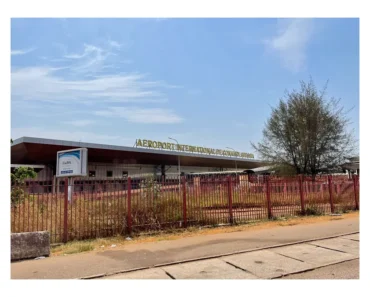
Roberts International operates a single main passenger terminal building. The airport has one primary runway — a long paved strip capable of accommodating wide-body jet aircraft, a legacy of its wartime construction — which gives it a physical infrastructure advantage over some smaller regional airports in the sub-region. Cargo handling facilities are present and serve both commercial freight and the significant humanitarian logistics flows that have characterised Liberia’s post-conflict development period; international organisations including UN agencies have historically used the airport as a logistics base. By African aviation classification standards, Roberts International is a small-to-medium international hub — it handles a fraction of the traffic volumes processed at West Africa’s major gateways, and according to publicly disclosed traffic data and industry estimates, annual passenger movements remain well below the thresholds that would qualify it as a large hub. Planned or ongoing expansion works have been discussed at various points by the Liberia Airports Authority and government ministries; travellers and researchers should consult LAA official communications for the current status of any capital development programmes, as announced budgets and timelines in this market have historically been subject to revision.
Visa Regulations
Liberia operates a visa regime that requires most foreign nationals to obtain authorisation before or upon arrival. Citizens of the United States, United Kingdom, and European Union member states are generally required to hold a valid visa to enter Liberia; visa-on-arrival facilities have been available at Roberts International for eligible nationalities, and an electronic visa (eVisa) application pathway has been developed to streamline pre-travel processing. Within the ECOWAS community, citizens of member states benefit from the bloc’s free movement protocols, which significantly ease entry requirements for regional African travellers. Visa policy is subject to change at short notice and specific conditions — including fees, validity periods, and permitted activities — vary by nationality and purpose of travel. → Use our live visa requirements lookup for up-to-date entry rules by passport.
Recent Developments
In the 24-month window leading into 2026, Roberts International has seen a combination of cautious network recovery and ongoing infrastructure dialogue. The post-pandemic normalisation of international air travel has gradually restored route frequencies that were curtailed between 2020 and 2022, with carriers reassessing Monrovia’s commercial viability as regional demand indicators improved. Industry observers have noted renewed interest from African carriers in West African thin-route markets as intra-continental connectivity becomes a policy priority under the Single African Air Transport Market (SAATM) framework championed by the African Union. On the ground, discussions around terminal modernisation and airside safety compliance have continued between the Liberia Airports Authority and international aviation bodies. The Liberia Civil Aviation Authority (LCAA) has engaged with ICAO’s regional office on safety oversight programme benchmarks, a process relevant to the airport’s international operational standing. Specific new route announcements or terminal project milestones should be verified against official LAA and LCAA communications, as commercially sensitive negotiations in this market are not always publicly disclosed in advance.
News and Reports
Researchers, journalists, and aviation analysts tracking Roberts International and Liberian civil aviation should consult several authoritative source channels. The Liberia Airports Authority publishes operational notices and press releases through its official government communications channels. The Liberia Civil Aviation Authority (LCAA) is the regulatory body responsible for safety oversight and international compliance reporting, and its public documentation is relevant to analysts assessing Liberia’s ICAO Universal Safety Oversight Audit Programme (USOAP) standing. At the continental level, IATA’s Africa and Middle East regional office produces periodic market intelligence reports covering West African aviation trends, while ICAO’s Dakar-based Regional Office for Western and Central Africa (WACAF) is the primary multilateral body with oversight relevance to Roberts International’s operational environment. Trade publications including Aviation Week Network, ch-aviation, and The Africa Report provide ongoing commercial and operational coverage of the West African aviation market within which ROB sits.
Related Research
- Liberia Expert Briefing — political economy, investment climate, and sector analysis
- Liberia Statistics — population, GDP, trade, and infrastructure data
- African Airports — full directory and comparative profiles
- African Airlines — carrier profiles, route maps, and fleet data
- Visa Requirements — live lookup tool by nationality and destination
- Country Comparison — benchmark Liberia against regional peers