Maya-Maya Airport
Maya-Maya Airport
Maya-Maya Airport (BZV) — Brazzaville, Republic of the Congo
Maya-Maya Airport (IATA: BZV | ICAO: FCBB) is the principal international gateway of Brazzaville, the capital of the Republic of the Congo, and one of the strategically positioned aviation nodes in Central Africa. Sitting on the northern edge of a capital city that faces Kinshasa — the Democratic Republic of the Congo’s capital — across the Congo River, BZV occupies a geopolitically and commercially significant position that few airports on the continent can match. For travellers, journalists, researchers, and aviation analysts seeking to understand Central Africa’s connectivity landscape, Maya-Maya is an essential reference point.
About
Maya-Maya Airport functions as the Republic of the Congo’s primary international airport, handling the bulk of the country’s scheduled passenger traffic, cargo movements, and government aviation activity. Its location within Brazzaville — a capital of considerable diplomatic weight, home to African Union regional offices and numerous international organisations — means the airport regularly processes a mix of business travellers, humanitarian workers, diplomats, and leisure passengers. In regional aviation terms, BZV is classified as a medium-scale hub by most industry frameworks, serving a network that spans continental Africa and select intercontinental routes.
The airport’s origins date to the colonial era, when the site was developed as part of the French Equatorial Africa aviation infrastructure. Following Congolese independence in 1960, the facility was progressively transferred to national administration and expanded to meet the demands of a sovereign state. The airport takes its name — Maya-Maya — from the neighbourhood in which it sits, a designation that has remained consistent through successive political administrations and infrastructure upgrades. Ownership and operational oversight rest with the Congolese state, with the national civil aviation authority — the Agence Nationale de l’Aviation Civile (ANAC) of the Republic of the Congo — holding regulatory authority over the facility.
Over the decades, Maya-Maya has undergone several rounds of infrastructure investment, including terminal refurbishment works and airside improvements intended to bring the facility closer to ICAO standards for international operations. The airport has historically benefited from French technical and financial cooperation given the Republic of the Congo’s Francophone ties, and various bilateral agreements have shaped its operational development. As of 2026, the airport continues to operate under state management, with periodic discussions — reported in regional aviation and infrastructure media — about the potential for public-private partnership arrangements to accelerate modernisation.
Country
The Republic of the Congo — not to be confused with the much larger Democratic Republic of the Congo across the river — is a Central African nation with Brazzaville as its capital. The country has a population estimated in the low single-digit millions, making it one of the less densely populated states in sub-Saharan Africa relative to its land area, though Brazzaville itself is a substantial urban centre. The Republic of the Congo is a member of the Economic Community of Central African States (ECCAS) and the Central African Economic and Monetary Community (CEMAC), positioning it within a regional economic bloc that shapes both trade flows and aviation demand. Its economy has historically been anchored in oil production, with services and government activity concentrated in Brazzaville and the port city of Pointe-Noire.
→ Read the Republic of the Congo expert briefing
Airlines Based Here
The Republic of the Congo’s national carrier, Asky Airlines’ regional presence and — most directly — Trans Air Congo, have historically used Brazzaville as an operational base, though the precise hub status of individual carriers has shifted with the financial fortunes common to African aviation. Trans Air Congo, a Congolese private carrier, has operated domestic and regional services out of BZV and treats the airport as its principal base. The Congolese national aviation landscape has seen carriers come and go; Lina Congo, the former state airline, ceased operations, and the market has since been served by a combination of surviving domestic operators and visiting international carriers. Airlines from the broader CEMAC zone — including those based in Cameroon, Gabon, and the Central African Republic — operate scheduled services into BZV, treating it as a destination rather than a hub. Ethiopian Airlines, one of Africa’s most expansive network carriers, has served Brazzaville as part of its continental network, as has Air France, which maintains Francophone Africa connectivity as a core commercial priority. Kenya Airways and other pan-African carriers have at various points included BZV in their route networks, subject to commercial viability reviews.
Flights and Destinations
Maya-Maya Airport supports a network that is primarily continental in character, with a small number of intercontinental services providing direct links to Europe. Within Africa, the airport offers connections to key regional hubs including Douala and Yaoundé in Cameroon, Libreville in Gabon, Kinshasa (served via the short cross-river route, one of the world’s shortest international connections), Luanda in Angola, and Nairobi in Kenya. Domestic connectivity links Brazzaville to Pointe-Noire, the Republic of the Congo’s commercial capital and oil industry hub, a route that represents one of the busiest domestic corridors in the country. On the intercontinental side, Paris Charles de Gaulle has historically been the most significant long-haul destination, reflecting the deep economic and cultural ties between France and the Republic of the Congo. Addis Ababa serves as a connecting hub for onward travel across Africa and beyond, via Ethiopian Airlines’ Bole hub. Industry observers note that the airport’s intercontinental network remains limited relative to larger African hubs, and that most long-haul travellers connect through Nairobi, Addis Ababa, or Paris rather than flying direct to final destinations.
Facilities and Capacity
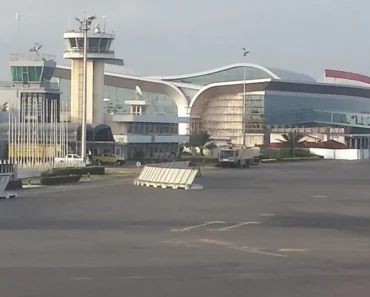
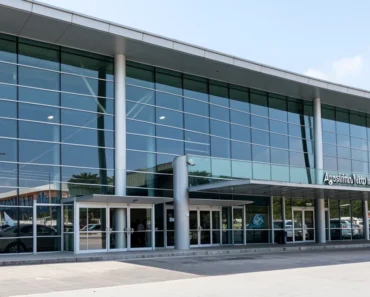
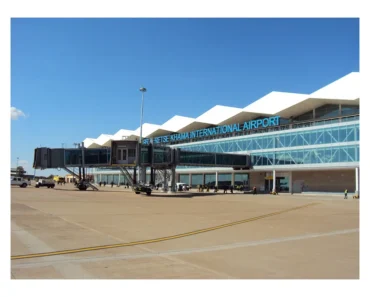
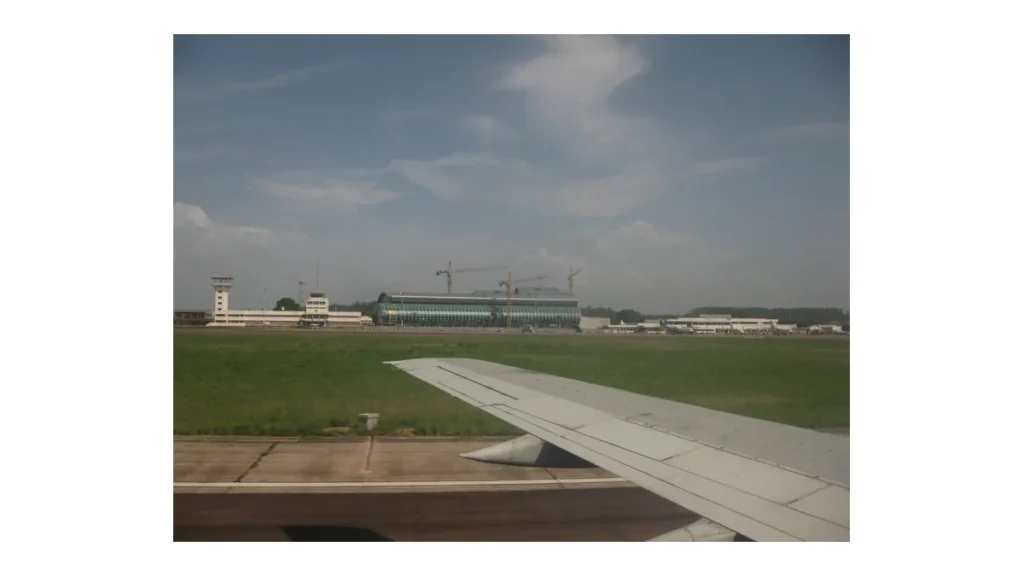
Maya-Maya Airport operates with a single primary passenger terminal building, which handles both international and domestic departures and arrivals. The terminal layout is relatively compact by the standards of major African hubs, reflecting the airport’s medium-scale traffic volumes. According to publicly disclosed infrastructure data, the airport is served by a single main runway, which is capable of accommodating wide-body jet aircraft of the type operated on regional and intercontinental routes — including aircraft in the Boeing 737 and Airbus A320 families, as well as larger wide-bodies on the Paris service. Cargo handling facilities are present on the airfield, serving the Republic of the Congo’s import-dependent economy and its oil sector logistics needs, though the cargo infrastructure is not considered a major regional freight hub by industry estimates. The airport also maintains a VIP terminal in recognition of its role as a diplomatic gateway. Passenger traffic volumes place BZV in the small-to-medium hub category by African standards; according to publicly disclosed traffic data available from ANAC and IATA regional reporting, the airport processes a fraction of the volumes seen at major African hubs such as Addis Ababa, Nairobi, or Johannesburg. Expansion discussions have been reported in Congolese government communications and regional infrastructure media, with modernisation of the terminal and airside facilities cited as a development priority, though specific budget figures and timelines should be verified against official government announcements rather than assumed from secondary sources.
Visa Regulations
Travellers arriving at Maya-Maya Airport should be aware that the Republic of the Congo operates a relatively restrictive visa regime by regional standards. As of 2026, citizens of most Western countries — including the United States, United Kingdom, and European Union member states — are generally required to obtain a visa prior to arrival; the Republic of the Congo has not historically been among the African nations that offer straightforward visa-on-arrival access to these passport holders, though policies are subject to change and travellers should verify current requirements before booking. For regional African passport holders, access conditions vary significantly by bilateral agreement; citizens of CEMAC member states generally benefit from easier movement provisions, while holders of passports from other African Union member states face varying requirements. An eVisa system has been discussed and partially implemented in some form, but travellers should not assume full digital visa availability without checking current official sources. Visa rules change frequently and without advance notice — always consult the live lookup tool for the most current requirements: → Check current visa requirements for the Republic of the Congo.
Recent Developments
In the 24 months leading into 2026, Maya-Maya Airport has seen a number of operationally significant developments consistent with broader trends in Central African aviation. Regional carriers have adjusted their Brazzaville schedules in response to fuel cost pressures and currency availability challenges that have affected airline operations across the CEMAC zone. Ethiopian Airlines has maintained its Brazzaville service as part of its strategic commitment to comprehensive African connectivity, while Air France’s Brazzaville operations have been subject to the same network rationalisation reviews the carrier has applied across its Francophone Africa portfolio. Domestically, the Brazzaville–Pointe-Noire corridor has remained commercially active, with operators adjusting frequency in response to demand. Infrastructure works at the terminal — including improvements to passenger processing areas and airside safety compliance measures — have been referenced in Congolese civil aviation authority communications, though the scope and completion status of specific projects should be confirmed with ANAC directly. The broader context of CEMAC aviation liberalisation efforts, driven by the Yamoussoukro Decision’s implementation agenda, continues to shape the regulatory environment within which BZV operates.
News and Reports
Researchers and analysts seeking current operational intelligence on Maya-Maya Airport should consult several authoritative source categories. The Agence Nationale de l’Aviation Civile (ANAC) of the Republic of the Congo is the primary regulatory authority and periodically publishes operational notices, safety directives, and traffic summaries through official government channels. The Congolese government’s Ministry of Transport communications provide policy-level context for infrastructure investment and bilateral air service agreement developments. At the regional level, IATA’s Africa and Middle East regional office publishes periodic reports on Central African aviation market conditions that include BZV-relevant data. The ICAO Western and Central Africa Regional Office (WACAF), based in Dakar, is the relevant ICAO body for safety oversight and standards compliance reporting affecting this airport. International aviation trade publications — including Aviation Week Network, ch-aviation, and The Africa Report’s infrastructure coverage — provide ongoing commercial and operational news. For diplomatic and political context affecting airport operations, the Republic of the Congo desk reporting from Agence France-Presse and RFI (Radio France Internationale) offers French-language sourcing of high reliability.