Niger — Expert Briefing
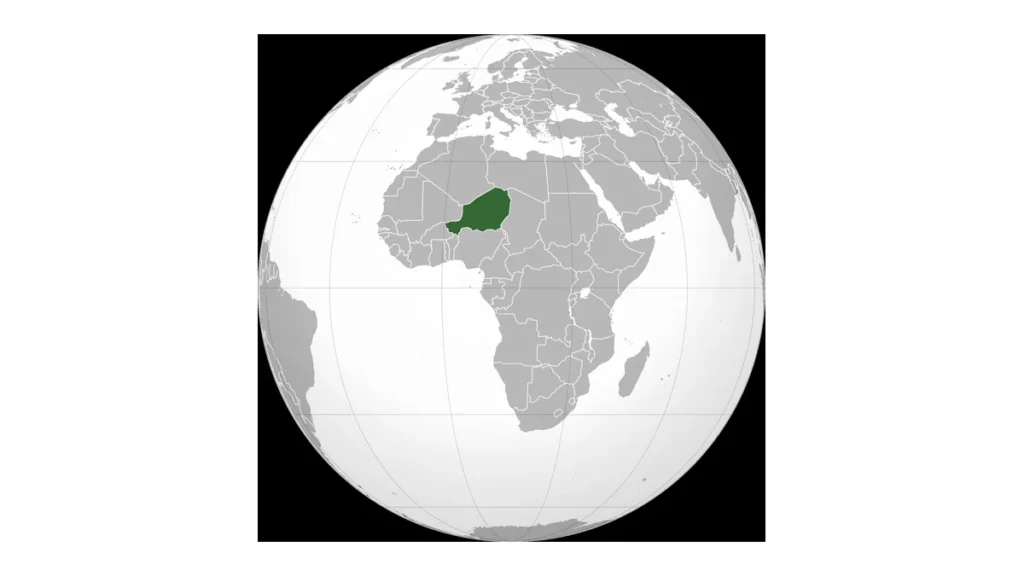
Niger at a glance: A landlocked Sahelian state navigating military rule, a deepening security crisis, and the geopolitical realignment of West Africa — Niger has become one of the continent’s most consequential and closely watched countries in 2026.
Overview
Capital: Niamey. Population: approximately 27.5 million (World Bank, 2024 estimate), making Niger one of the fastest-growing populations on earth, with a total fertility rate that consistently ranks among the highest globally. Official language: French. Currency: West African CFA franc (XOF), shared with seven other members of the West African Economic and Monetary Union (WAEMU), though Niger’s relationship with that architecture is now under significant political strain. GDP per capita: Niger sits in the low-income band, estimated at roughly USD 590–620 (current prices, 2024), placing it among the poorest economies in the world by this measure. Niger matters in 2026 for two intersecting reasons: it sits at the epicentre of the Sahel’s security collapse, hosting the headquarters of the newly formed Alliance of Sahel States alongside Mali and Burkina Faso; and it holds substantial uranium and nascent oil reserves whose strategic value is being actively contested by competing external powers.
Government and Politics
Niger is currently governed as a military transitional state, following the coup of 26 July 2023 in which the Presidential Guard detained elected President Mohamed Bazoum. The junta formalised itself as the Conseil National pour la Sauvegarde de la Patrie (CNSP). General Abdourahamane Tchiani, formerly commander of the Presidential Guard, serves as head of state with the self-designated title of President of the CNSP — a figure with limited prior public profile who has since become the dominant political actor in Niamey. There is no functioning legislature: the National Assembly, which under the previous Seventh Republic constitution operated as a unicameral body of 171 seats, was dissolved following the coup. The constitution of the Seventh Republic — adopted in 2021 under Bazoum’s predecessor Mahamadou Issoufou and considered one of Niger’s more carefully drafted democratic frameworks — was suspended. The CNSP announced a transitional charter in August 2023 and has since indicated a transition timeline of up to three years, though no credible electoral roadmap with firm dates has been published. Niger was suspended from ECOWAS following the coup; the bloc’s threatened military intervention did not materialise, and Niger subsequently withdrew from ECOWAS entirely in early 2024 alongside Mali and Burkina Faso. No elections are currently scheduled. Former President Bazoum remains in detention, a situation that has drawn sustained condemnation from the United Nations Human Rights Council and international human rights organisations.
Economy
Niger’s GDP is estimated at approximately USD 16–17 billion (current prices, 2024), a figure that masks extreme structural fragility. The economy rests on three primary pillars: subsistence and smallholder agriculture (employing the majority of the working population and heavily exposed to rainfall variability), uranium extraction, and a nascent but strategically significant oil sector. Niger is historically one of the world’s top five uranium producers; the Arlit and Akokan mines in the Agadez region have supplied French nuclear operator Orano (formerly Areva) for decades. The most consequential economic story of the past 24 months is the expulsion of Orano from its operational concessions following the coup, and the parallel acceleration of the Niger–Benin oil pipeline — a 2,000-kilometre export route connecting the Agadem oil block to the port of Sèmè-Kpodji in Benin, which began pumping oil in 2024. This pipeline, developed in partnership with the China National Petroleum Corporation (CNPC), represents Niger’s first significant oil export capacity and a potential structural shift in government revenues, though output volumes remain modest relative to ambitions. The CFA franc remains the legal currency, but the junta’s fraught relationship with WAEMU institutions — including the Banque Centrale des États de l’Afrique de l’Ouest (BCEAO) — has created liquidity tensions. Bilateral aid from Western donors, including the United States (which suspended security assistance) and the European Union, was significantly curtailed post-coup, tightening the fiscal position. Debt remains at moderate levels relative to GDP but is increasingly concentrated in bilateral arrangements with non-Paris Club creditors.
Demographics and Society
Niger’s population of approximately 27.5 million is overwhelmingly young — the median age is estimated at around 15 years — and rural, with urbanisation running at roughly 17–18 percent, one of the lowest rates in sub-Saharan Africa, though Niamey is growing rapidly and informally. The principal ethnic and linguistic groups are the Hausa (the largest, concentrated in the south and closely linked to northern Nigeria), the Zarma-Songhai (dominant in the Niamey region and the western corridor), the Tuareg (across the Agadez region and the north), the Fulani (Peul), the Kanuri (in the Diffa region near Lake Chad), and smaller communities including the Toubou and Arab populations. Islam is the religion of approximately 99 percent of the population, predominantly Sunni and Maliki in tradition, with Sufi brotherhoods — particularly the Tijaniyya — playing an important social and community role. French is the sole official language but is spoken fluently by a minority; Hausa functions as the dominant lingua franca for trade and daily communication across much of the country. The defining social trend of the current moment is demographic pressure intersecting with displacement: Niger hosts over 700,000 internally displaced persons (IDPs) and more than 300,000 refugees from Mali, Nigeria, and Burkina Faso (UNHCR figures, 2024), placing acute strain on already limited social services, land access, and communal relations in border regions.
Key Issues Right Now
Jihadist insurgency and regional security realignment. The security situation in Niger deteriorated sharply in the years before the coup and has not stabilised since. Jihadist groups affiliated with both al-Qaeda (through Jama’at Nusrat al-Islam wal-Muslimin, JNIM) and the Islamic State Sahel Province (ISSP) operate across the Tillabéri region in the west, the Tahoua region, and the Diffa region in the southeast. The withdrawal of French Barkhane forces and the US military’s drawdown from its drone base at Agadez (Air Base 201) — one of the most significant US military installations in Africa — has left a notable intelligence and strike-capacity gap. The junta has moved to fill this with Russian Wagner Group (now rebranded under Russian state structures) personnel, following the pattern established in Mali and Burkina Faso. Whether this substitution improves security outcomes for civilian populations remains deeply contested among analysts.
The Alliance of Sahel States and the fracturing of West African multilateralism. Niger’s formal withdrawal from ECOWAS in early 2024, alongside Mali and Burkina Faso, and the creation of the Alliance of Sahel States (AES) represents the most significant restructuring of West African regional architecture in decades. The AES has announced ambitions for a common passport, a potential common currency, and joint security arrangements — though institutional capacity to deliver these remains limited. For analysts and investors, the key question is whether the AES consolidates into a durable alternative bloc or fragments under the weight of its members’ individual crises. Niger’s position is pivotal: it is the most populous of the three and controls the uranium and oil assets that give the grouping its external leverage.
Climate stress and food insecurity. Niger is among the countries most exposed to climate-driven agricultural disruption. The 2024 rainy season brought both drought in parts of the south and catastrophic flooding in Niamey and the Dosso region — a pattern of erratic precipitation increasingly consistent with broader Sahelian climate trends. The UN’s World Food Programme assessed that over 4 million Nigeriens faced acute food insecurity in 2024, a figure likely to remain elevated in 2025–2026. The reduction in Western humanitarian funding following the coup — partly a political signal, partly a logistical consequence of suspended bilateral frameworks — has compounded the humanitarian picture. This is not a background condition; it is an active, acute crisis shaping internal migration, recruitment into armed groups, and the junta’s domestic legitimacy calculus.
Travel and Connectivity
The principal international gateway is Diori Hamani International Airport in Niamey, which handles the majority of international traffic; Mano Dayak International Airport in Agadez serves as a secondary hub and historically served as the entry point for Saharan tourism and trans-Saharan transit routes. Principal cities beyond the capital include Zinder (the historic commercial capital of the south, with a population approaching 400,000), Maradi (a major trading hub on the Nigerian border), Tahoua, and Agadez (a UNESCO World Heritage site and the gateway to the Aïr Mountains and Ténéré desert). Tourism, once a modest but growing sector — centred on the Aïr and Ténéré natural reserves, the historic architecture of Agadez, and the Cure Salée nomadic festival — has been effectively suspended since the security deterioration of the mid-2010s and remains non-viable for independent travellers under current conditions. Most Western governments maintain “do not travel” or “reconsider your need to travel” advisories for the majority of Niger’s territory. Internet penetration stands at approximately 20–25 percent of the population (ITU estimates, 2023–2024), with mobile internet the dominant access mode; fixed broadband infrastructure is minimal outside Niamey. Mobile money adoption is growing but lags behind West African leaders such as Côte d’Ivoire and Senegal; Orange Money and Airtel Money are the principal platforms, with adoption accelerating in urban centres.
Further Research
Analysts, journalists, and researchers seeking to deepen their understanding of Niger should consult the following institutions and resources. The Institut National de la Statistique du Niger (INS) is the primary source for official demographic, economic, and social data, including census materials and household surveys. The World Bank Niger country page provides regularly updated macroeconomic indicators, project documentation, and poverty assessments. The Africa Center for Strategic Studies (based in Washington, D.C.) publishes substantive analysis on Sahel security dynamics, including Niger-specific briefs on jihadist movements and military governance. The International Crisis Group maintains an active Niger and Sahel research programme, with field-informed reporting on the insurgency, displacement, and the political consequences of the coup. The Banque Centrale des États de l’Afrique de l’Ouest (BCEAO) publishes monetary and financial statistics for WAEMU member states, including Niger, and is essential for understanding the currency and banking environment. Finally, the UNHCR Niger operation page provides current displacement and refugee data, which is indispensable context for understanding the humanitarian and social landscape.