Rabat–Salé Airport
Rabat–Salé Airport
About
Rabat–Salé Airport (IATA: RBA | ICAO: GMME) serves Morocco’s capital city and functions as one of the country’s secondary international gateways, complementing the high-volume Casablanca Mohammed V International Airport while offering travellers, diplomats, and government delegations direct access to the seat of Moroccan political power. In the broader context of African aviation, RBA occupies a distinctive niche: it is not a mass-market hub, but rather a strategically important facility whose passenger mix skews toward business travellers, civil servants, journalists covering North African affairs, and researchers engaged with Morocco’s governmental and academic institutions. Its role in the continent’s connectivity story is modest in volume but meaningful in character.
The airport’s origins date to the mid-twentieth century, when it was developed to serve the administrative requirements of the Moroccan capital following independence in 1956. Over subsequent decades it was progressively upgraded from a primarily domestic and regional facility into a certified international airport capable of handling widebody aircraft on select routes. The Office National des Aéroports (ONDA), Morocco’s state airport authority, operates Rabat–Salé Airport as part of a national network that spans more than two dozen aerodromes across the kingdom.
Significant infrastructure investment has been directed at the airport in successive national transport plans, reflecting Morocco’s broader ambition to position itself as a continental aviation hub. Expansion works carried out in the 2000s and 2010s extended the terminal building, modernised airside facilities, and improved ground-handling capacity. As of 2026, the airport continues to operate under ONDA stewardship, with ongoing dialogue between the authority, the Moroccan government, and international partners regarding further capacity enhancements aligned with the country’s preparations for co-hosting the 2030 FIFA World Cup.
Country
Morocco is a constitutional monarchy situated at the northwestern tip of the African continent, sharing land borders with Algeria and Mauritania and maritime boundaries with Spain across the Strait of Gibraltar. Rabat serves as the national capital, while Casablanca functions as the commercial and economic engine. With a population estimated in the tens of millions and a GDP that positions it among Africa’s larger economies, Morocco plays an influential role in both the Arab world and sub-Saharan African diplomatic and trade networks. Its geographic position — bridging Europe, the Middle East, and West Africa — gives its aviation infrastructure outsized strategic relevance relative to its domestic market size.
→ Read the Morocco expert briefing
Airlines based here
Royal Air Maroc (RAM), Morocco’s flag carrier and the dominant force in the country’s commercial aviation sector, treats Rabat–Salé as a secondary focus city rather than a primary hub — its main operational base remains Casablanca Mohammed V. Nevertheless, RAM maintains a meaningful schedule at RBA, connecting the capital to domestic points and select international destinations. RAM’s subsidiary RAM Express has historically operated turboprop and regional jet services from the airport to domestic Moroccan cities. Ryanair, the Irish ultra-low-cost carrier with a substantial presence across North Africa, operates seasonal and year-round services from RBA to multiple European points, making it one of the most visible visiting carriers at the airport. easyJet and Transavia France have also featured in the airport’s schedule, serving leisure and visiting-friends-and-relatives (VFR) demand from France, Spain, and the United Kingdom. Air Arabia Maroc, the Casablanca-based low-cost affiliate of the UAE’s Air Arabia group, has operated routes through RBA as part of its Moroccan network expansion.
Flights and destinations
Rabat–Salé Airport supports a network that is primarily oriented toward Europe, reflecting the strong migratory and tourism ties between Morocco and the continent to its north. Within Europe, representative destinations served from RBA include Paris (Charles de Gaulle and Orly), Madrid, Brussels, Amsterdam, and London (Stansted and Gatwick), with frequencies varying by season and carrier. Domestically, connections to Casablanca, Marrakech, and Agadir provide onward feed for travellers transiting through Morocco’s larger hubs. On the African continent, the airport has hosted services to Dakar and other West African capitals, though intercontinental African connectivity from RBA remains thinner than from Casablanca. Long-haul intercontinental services are limited; travellers requiring connections to North America, the Gulf, or sub-Saharan Africa typically connect via Casablanca Mohammed V or a European hub. The airport’s network is best characterised as a medium-range, Europe-focused operation with selective domestic and regional African reach.
Facilities and capacity
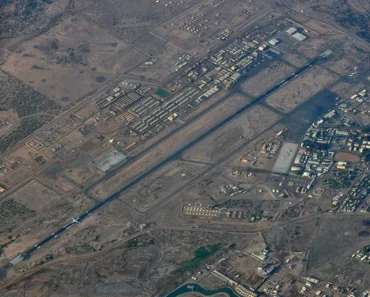
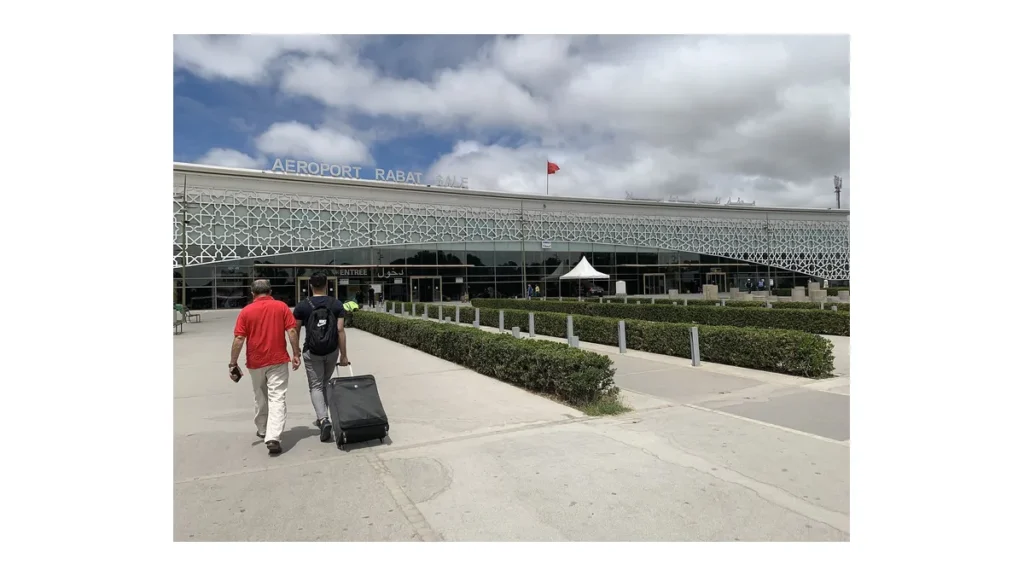
Rabat–Salé Airport operates a single passenger terminal building that has been extended and refurbished in phases over the past two decades. The terminal accommodates both departures and arrivals under one roof, with airside retail, food and beverage concessions, and standard international transit facilities. The airport is served by a single primary runway — designated 09/27 — with a published length sufficient to accommodate narrowbody jet operations and, under appropriate conditions, certain widebody aircraft types. A parallel taxiway system and apron capable of handling multiple aircraft simultaneously supports the airport’s operational tempo. Cargo handling facilities are present but modest in scale, reflecting the airport’s positioning as a passenger-primary facility; significant freight volumes in Morocco are channelled through Casablanca. According to publicly disclosed traffic data, RBA falls into the small-to-medium hub category by African standards, handling passenger volumes that are substantial for a capital-city secondary airport but well below the throughput of Casablanca Mohammed V. Planned capacity enhancements, linked in part to Morocco’s 2030 World Cup infrastructure commitments, are understood to be under assessment by ONDA, though specific budgetary figures have not been independently verified at the time of writing.
Visa regulations
Travellers arriving at Rabat–Salé Airport are subject to Morocco’s national visa regime, which is administered by the Ministry of Foreign Affairs and managed at the border by the Direction Générale de la Sûreté Nationale (DGSN). Morocco operates a relatively open visa policy for many major source markets: citizens of the United States, the United Kingdom, the European Union member states, Canada, and Japan, among others, have historically been permitted to enter Morocco visa-free for stays of up to 90 days for tourism and business purposes. Citizens of many Arab League member states also benefit from facilitated entry arrangements. For travellers holding passports from other African nations, the position varies significantly by nationality; some West and Central African passport holders require a visa obtained in advance from a Moroccan diplomatic mission, while others benefit from bilateral visa-waiver agreements. Morocco does not operate a widely available visa-on-arrival scheme for most nationalities, and an eVisa system, while discussed in policy circles, had not been universally implemented as of early 2026. Visa rules are subject to change without notice and travellers are strongly advised to verify current requirements before travel. → Use the live visa requirements lookup tool.
Recent developments
In the 24 months leading to mid-2026, Rabat–Salé Airport has seen a number of operationally significant developments. The post-pandemic recovery of international air travel continued to drive route reinstatement and frequency increases on key European corridors, with carriers including Ryanair and Transavia reporting strengthened load factors on their RBA services. Royal Air Maroc’s broader network restructuring, which has included fleet renewal with Boeing 787 Dreamliner aircraft on long-haul routes, has had downstream effects on how the carrier positions its Rabat services relative to its Casablanca hub. ONDA has publicly signalled investment in digital passenger processing infrastructure across its network, with RBA among the airports earmarked for upgraded self-service check-in and e-gate technology. Morocco’s accelerating preparations for the 2030 FIFA World Cup — which it will co-host alongside Spain and Portugal — have placed renewed scrutiny on the capacity and readiness of secondary airports including RBA, with industry estimates suggesting that significant visitor volumes will transit through the capital during the tournament period. Discussions between ONDA and international airport consultancies regarding terminal optimisation have been reported in Moroccan trade media, though formal project announcements remain pending.
News and reports
Researchers, journalists, and aviation analysts tracking developments at Rabat–Salé Airport should consult several authoritative source categories. The Office National des Aéroports (ONDA) publishes operational updates, traffic statistics, and infrastructure announcements through its official communications channels; ONDA’s published annual reports are the primary source for verified passenger and cargo throughput data. The Direction Générale de l’Aviation Civile (DGAC Morocco), operating under the Ministry of Transport, issues regulatory notices, safety oversight findings, and air transport policy documents relevant to all Moroccan airports including RBA. At the international level, IATA’s Africa regional reports and the ICAO Middle East and Africa regional office publications provide comparative benchmarking data and policy analysis that contextualise RBA’s performance within the continental aviation landscape. Moroccan business press outlets, including L’Économiste and Médias24, regularly cover aviation sector news and are useful for tracking route announcements and infrastructure procurement stories. Aviation trade publications such as ch-aviation, Cirium, and OAG provide schedule and capacity data that analysts can use to track network changes at RBA in near real time.