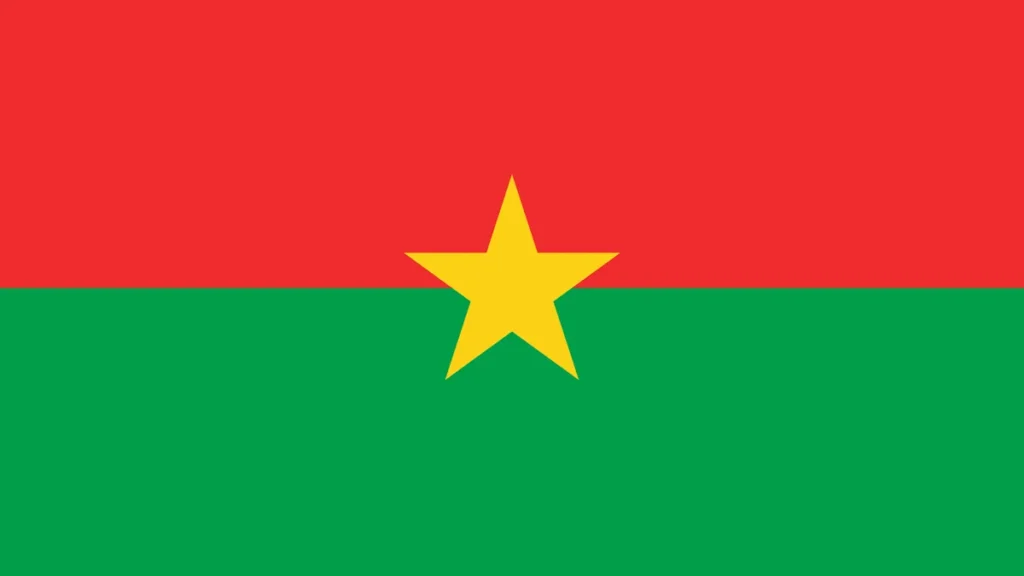
Burkina Faso — Expert Briefing
Burkina Faso at a glance: A landlocked Sahelian state navigating one of the world’s most acute jihadist insurgencies while under military rule, making it a pivotal test case for the future of governance, security, and sovereignty in West Africa.
Overview
Burkina Faso is a landlocked country in the heart of West Africa, bordered by Mali to the north and west, Niger to the east, and Benin, Togo, Ghana, and Côte d’Ivoire to the south. Its capital is Ouagadougou, the political and commercial centre, with Bobo-Dioulasso serving as the country’s second city and economic hub. According to the most recent United Nations Population Division estimates, the population stands at approximately 23.5 million (2025 projection), with the World Bank placing it among the fastest-growing populations on the continent. French is the official language, though Moore, Dioula, and Fulfuldé are widely spoken across different regions. The national currency is the West African CFA franc (XOF), shared with seven other members of the West African Economic and Monetary Union (WAEMU). GDP per capita sits in the low-income band, estimated at roughly USD 870–920 (World Bank, 2023 data), reflecting persistent structural underdevelopment compounded by years of conflict. Burkina Faso matters acutely in 2026 because it sits at the epicentre of the Sahel security crisis, with more than 60 per cent of its territory partially or wholly outside effective government control, and because its political trajectory — military rule, expulsion of French forces, and a new alignment with Russia — is reshaping the geopolitical architecture of the entire region.
Government and Politics
Burkina Faso is currently governed as a military-led transitional state, following two coups within eight months in 2022. The country is not, at present, a functioning constitutional republic in the conventional sense: its 1991 constitution was suspended following the second coup of September 2022. Captain Ibrahim Traoré, born in 1988, is the head of state and president of the Transition. He came to power on 30 September 2022, deposing Lieutenant-Colonel Paul-Henri Sandaogo Damiba, who had himself seized power in January 2022 from elected president Roch Marc Christian Kaboré. Traoré is among the youngest heads of state in the world and has positioned himself as a pan-Africanist revolutionary figure, drawing explicit comparisons to Thomas Sankara, the iconic Burkinabè leader assassinated in 1987. The transitional legislature, the Alliance des Forces Vives (ALV)-backed Assemblée Législative de Transition (ALT), replaced the dissolved National Assembly; it is an appointed, not elected, body. A transitional charter governs the country in place of the constitution. The transition period was initially set to end in July 2024 but has been extended; as of mid-2025, no credible electoral calendar has been announced, and international pressure for a return to civilian rule has yielded little concrete commitment from the junta. Burkina Faso was suspended from the Economic Community of West African States (ECOWAS) following the 2022 coups and, alongside Mali and Niger, formed the Alliance des États du Sahel (AES) in 2023 — a mutual defence and political bloc that formally withdrew from ECOWAS in January 2025. This represents the most significant structural rupture in West African regional integration in decades.
Economy
Burkina Faso’s GDP is estimated at approximately USD 20–21 billion (current prices, World Bank 2023), placing it among the smaller economies in sub-Saharan Africa by absolute size. Agriculture remains the backbone of the economy, employing roughly 80 per cent of the population and accounting for around 25 per cent of GDP; cotton is the principal cash crop and a major source of export revenue. Gold is the country’s single largest export commodity and the dominant driver of foreign exchange earnings, with Burkina Faso consistently ranking among Africa’s top five gold producers. The artisanal and small-scale mining sector is substantial and largely informal. Other exports include zinc, manganese, and sesame. The CFA franc’s peg to the euro provides monetary stability but limits independent monetary policy; the country’s fiscal position has deteriorated sharply since 2019 as security spending has crowded out social and infrastructure investment. The International Monetary Fund noted in its most recent Article IV consultation that the fiscal deficit widened significantly, with domestic revenue mobilisation remaining structurally weak. Public debt, while not at crisis levels in absolute terms, is rising as a share of GDP. The single most consequential economic story of the past 24 months is the disruption to gold production and export logistics caused by the insurgency. Several industrial mining operations have been forced to suspend or curtail activity due to attacks on supply routes and mine sites, and the government’s increasing reliance on artisanal gold — some of which is alleged to transit through informal channels linked to Russian intermediaries — has raised concerns among international financial institutions and Western governments about revenue transparency and sanctions exposure.
Demographics and Society
Burkina Faso has one of the youngest and fastest-growing populations in the world, with a median age of approximately 17 years and a total fertility rate estimated at around 4.5 children per woman (UN Population Fund, 2023). The population is ethnically and linguistically diverse: the Mossi are the largest group, comprising roughly 50 per cent of the population and historically dominant in the political and administrative sphere. Other significant groups include the Fulani (Peul), Bobo, Gurunsi, Senufo, Bissa, and Lobi, among many others. Religiously, the country is majority Muslim (approximately 60–65 per cent), with a substantial Christian minority (approximately 20–25 per cent, predominantly Catholic) and a significant proportion practising indigenous religions, often in syncretic combination with Islam or Christianity. Interreligious relations have historically been notably harmonious by regional standards, though the insurgency has introduced new communal tensions, particularly between sedentary farming communities and Fulani pastoralists, the latter frequently — and often unjustly — associated with jihadist groups. Urbanisation is accelerating rapidly: Ouagadougou’s population has grown from under one million in the early 2000s to an estimated 3.5–4 million today, driven partly by rural-urban migration and, increasingly, by internal displacement. The defining social trend of the current moment is forced displacement: the United Nations Office for the Coordination of Humanitarian Affairs (OCHA) estimated that Burkina Faso had more than 2.1 million internally displaced persons (IDPs) as of late 2024, the largest IDP crisis in the country’s history and one of the largest in Africa, placing enormous strain on urban infrastructure, social cohesion, and humanitarian capacity.
Key Issues Right Now
The jihadist insurgency and humanitarian crisis. The security situation in Burkina Faso remains the country’s defining challenge and one of the most severe in the world. Two principal jihadist coalitions — Jama’at Nusrat al-Islam wal-Muslimin (JNIM), affiliated with al-Qaeda, and the Islamic State in the Greater Sahara (ISGS) — control or contest large swathes of the north, east, and Sahel regions. The Burkinabè armed forces (FAMA), augmented by the government-organised Volunteers for the Defence of the Homeland (VDP) militia, have struggled to reverse territorial losses. The junta’s decision to expel French Sahelian forces (Operation Barkhane’s successor arrangements) and invite Russian Wagner Group — now rebranded under Russian state structures as the Africa Corps — has not demonstrably improved security outcomes, while drawing international criticism. Humanitarian access to conflict-affected populations is severely constrained, and the World Food Programme has warned of acute food insecurity affecting millions.
Geopolitical realignment and the AES bloc. The formal withdrawal of Burkina Faso, Mali, and Niger from ECOWAS in January 2025 and the consolidation of the Alliance des États du Sahel represent a structural shift in West African geopolitics with long-term implications for trade, security cooperation, and regional governance. The AES states have collectively moved away from France and Western security partnerships toward Russia and, to a lesser extent, China and Turkey. For analysts and investors, the key question is whether the AES can develop functional institutions and whether its members’ shared security challenges will bind them together or expose fault lines. The bloc has announced ambitions for a common currency and joint military force, but implementation remains nascent.
Press freedom, civil society, and information control. The Traoré government has moved aggressively to restrict independent media and civil society. Several international broadcasters — including Radio France Internationale (RFI) and France 24 — have been suspended. Burkinabè journalists and activists face arrest, and a number of civil society organisations have been dissolved by decree. Reporters Without Borders (RSF) has consistently ranked Burkina Faso among the most dangerous environments for journalists in Africa. This information environment makes independent verification of security and humanitarian conditions extremely difficult and is a material concern for any organisation — journalistic, humanitarian, or commercial — seeking to operate in or report on the country.
Travel and Connectivity
The principal international gateway is Ouagadougou International Airport (IATA: OUA), formally named Aéroport International de Ouagadougou. Bobo-Dioulasso Airport (IATA: BOY) handles limited regional traffic. Most Western governments — including the United Kingdom, France, the United States, Canada, and Germany — currently advise against all but essential travel to Burkina Faso, and against all travel to the northern, eastern, and Sahel regions. The security situation has severely curtailed tourism, which was never a dominant sector but had been growing modestly around cultural heritage sites including Ouagadougou’s vibrant arts scene and the biennial FESPACO pan-African film festival. FESPACO, held in Ouagadougou, remains one of Africa’s most significant cultural events when conditions permit. Internet penetration stands at approximately 20–25 per cent of the population (International Telecommunication Union estimates), with mobile internet the dominant mode of access. Mobile money adoption is significant and growing: services operated through Moov Africa and Orange Money are widely used for remittances, retail payments, and financial inclusion, particularly in urban and peri-urban areas. Connectivity infrastructure remains concentrated in Ouagadougou and Bobo-Dioulasso, with large parts of the country — particularly conflict-affected zones — having limited or no reliable telecommunications coverage.
Further Research
Analysts, journalists, and researchers seeking to deepen their understanding of Burkina Faso should consult the following institutions and resources. The World Bank Burkina Faso country page provides the most regularly updated macroeconomic data, poverty assessments, and project documentation. The Africa Center for Strategic Studies (based in Washington, D.C.) publishes rigorous, freely available analysis on Sahel security dynamics, civil-military relations, and the AES bloc. The Institut National de la Statistique et de la Démographie (INSD) — Burkina Faso’s national statistics office — is the primary source for demographic, agricultural, and household survey data, though publication schedules have been disrupted by the political situation. The United Nations Office for the Coordination of Humanitarian Affairs (OCHA) Burkina Faso publishes situation reports and humanitarian response plans that provide the most granular available data on displacement, food insecurity, and access constraints. The International Crisis Group maintains an active Sahel research programme and has published extensively on Burkina Faso’s insurgency, governance crisis, and regional dynamics. Finally, the Banque Centrale des États de l’Afrique de l’Ouest (BCEAO) — the common central bank of the WAEMU zone — publishes monetary, banking, and balance-of-payments statistics for Burkina Faso within its regional reporting framework, and is the authoritative source on the CFA franc and financial sector conditions.