Mitiga International Airport
Mitiga International Airport
About
Mitiga International Airport (IATA: MJI / ICAO: HLLM) serves as the principal commercial aviation gateway to Tripoli, the capital of Libya, and occupies a strategically significant position within the broader landscape of North African and pan-African air transport. Situated on the northeastern edge of the city, the airport connects Libya to a network of regional and intercontinental destinations at a time when the country’s aviation sector continues to rebuild and reorient itself following years of political turbulence. For travellers, journalists, and researchers tracking African aviation, Mitiga represents both the operational resilience of civil aviation under difficult conditions and the latent demand of a large, hydrocarbon-rich economy seeking renewed international connectivity.
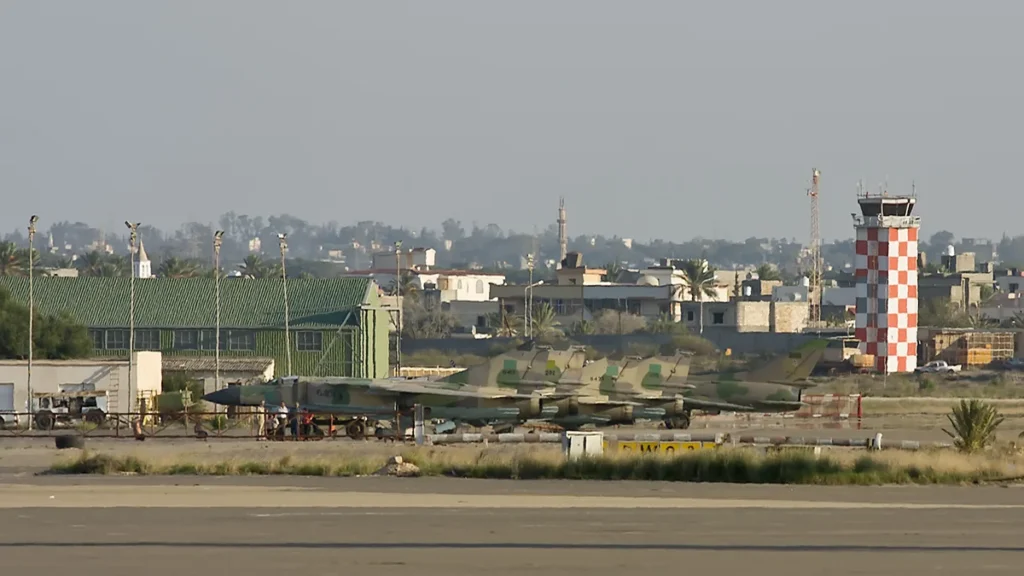
The airport’s origins lie in a former military airbase — a legacy that continues to shape its infrastructure profile and, at times, its operational status. The site was originally developed as a United States Air Force installation, known as Wheelus Air Base, during the post-World War II era, before being handed over to the Libyan government in 1970 following the revolution led by Muammar Gaddafi. It subsequently served Libyan military purposes before being progressively opened to civilian and commercial traffic, particularly after the prolonged closure and damage sustained at Tripoli International Airport (Tripoli Mitiga’s predecessor as the city’s primary civil hub) rendered that facility non-operational.
Ownership and operational oversight of Mitiga falls under the authority of the Libyan Civil Aviation Authority (LCAA), the state body responsible for regulating and managing civil aviation infrastructure across the country. The airport has undergone incremental works to adapt its originally military-grade facilities for sustained commercial use, though it has not benefited from the kind of large-scale, purpose-built terminal investment seen at comparable North African hubs. Its continued operation as Tripoli’s de facto primary international airport reflects both necessity and the broader challenge of stabilising civil infrastructure in post-conflict Libya.
Country
Libya is a North African state bordering the Mediterranean Sea to the north, with Tunisia and Algeria to the west, Niger and Chad to the south, and Sudan and Egypt to the east. Tripoli serves as the internationally recognised capital and the country’s largest urban centre, home to a significant share of a national population estimated in the tens of millions. Libya holds some of the largest proven oil reserves on the African continent, giving it considerable economic weight within the region despite the political fragmentation that has characterised governance since 2011. Its geographic position makes it a natural transit point between sub-Saharan Africa, the Maghreb, and Southern Europe, a fact that shapes both its migration dynamics and its aviation demand profile.
→ Read the Libya expert briefing
Airlines Based Here
Libyan Airlines, the state-owned national carrier, uses Mitiga as its primary operational base and treats the airport as its effective hub for both domestic and international services. The airline, which has operated under various configurations and levels of international recognition over the decades, connects Tripoli to a range of Arab, African, and European destinations, though its network has contracted and expanded in line with Libya’s shifting political and regulatory environment. Afriqiyah Airways, another Libyan state carrier with a historically pan-African mandate, has also operated from Mitiga, though its schedule and fleet deployment have been subject to significant disruption in recent years. Beyond these home carriers, a number of foreign airlines have maintained or resumed services into Mitiga, treating it as a point-to-point destination rather than a hub. These have included carriers from neighbouring Arab states and Turkey, reflecting the strong demand corridors between Tripoli and Istanbul, Cairo, Tunis, and the Gulf region.
Flights and Destinations
Mitiga’s route network is concentrated primarily on the Middle East, North Africa, and Southern Europe, with more limited but meaningful connections into sub-Saharan Africa. Representative destinations served from the airport include Cairo (Egypt), Tunis (Tunisia), Istanbul (Turkey), Amman (Jordan), Dubai (United Arab Emirates), Benghazi (Libya, domestic), Misrata (Libya, domestic), Rome (Italy), Malta, and Khartoum (Sudan). Turkish Airlines has been among the more consistent international operators at Mitiga, reflecting the strong bilateral relationship between Turkey and Libya and the significant passenger demand on the Tripoli–Istanbul corridor. Regional African connectivity, while historically part of Afriqiyah Airways’ mandate, has been more variable in practice. Intercontinental services beyond the immediate Mediterranean and Gulf sphere remain limited, meaning that passengers travelling to destinations in Asia, the Americas, or further afield typically connect through hub airports in Istanbul, Cairo, or the Gulf states.
Facilities and Capacity
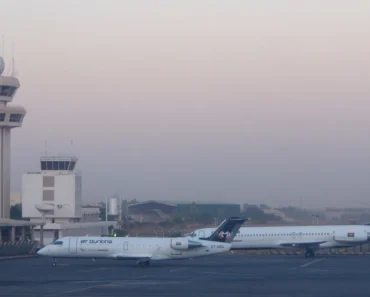
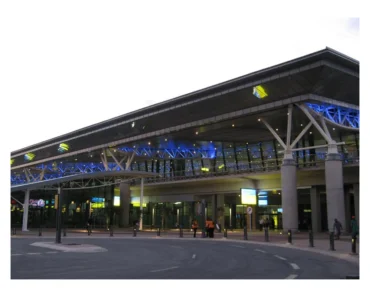
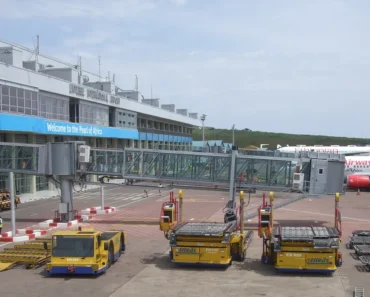
Mitiga operates with a single primary runway, a legacy of its military airbase configuration, which imposes practical constraints on simultaneous operations and overall throughput capacity. The terminal facilities, while functional, reflect the airport’s adapted rather than purpose-built character; the passenger terminal handles both international and domestic traffic without the degree of pier-based gate infrastructure common at larger regional hubs. Cargo handling facilities exist on site, serving the import and export needs of the Libyan economy, though the cargo operation is modest in scale relative to major African freight hubs. According to publicly disclosed traffic data and industry estimates, Mitiga operates broadly in the category of a medium-sized regional airport by African standards, with passenger volumes that have fluctuated considerably in response to Libya’s security situation and the availability of international services. Discussions around longer-term infrastructure improvement and the potential rehabilitation of Tripoli International Airport have been ongoing within Libyan planning circles, though the timeline and funding for any such works remain subject to the country’s broader political and fiscal conditions.
Visa Regulations
Libya operates a relatively restrictive visa regime by regional standards. Travellers arriving at Mitiga International Airport from most Western countries — including the United States, United Kingdom, and European Union member states — are generally required to obtain a visa in advance through a Libyan diplomatic mission, as Libya does not currently operate a widely available visa-on-arrival or eVisa scheme for these source markets. Passport holders from a number of Arab League member states may benefit from simplified entry arrangements under bilateral agreements, though the specific terms vary by nationality and are subject to change. Travellers holding passports with Israeli stamps or Israeli nationality have historically faced entry restrictions under Libyan law. Given that visa and entry regulations in Libya are subject to revision in line with the country’s evolving political situation, all travellers are strongly advised to verify current requirements with the relevant Libyan consular authority or embassy well in advance of travel.
→ Check the live visa requirements lookup for Libya
Recent Developments
Over the past 24 months, Mitiga has continued to navigate the intersection of commercial aviation recovery and Libya’s complex security environment. The airport has experienced periodic temporary closures or operational disruptions linked to security incidents in and around Tripoli, a recurring feature of its operational history that distinguishes it from most other North African international airports. On the commercial side, there have been reported efforts to attract additional international carriers and to restore routes that had been suspended during earlier periods of instability. Turkish Airlines has remained among the most active international operators during this period. Discussions within Libyan aviation and government circles regarding the longer-term future of Tripoli’s airport infrastructure — including the status of the damaged Tripoli International Airport site — have continued without a definitive public resolution as of early 2026. The Libyan Civil Aviation Authority has also engaged with ICAO on matters of safety oversight and regulatory alignment, reflecting the broader effort to restore international confidence in Libyan civil aviation governance.
News and Reports
Researchers and analysts tracking developments at Mitiga International Airport and within Libyan civil aviation more broadly will find the most authoritative primary source material through official communications from the Libyan Civil Aviation Authority (LCAA), which periodically issues operational notices and regulatory updates. IATA’s Africa regional publications and its slot coordination and traffic data services provide a useful industry-level perspective on Libyan aviation within the continental context. The ICAO Middle East and Africa regional offices publish safety oversight and audit-related documentation that is relevant to understanding the regulatory environment at Mitiga. Aviation trade press — including outlets specialising in African and Middle Eastern aviation markets — provides ongoing route news and airline strategy coverage. Travellers and journalists seeking current operational status information should consult official NOTAM (Notice to Airmen) databases and the airport authority’s own communications channels, bearing in mind that real-time status can shift rapidly given Libya’s security dynamics.