Borg El Arab Airport
Borg El Arab Airport
About
Borg El Arab Airport (IATA: HBE / ICAO: HEBA) serves as the principal international gateway for Alexandria, Egypt’s second-largest city and one of the Mediterranean’s most historically significant ports. Positioned on the northwestern edge of the Nile Delta, the airport plays a quietly strategic role in African aviation: it offers an alternative entry point into Egypt beyond Cairo International, connects the country’s industrial and tourism corridors to European and Gulf markets, and increasingly features in regional connectivity discussions as North Africa’s aviation sector continues to expand. For travellers, journalists, and researchers tracking African infrastructure, Borg El Arab represents both a functioning mid-scale international hub and a case study in how secondary airports in large African nations are being repositioned to absorb demand and reduce congestion at primary gateways.
The airport’s origins trace to a military airfield established in the broader Borg El Arab development zone west of Alexandria, a planned industrial city that began taking shape in the 1980s under Egyptian government investment programmes. The facility was progressively upgraded for civilian use and formally opened to scheduled commercial traffic, operating under the authority of the Egyptian Airports Company (EAC), a state-owned entity that manages the majority of Egypt’s civil aviation infrastructure under the oversight of the Egyptian Ministry of Civil Aviation. Ownership and operational control have remained within the public sector framework, consistent with Egypt’s broader approach to strategic transport infrastructure.
Over the years, the airport has undergone phased capacity improvements, including terminal upgrades and airside enhancements intended to accommodate growing passenger volumes and widen its appeal to charter and low-cost carriers serving European leisure markets. While it has not matched the scale of expansion seen at Cairo International, industry observers note that Borg El Arab has benefited from deliberate policy decisions to route certain international services — particularly charter flights serving Alexandria’s tourism and diaspora markets — through HBE rather than the capital.
Country
Egypt is a transcontinental nation straddling northeastern Africa and the Sinai Peninsula, with Cairo as its capital and a population that, according to official estimates, has surpassed 100 million people, making it the most populous country in the Arab world and among the largest in Africa. Its geographic position — bordering Libya, Sudan, Israel, and the Gaza Strip, and commanding the Suez Canal — gives it outsized geopolitical and economic significance within both the African Union framework and the broader Middle East and Mediterranean region. Egypt’s aviation market is one of the continent’s largest, supported by a substantial domestic network, a major national carrier, and strong inbound tourism flows from Europe, the Gulf, and beyond.
→ Read the Egypt expert briefing
Airlines based here
EgyptAir, the national flag carrier and a Star Alliance member, operates scheduled services through Borg El Arab Airport, treating it as a secondary focus point within its domestic and regional network rather than a primary hub — that designation belongs to Cairo International. EgyptAir’s presence at HBE connects Alexandria to the national network and provides onward interline opportunities. Beyond the flag carrier, the airport has historically attracted significant charter and scheduled activity from European carriers serving the Alexandria leisure and visiting-friends-and-relatives (VFR) market. Airlines including Ryanair have operated seasonal or scheduled services to HBE, reflecting the airport’s appeal to low-cost carriers seeking less congested Egyptian entry points. Gulf carriers and regional operators have also featured in the airport’s schedule at various points, though the mix of visiting carriers shifts with seasonal demand cycles and bilateral air service agreement developments. The airport does not host an independent home-based carrier of its own.
Flights and destinations
Borg El Arab Airport’s route network is oriented primarily toward Europe and the Gulf, with a secondary domestic dimension. European destinations that have featured in the airport’s scheduled and charter network include Milan, Rome, Frankfurt, London, Madrid, and various Eastern European and Balkan cities that generate strong VFR and leisure traffic to Alexandria’s large diaspora communities. Gulf connectivity has included services toward Dubai and other regional hubs, providing onward access to South and Southeast Asian markets. Domestically, connections to Cairo and other Egyptian cities form part of the operational picture. The airport does not currently operate as a significant hub for intra-African continental routes, though Egypt’s broader aviation diplomacy — including its engagement with African Union open-skies frameworks — may influence future network development. Representative destinations served, across scheduled and charter operations, include Rome Fiumicino, Milan Malpensa, Frankfurt, London Gatwick, Dubai, Istanbul, Jeddah, Riyadh, and Cairo.
Facilities and capacity
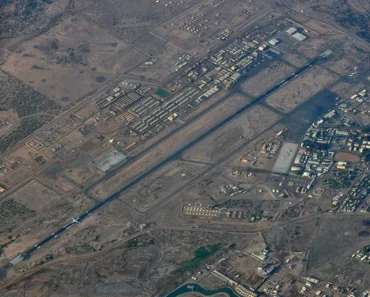
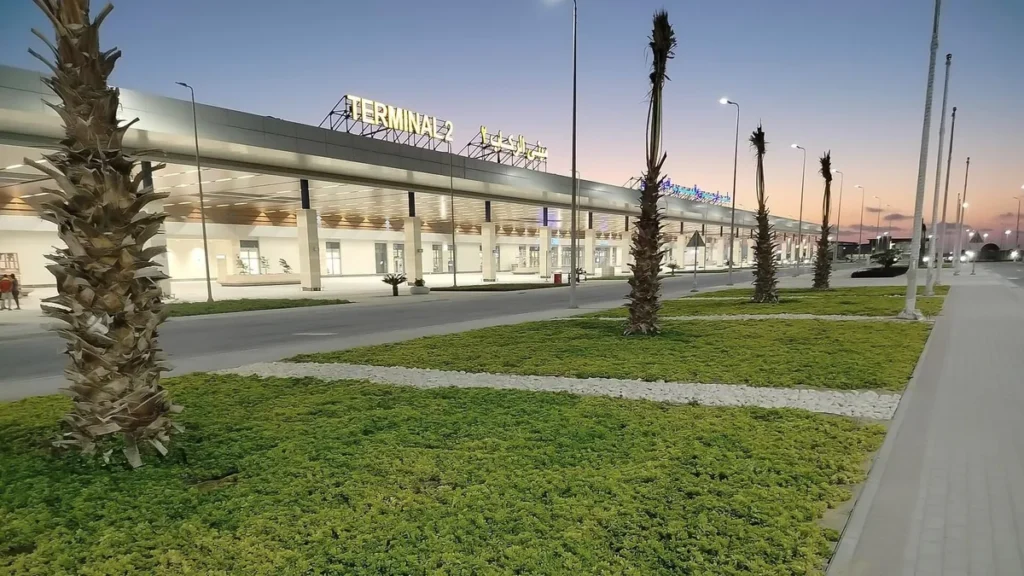
Borg El Arab Airport operates with a single passenger terminal handling both international and domestic traffic, supported by a runway configuration that includes a primary runway capable of accommodating wide-body commercial aircraft. The airport is classified broadly as a medium-scale international hub within the African context — larger than many regional airports on the continent but operating well below the throughput levels of Cairo International or major North African competitors such as Tunis-Carthage or Casablanca Mohammed V. Cargo facilities exist on site, serving the industrial and commercial needs of the Borg El Arab economic zone, though the airport is not a primary freight hub. According to publicly disclosed traffic data from the Egyptian Airports Company and civil aviation authority reporting, passenger volumes at HBE have fluctuated in line with regional tourism cycles, the COVID-19 pandemic’s impact on aviation, and subsequent recovery patterns. Expansion plans have been discussed in the context of Egypt’s broader airport infrastructure investment agenda, though specific confirmed project timelines and budgets should be verified against current Egyptian Ministry of Civil Aviation announcements.
Visa regulations
Travellers arriving at Borg El Arab Airport are subject to Egypt’s standard national visa regime, which applies uniformly across the country’s international airports. As of 2026, Egypt offers a visa-on-arrival facility to nationals of a number of countries, including the United States, the United Kingdom, and most European Union member states, typically issued for a single-entry stay and subject to a fee payable in accepted currencies at the port of entry. Egypt’s eVisa system, administered through the official government portal, allows eligible travellers to obtain authorisation before departure, which is generally recommended to reduce processing time on arrival. Nationals of many Arab League countries and certain African states may benefit from simplified entry arrangements under bilateral agreements, though conditions vary by passport. Visa-free access without any prior arrangement is more limited and applies to a smaller set of nationalities. It is important to note that visa regulations are subject to change at short notice due to diplomatic, security, or policy developments. Travellers, journalists, and researchers should verify current requirements before travel.
→ Check the live visa requirements lookup for Egypt
Recent developments
In the 24 months leading into 2026, Borg El Arab Airport has seen activity consistent with Egypt’s post-pandemic aviation recovery trajectory. Industry estimates suggest that passenger traffic across Egyptian airports has broadly returned to and in some cases exceeded pre-2020 levels, driven by resumed European charter operations, recovering Gulf connectivity, and domestic demand. At HBE specifically, there has been reported interest from low-cost and ultra-low-cost European carriers in establishing or restoring seasonal routes, reflecting Alexandria’s competitive positioning as a Mediterranean leisure destination. Terminal improvement works have been referenced in Egyptian civil aviation authority communications as part of ongoing infrastructure maintenance and modernisation efforts. Regulatory developments at the national level — including Egypt’s engagement with ICAO safety oversight assessments and its participation in African Union aviation liberalisation discussions — have indirect bearing on the airport’s operational environment. Researchers and journalists are advised to consult the Egyptian Ministry of Civil Aviation’s official communications for confirmed project and route announcements.
News and reports
Ongoing operational and strategic news about Borg El Arab Airport can be tracked through several authoritative sources. The Egyptian Airports Company publishes periodic operational updates and press releases through its official channels. The Egyptian Ministry of Civil Aviation issues policy announcements, route approvals, and infrastructure investment communications that directly affect HBE’s development. The Egyptian Civil Aviation Authority (ECAA) is the primary regulatory body and publishes safety, licensing, and traffic data relevant to researchers and analysts. At the continental level, IATA’s Africa regional office produces market analysis and traffic reports covering North African aviation markets, while the ICAO Middle East Regional Office — which has oversight responsibility for Egypt — publishes safety audit findings and regulatory guidance. Aviation trade publications including ch-aviation, anna.aero, and Cirium provide route-level data and airline schedule analysis that frequently covers HBE operations. Researchers should cross-reference multiple sources given the variability of data disclosure across Egyptian public institutions.