Djerba–Zarzis International Airport
Djerba–Zarzis International Airport
Djerba–Zarzis International Airport (DJE) — Airport Profile
Djerba–Zarzis International Airport (IATA: DJE | ICAO: DTTJ) is Tunisia’s second-busiest international gateway and one of the most strategically significant leisure-focused airports on the African continent. Situated on the island of Djerba in southern Tunisia — a destination with deep roots in Mediterranean tourism — the airport serves as the primary air access point for one of North Africa’s most visited holiday regions. For travellers, journalists, and aviation analysts tracking the development of African air transport, DJE offers a compelling case study in how a mid-sized, tourism-driven airport navigates seasonal demand, European charter markets, and the gradual expansion of scheduled low-cost services.
About
Djerba–Zarzis International Airport occupies a position of outsized importance within the Tunisian aviation system relative to its physical scale. While Tunis-Carthage International Airport handles the bulk of the country’s business and transit traffic, DJE is the dominant entry point for leisure visitors to southern Tunisia, channelling tourists toward the island of Djerba, the coastal resort zone of Zarzis, and the wider Medenine governorate. The airport’s role in African aviation is partly symbolic — it demonstrates how a regionally specific, tourism-anchored facility can sustain international connectivity across multiple decades — and partly economic, underpinning a hospitality sector that represents a significant share of local employment and foreign-exchange earnings.
The airport opened in its modern international configuration in the 1970s, aligned with Tunisia’s early push to develop Djerba as a mass-market Mediterranean resort destination. Ownership and operation fall under the Office de l’Aviation Civile et des Aéroports (OACA), the Tunisian state body responsible for managing the country’s civil aviation infrastructure. OACA has overseen successive rounds of infrastructure investment at DJE, including terminal upgrades and apron expansions designed to accommodate the wide-body charter aircraft that dominate the airport’s peak summer schedule.
Major expansion works have been carried out at various intervals to increase passenger throughput capacity and modernise ground-handling facilities. The airport has historically operated with a pronounced seasonal rhythm — extremely high volumes during the European summer and shoulder periods, with considerably reduced activity in winter months — and its infrastructure has been progressively calibrated to manage that demand curve. According to publicly disclosed traffic data from OACA, DJE consistently ranks among Tunisia’s top two airports by international passenger volume, though precise annual figures should be verified against the most current OACA statistical releases.
Country
Tunisia is a North African republic with its capital at Tunis, a population in the range of twelve million people, and a geographic position that places it at the crossroads of the central Mediterranean, the Maghreb, and sub-Saharan Africa’s northern trade corridors. As the northernmost country on the African continent, Tunisia maintains strong economic and cultural ties with the European Union — particularly France, Italy, and Germany — while also participating in regional frameworks including the Arab Maghreb Union and the African Union. Its economy is diversified across tourism, manufacturing, agriculture, and services, with the tourism sector remaining particularly sensitive to geopolitical conditions and airlift availability.
→ Read the Tunisia expert briefing
Airlines based here
Djerba–Zarzis International Airport does not function as a hub in the conventional network-carrier sense; no major airline maintains its primary base of operations at DJE. The airport is instead a focus destination — a point that carriers fly to rather than through. Tunisair, the Tunisian national carrier, operates scheduled services to and from DJE as part of its domestic and short-haul international network, making it the closest equivalent to a home carrier at the airport. Tunisair Express, the regional subsidiary, has also served routes connecting Djerba to Tunis on domestic sectors. Beyond the national carrier group, the airport’s traffic is dominated by European charter and leisure operators. Airlines including TUI fly (operating under various national banners across the UK, Germany, Belgium, and the Netherlands), Corsair, and Transavia have historically been significant contributors to DJE’s international seat capacity. Low-cost scheduled carriers including Ryanair and Vueling have at various points operated or explored services to Djerba, reflecting the airport’s appeal to price-sensitive leisure travellers from Western Europe.
Flights and destinations
The route network at DJE is overwhelmingly oriented toward Europe, reflecting the island’s identity as a Mediterranean leisure destination. The strongest connectivity exists with France — with Paris (both Charles de Gaulle and Orly), Lyon, Marseille, and Nantes among the most consistently served French points — as well as with Germany, where Frankfurt, Munich, Düsseldorf, and Hamburg have featured in seasonal schedules. The United Kingdom market is served with links to London airports, and Belgian and Dutch travellers are connected via Brussels and Amsterdam respectively. Within the Mediterranean basin, Italian connections to cities including Rome and Milan have featured in the network. Domestically, Tunis-Carthage is the principal domestic link, providing onward connectivity for travellers transiting through the Tunisian capital. Intra-African and intercontinental routes are limited; DJE is not a long-haul gateway in the way that Tunis-Carthage serves that function. The network is highly seasonal, with peak-season schedules substantially denser than winter offerings, and route availability should always be confirmed against current airline schedules.
Facilities and capacity
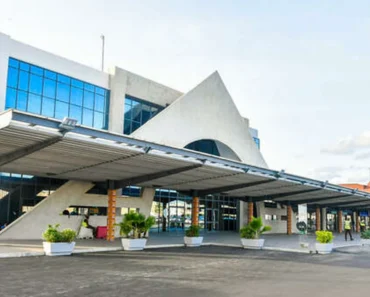
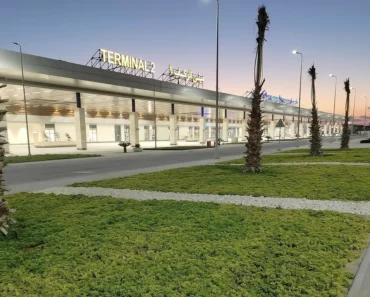
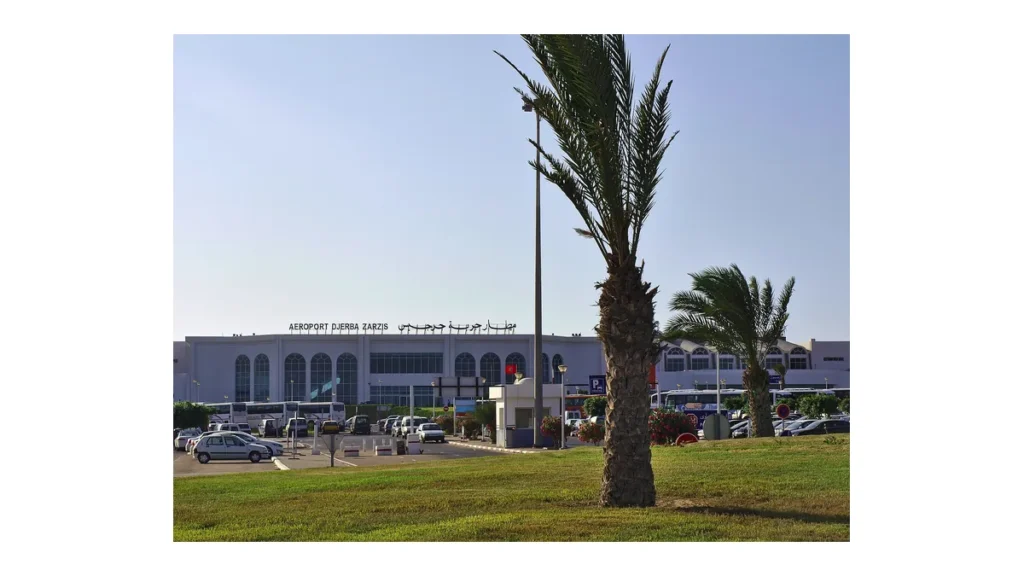
Djerba–Zarzis International Airport operates with a single passenger terminal building that has been extended and reconfigured over the years to handle both charter and scheduled traffic. The terminal incorporates international departure and arrival halls, with facilities including duty-free retail, food and beverage concessions, and car rental desks. The airport is served by a single primary runway, which is capable of accommodating wide-body jet aircraft of the type commonly used on European charter operations — including Boeing 737 family variants and Airbus A320-family aircraft, as well as larger wide-body types on high-density leisure routes. Ground-handling services are provided by operators working under OACA oversight. Cargo facilities exist but are modest in scale, consistent with the airport’s leisure rather than freight orientation. By African aviation classification standards, DJE is best characterised as a medium-volume international airport with a highly seasonal traffic profile; it is not a large hub in the continental sense, but its international passenger throughput during peak months is substantial relative to its physical footprint. Industry estimates suggest the airport has the physical capacity to handle several million passengers annually at peak utilisation, though actual throughput varies considerably with market conditions.
Visa regulations
Tunisia operates a relatively open visa regime for many of the source markets that generate traffic at Djerba–Zarzis International Airport. Citizens of European Union member states and the United Kingdom have historically been able to enter Tunisia without a visa for short stays, making DJE accessible for the leisure travellers who form the core of its passenger base. United States passport holders have similarly benefited from visa-free access for tourist visits within defined time limits. For travellers holding passports from other African countries, the position varies considerably by nationality — some regional African passport holders benefit from visa-free or visa-on-arrival arrangements, while others require advance visas obtained through Tunisian diplomatic missions. Tunisia has explored and in some contexts implemented electronic visa or pre-travel authorisation mechanisms, though the status of specific programmes should be verified at the time of travel. Visa rules are subject to change at short notice in response to bilateral agreements, security considerations, and policy shifts. Travellers, journalists, and researchers planning visits should consult the most current official guidance.
→ Check live visa requirements for Tunisia
Recent developments
In the period leading into 2026, Djerba–Zarzis International Airport has seen a gradual recovery and recalibration of its route network following the disruptions that affected Mediterranean tourism markets in the early part of this decade. European leisure carriers have progressively restored and in some cases expanded their seasonal programmes to DJE, responding to sustained demand from French, German, and British holiday markets. The airport has been the subject of ongoing infrastructure attention under OACA’s broader national aviation development agenda, with terminal and apron works aimed at improving passenger flow and ground-handling efficiency. New route announcements from low-cost operators have periodically added point-to-point connectivity to European cities not previously well served from Djerba. Regulatory and safety oversight at the airport continues under OACA’s framework, with Tunisia maintaining its engagement with ICAO standards and recommended practices. Analysts monitoring North African aviation have noted Djerba’s resilience as a leisure destination even during periods of broader regional uncertainty, a factor that continues to attract airline commercial interest.
News and reports
Ongoing operational news and data relating to Djerba–Zarzis International Airport can be sourced from several authoritative channels. The Office de l’Aviation Civile et des Aéroports (OACA) publishes press releases and statistical summaries through its official communications, and is the primary source for traffic data, infrastructure announcements, and regulatory updates specific to Tunisian airports. The Direction Générale de l’Aviation Civile in Tunisia provides regulatory and safety-related information. At the continental level, IATA’s Africa and Middle East regional office produces periodic reports on African aviation market trends that contextualise DJE’s performance within the broader regional picture. The ICAO Middle East and Africa regional offices publish safety oversight and audit-related documentation relevant to Tunisian civil aviation. Aviation trade publications including ch-aviation, Cirium, and Anna.aero provide route-level data, airline schedule analysis, and market commentary that frequently covers North African leisure airports including DJE. Journalists and researchers are advised to cross-reference multiple sources and to seek the most current OACA statistical releases for any figures intended for publication.
Related research
- Tunisia Expert Briefing — in-depth country analysis for researchers and investors
- Tunisia Statistics — demographic, economic, and transport data
- African Airports — profiles of major and regional airports across the continent
- African Airlines — carrier profiles, fleet data, and route network analysis
- Visa Requirements — live lookup tool for entry requirements by nationality and destination
- Country Comparison — benchmark Tunisia against peer economies and aviation markets