Asmara International Airport
Asmara International Airport
About
Asmara International Airport (IATA: ASM / ICAO: HHAS) is the principal gateway to Eritrea and one of the most historically distinctive aviation facilities on the African continent. Situated at an elevation of approximately 2,325 metres (7,628 feet) above sea level on the Eritrean Highlands, it ranks among the highest-altitude commercial airports in Africa — a geographic fact that shapes everything from aircraft performance calculations to fuel planning for visiting carriers. For a country that has spent much of its post-independence existence navigating diplomatic isolation and economic constraints, Asmara International Airport carries an outsized strategic importance: it is simultaneously the country’s sole international air gateway, a symbol of national sovereignty, and a fragile but real thread connecting Eritrea to the wider world.
The airport’s origins trace to the Italian colonial period, when Asmara served as a showcase city for Fascist-era modernist architecture — a legacy that earned the city UNESCO World Heritage status in 2017. The airfield was developed and expanded during the Second World War under British administration, and it continued to function through the Ethiopian imperial period and the subsequent Derg military regime, during which Eritrea was administered as an Ethiopian province. Following Eritrean independence in 1993, the airport was transferred to the authority of the newly formed State of Eritrea and has since been operated under the oversight of the Eritrean Civil Aviation Authority (ECAA).
Ownership and operational control remain firmly in state hands. The airport has undergone periodic infrastructure maintenance and modest upgrades since independence, though large-scale capital expansion has been constrained by Eritrea’s broader economic environment and its historically limited access to international development financing. The facility is classified by industry analysts as a small international hub, serving a relatively narrow but strategically meaningful set of routes connecting Eritrea to the Middle East, East Africa, and Europe.
Country
Eritrea is a sovereign state in the Horn of Africa, bordering Ethiopia to the south, Sudan to the west, and Djibouti to the southeast, with a long Red Sea coastline to the east that gives it significant maritime and geopolitical relevance. Its capital, Asmara, is also its largest city and the country’s administrative, cultural, and economic centre. Eritrea’s population is estimated in the low millions — precise figures are difficult to verify independently given the limited availability of recent census data — and the country encompasses a diverse mix of ethnic and linguistic communities. Its position at the intersection of the Red Sea trade corridor and the Horn of Africa makes it a subject of sustained interest for regional analysts, security researchers, and development economists alike.
→ Read the Eritrea expert briefing
Airlines Based Here
Eritrean Airlines, the state-owned national carrier, uses Asmara International Airport as its home base and primary hub. The airline has operated a limited international network, historically focused on connecting Asmara to destinations in the Middle East and select African cities. Like many small African national carriers, Eritrean Airlines has faced well-documented operational challenges related to fleet size, financing, and route sustainability. Its schedule and fleet composition have fluctuated over the years, and travellers and analysts are advised to verify current operational status directly with the carrier or through IATA-affiliated booking systems before making travel arrangements.
Beyond the national carrier, a small number of international airlines have maintained scheduled or charter services into Asmara. Saudi Arabian Airlines (Saudia) has historically been among the most consistent foreign carriers serving the route, reflecting the significant Eritrean diaspora community in Saudi Arabia and the Gulf states more broadly. Turkish Airlines and Flydubai have at various points been associated with services to or via Asmara, though route availability for visiting carriers has shifted in response to regional politics, bilateral air service agreements, and commercial demand. Researchers and journalists should treat any specific schedule information as subject to change and cross-reference with current airline timetables.
Flights and Destinations
The route network supported by Asmara International Airport is modest in scale but reflects the airport’s role as a diaspora lifeline and a regional connector. The most heavily trafficked corridors link Asmara to the Gulf states, where large communities of Eritrean workers and refugees maintain close ties to their home country. Representative destinations that have featured in the airport’s network include Jeddah and Riyadh in Saudi Arabia, Dubai in the United Arab Emirates, and Cairo in Egypt. Within Africa, Addis Ababa in Ethiopia has historically been a key regional connection, though the diplomatic relationship between Eritrea and Ethiopia has directly influenced the availability and frequency of that route over time. Nairobi, Kenya, and Khartoum, Sudan, have also featured as regional destinations. European connections, serving the Eritrean diaspora in countries such as Italy, Germany, and Sweden, have been served either directly or via hub connections, with Rome and Frankfurt representing historically relevant European endpoints. The intercontinental network remains thin by the standards of larger African hubs, and the airport does not currently support the kind of multi-carrier, multi-alliance connectivity found at airports such as Addis Ababa Bole or Nairobi Jomo Kenyatta.
Facilities and Capacity
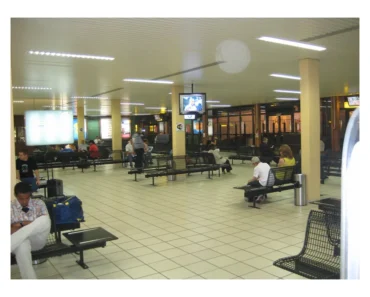
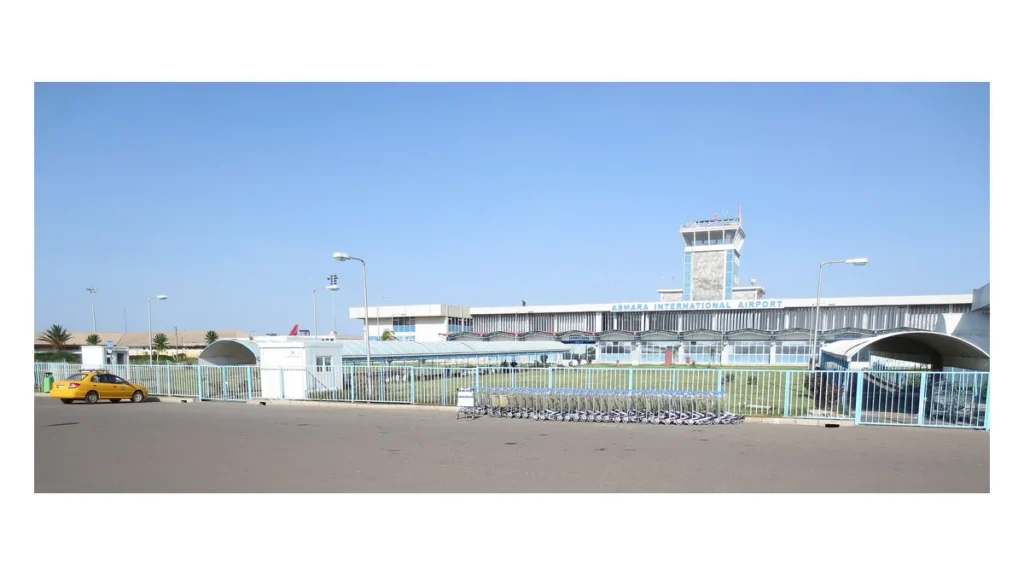
Asmara International Airport operates a single passenger terminal building, which handles both arriving and departing international traffic. The terminal’s capacity and layout reflect the airport’s classification as a small international facility; it is not designed to handle the simultaneous processing of multiple wide-body aircraft at peak times. The airport is served by a single primary runway, oriented to accommodate the prevailing wind patterns of the highland plateau, and its high-altitude location requires that aircraft operators apply performance corrections that effectively reduce payload capacity compared to sea-level operations — a factor of practical relevance to cargo and charter operators.
Cargo facilities exist on site and serve both commercial freight and humanitarian logistics purposes, the latter being particularly significant given Eritrea’s periodic reliance on international food and medical aid. Ground handling services are limited compared to larger regional hubs, and visiting airlines typically work within the constraints of the available infrastructure. According to publicly disclosed traffic data and industry estimates, the airport handles a relatively small annual passenger volume consistent with its small-hub classification. No major terminal expansion or runway extension project has been publicly confirmed as of the time of writing, though periodic reports have referenced government interest in modernising the facility in line with broader national infrastructure priorities.
Visa Regulations
Eritrea operates one of the more restrictive visa regimes on the African continent, and travellers arriving at Asmara International Airport should plan well in advance of their journey. As a general rule, most foreign nationals — including citizens of the United States, the United Kingdom, and European Union member states — require a visa to enter Eritrea and cannot obtain one on arrival at the airport. Visas are typically required to be obtained in advance through an Eritrean embassy or consulate in the traveller’s country of residence, and the application process may require supporting documentation such as an invitation letter, proof of accommodation, and evidence of the purpose of travel. Journalists and researchers should be aware that Eritrea has specific and well-documented requirements — and in some cases restrictions — relating to professional visits, and obtaining the appropriate accreditation before travel is strongly advised.
For holders of African Union passports and citizens of neighbouring countries, bilateral arrangements may apply, but these are subject to change and should not be assumed without verification. There is no publicly confirmed eVisa system for Eritrea as of 2026. Visa rules are subject to change without notice. → Check the live visa requirements lookup for the most current entry conditions before booking travel.
Recent Developments
The past 24 months have seen Asmara International Airport navigate a challenging operational environment shaped by regional geopolitics, post-pandemic aviation recovery patterns across Africa, and Eritrea’s continued diplomatic positioning. The gradual normalisation of relations between Eritrea and Ethiopia following the 2018 peace agreement had raised expectations of expanded air connectivity between the two countries, though the subsequent deterioration of the broader regional security situation — including the Tigray conflict and its aftermath — has complicated the realisation of those expectations. Industry observers have noted that route recovery at Asmara has lagged behind the broader African aviation rebound seen at larger hubs.
There have been periodic reports of discussions between the Eritrean government and potential airline partners regarding new or resumed services, particularly on Gulf routes where diaspora demand remains strong. Any confirmed new route launches or terminal infrastructure works will be reflected in updates from the Eritrean Civil Aviation Authority and IATA’s Africa regional communications. Travellers and analysts are encouraged to monitor these sources for the most current operational picture.
News and Reports
Ongoing operational news relating to Asmara International Airport is best sourced through a combination of official and industry channels. The Eritrean Civil Aviation Authority (ECAA) is the primary regulatory and operational authority and periodically issues notices to airmen (NOTAMs) and official communications relevant to the airport’s status. IATA’s Africa regional office publishes periodic reports on African aviation market conditions that contextualise Asmara’s performance within the broader continental picture. The ICAO Eastern and Southern African Regional Office (ESAF), based in Nairobi, covers Eritrea within its remit and produces safety oversight and capacity-building documentation relevant to HHAS operations. Specialist aviation trade publications including ch-aviation, Anna.aero, and the African Aviation journal provide commercial route analysis and airline news that frequently covers developments at smaller African airports including Asmara. Researchers should note that independent, on-the-ground reporting from Eritrea is limited due to the country’s press freedom environment, and official sources should be read with appropriate critical context.