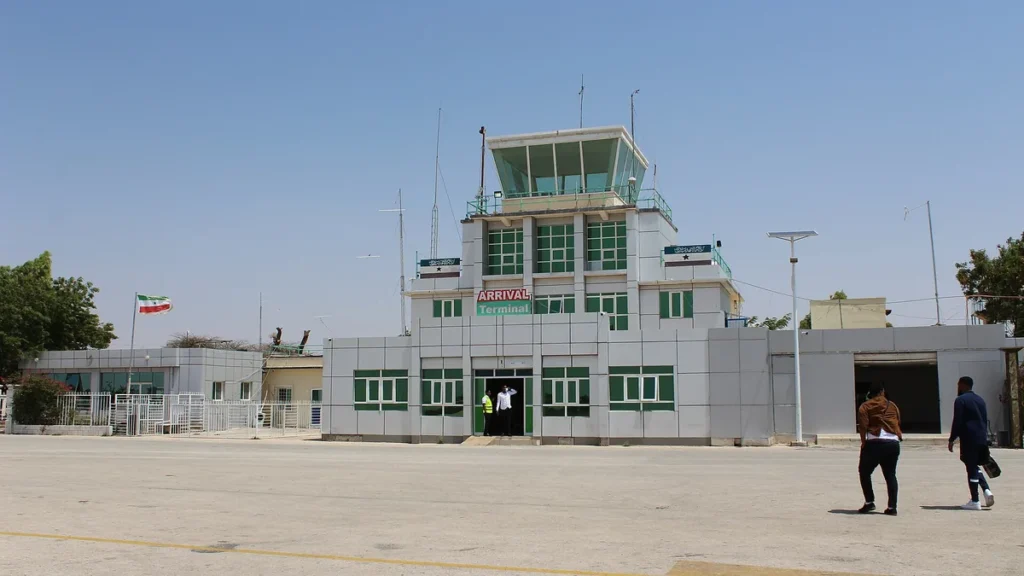
Hargeisa Egal International Airport
Hargeisa Egal International Airport
About
Hargeisa Egal International Airport (IATA: HGA; ICAO: HCMH) serves as the principal gateway to Somaliland, the self-declared republic that administers the northwestern region of Somalia. Situated on the outskirts of Hargeisa — the largest city in Somaliland and a significant commercial hub in the Horn of Africa — the airport occupies a quietly strategic position in African aviation. For a facility operating in one of the world’s most complex political geographies, it punches above its weight: connecting a territory that lacks formal UN recognition to a growing constellation of regional and international destinations, and doing so with increasing regularity and professionalism. For travellers, journalists, and researchers entering Somaliland, HGA is almost always the point of entry, making an understanding of its operations, carriers, and facilities essential.
The airport takes its name from Mohamed Haji Ibrahim Egal, the founding president of Somaliland, who led the territory from 1993 until his death in 2002. The facility’s origins predate independence — the airstrip served both civilian and military purposes during the Somali Democratic Republic era — but its modern configuration as a functioning international airport developed substantially through the 1990s and 2000s as Somaliland consolidated its own institutions. Ownership and operational oversight fall under the Somaliland Civil Aviation Authority (SLCAA), which functions independently of the Federal Government of Somalia’s civil aviation structures in Mogadishu, a reflection of the broader political separation between the two administrations.
Expansion works have been carried out in phases over the past two decades, driven by rising passenger demand and the need to meet minimum international safety and handling standards. Improvements to the terminal building, apron lighting, and navigation aids have been documented in successive periods, with the most recent phase of infrastructure attention occurring in the early 2020s. The airport is classified as a small-to-medium international hub by regional standards, though its importance to Somaliland’s economy and connectivity is disproportionate to its physical footprint.
Country
Somalia is a country in the Horn of Africa, bordered by Ethiopia, Djibouti, Kenya, and the Indian Ocean. Its internationally recognised capital is Mogadishu, though Hargeisa functions as the administrative capital of Somaliland, which governs itself separately. Somalia’s population is estimated in the tens of millions, making it one of the more populous nations in East Africa, and the country occupies a geostrategically significant position at the mouth of the Gulf of Aden — a corridor through which a substantial share of global maritime trade passes. Despite decades of political instability at the federal level, Somaliland has maintained a degree of internal stability that has allowed commerce, civil society, and aviation infrastructure to develop. → Read the Somalia expert briefing
Airlines Based Here
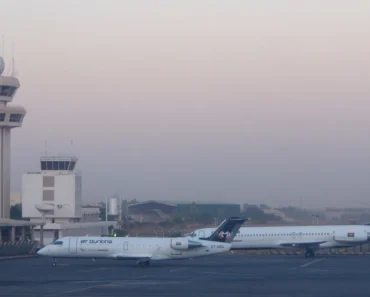
Jubba Airways has historically operated Hargeisa as one of its primary focus cities, providing connections across the Somali-speaking world and into the broader East African region. The carrier, which is among the most established airlines serving Somali territories, uses HGA as a key node in its network rather than a formal headquarters hub. Daallo Airlines, another carrier with deep roots in the Somali aviation market, has also maintained a presence at Hargeisa, offering scheduled services that link the city to Djibouti, Nairobi, and points in the Gulf. Ethiopian Airlines, the continent’s largest carrier by network reach, operates scheduled services into HGA, providing Hargeisa with a critical onward connection to Addis Ababa Bole International Airport and, through it, to intercontinental destinations. Fly Dubai and Turkish Airlines have at various points been cited in route discussions for the airport, reflecting Gulf and European interest in the Somaliland market, though the status of specific services should be verified against current schedules. The carrier mix at HGA is characteristic of smaller African international airports: a combination of regional specialists with deep local knowledge and larger network carriers seeking to capture diaspora and business traffic.
Flights and Destinations
The route network operating through Hargeisa Egal International Airport reflects both the city’s regional role and the demands of a substantial Somaliland diaspora concentrated in the Gulf states, the United Kingdom, Scandinavia, and North America. Within the Horn of Africa, Addis Ababa (Ethiopian Airlines) and Djibouti (Daallo Airlines, Jubba Airways) are among the most consistently served destinations, providing critical regional connectivity. Nairobi’s Jomo Kenyatta International Airport features in the network as an East African hub connection. Within Somali territories, services to Mogadishu and Bosaso have been operated, though frequency and operator vary with political and security conditions. Dubai International Airport represents the most significant Gulf connection, serving the large Somaliland business and diaspora community in the UAE. Istanbul has been discussed as a potential long-haul connection given Turkish Airlines’ extensive African network. Berbera, within Somaliland itself, has a separate airport that absorbs some domestic traffic. Industry estimates suggest that the majority of HGA’s international traffic is driven by diaspora travel, humanitarian and NGO personnel movements, and trade-related business travel rather than leisure tourism.
Facilities and Capacity
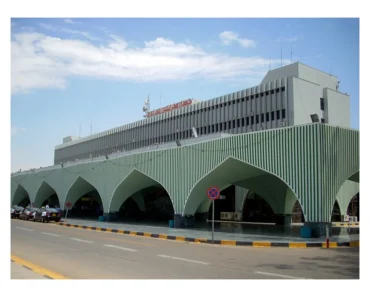
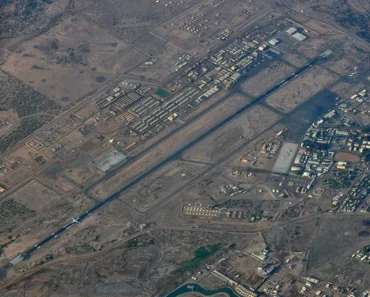
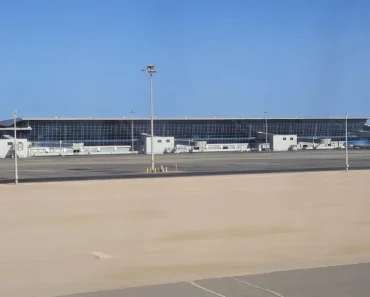
Hargeisa Egal International Airport operates a single terminal building that handles both arriving and departing international passengers. The terminal has undergone phased improvements, including upgrades to check-in facilities, arrival processing areas, and airside waiting space, though by the standards of larger African hubs it remains a compact facility. The airport is served by a single primary runway, oriented to accommodate the prevailing wind conditions of the Hargeisa plateau, which sits at an elevation of approximately 4,400 feet above sea level — a factor that affects aircraft performance calculations and is relevant to operators planning payload and fuel loads. Cargo handling facilities exist on site and serve a meaningful function given the volume of goods moving through Somaliland’s trade corridors, though dedicated cargo infrastructure is limited compared to major African freight hubs. The airport is broadly classified as a small international hub. According to publicly disclosed traffic data and regional aviation assessments, passenger throughput has grown steadily over the past decade, though precise annual figures should be sourced directly from the SLCAA or IATA’s Africa regional reporting.
Visa Regulations
Travellers arriving at Hargeisa Egal International Airport enter Somaliland, which operates its own immigration and visa regime independently of the Federal Government of Somalia. In practice, most foreign nationals — including holders of US, UK, EU member state, and many African passports — are able to obtain a visa on arrival at HGA, a policy that Somaliland has maintained to encourage business travel, journalism, and humanitarian access. The visa on arrival is typically issued for a short stay and requires a valid passport, a passport photograph, and payment of the applicable fee in US dollars. Some nationalities may be required to obtain prior authorisation through Somaliland’s representative offices abroad. It is important to note that a Somaliland visa does not constitute authorisation to enter Federal Somalia, and vice versa. Visa regulations are subject to change without extensive advance notice, and travellers are strongly advised to verify current requirements before travel. → Check the live visa requirements lookup
Recent Developments
In the 24 months leading into 2026, Hargeisa Egal International Airport has been the subject of renewed attention from both regional aviation bodies and international development partners interested in Somaliland’s infrastructure trajectory. Discussions around runway resurfacing and apron expansion have been reported in regional aviation trade media, reflecting the SLCAA’s stated ambition to accommodate wider-body aircraft more reliably. Ethiopian Airlines has maintained and in some periods increased its frequency on the Addis Ababa–Hargeisa route, underscoring the commercial viability of the corridor. The broader geopolitical context — including Somaliland’s ongoing bid for international recognition and a memorandum of understanding signed with Ethiopia in early 2024 regarding port access at Berbera — has elevated international interest in Somaliland’s connectivity infrastructure, with HGA positioned as a beneficiary of that attention. New airline interest from Gulf-based carriers has been reported in industry discussions, though confirmed scheduled service announcements should be verified against current IATA schedules. Regulatory coordination between the SLCAA and ICAO’s Eastern and Southern African regional office has continued as part of ongoing efforts to align Somaliland’s aviation safety framework with international standards.
News and Reports
Ongoing operational news about Hargeisa Egal International Airport is best sourced from a combination of official and specialist channels. The Somaliland Civil Aviation Authority (SLCAA) periodically issues operational notices and press statements through its official communications, and these represent the most authoritative source for regulatory and infrastructure updates. IATA’s Africa regional publications and the organisation’s airport and airline data services provide comparative benchmarking and route data relevant to analysts. The ICAO Eastern and Southern African Regional Office (ESAF), based in Nairobi, covers Somaliland’s airspace within its broader regional safety and standards mandate and publishes relevant audit and compliance documentation. Regional aviation trade publications — including African Business Aviation Association communications and specialist Horn of Africa business media — carry route announcements and airport development reporting. For political and security context that directly affects airport operations, the UN Monitoring Group on Somalia and Eritrea, as well as established international news agencies with Horn of Africa bureaux, provide essential background. Researchers are advised to cross-reference multiple sources given the complexity of Somaliland’s international legal status.