Moshoeshoe I International Airport
Moshoeshoe I International Airport
About
Moshoeshoe I International Airport (IATA: MSU / ICAO: FXMM) serves as the principal gateway to the Kingdom of Lesotho, a landlocked mountain nation entirely encircled by South Africa. Named in honour of the founding king of the Basotho nation, the airport occupies a singular position in southern African aviation: it is the sole international airport of a sovereign state that shares no land border with any country other than its single neighbour. That geographic reality shapes everything about the airport — its route network, its traffic volumes, its strategic importance, and the challenges it faces in growing connectivity for a small but distinct national economy.
The airport is located at Moshoeshoe I, approximately 18 kilometres south-east of Maseru, the national capital, at an elevation of roughly 1,630 metres above sea level — a factor that influences aircraft performance calculations and operational planning. The facility was established in the mid-twentieth century and has served commercial aviation in various capacities since Lesotho’s independence in 1966. Ownership and operational oversight rest with the Government of Lesotho, with the Lesotho Civil Aviation Authority (LCAA) holding regulatory responsibility for the airspace and aerodrome standards.
Over the decades, the airport has undergone incremental upgrades to its terminal building, apron, and navigational aids, though it has remained a small-hub facility by continental standards. Discussions around more substantial infrastructure investment have recurred periodically in government planning documents and regional development frameworks, reflecting the broader ambition to position Lesotho as a more accessible destination for tourism, investment, and humanitarian logistics.
Country
Lesotho is a constitutional monarchy situated entirely within the borders of South Africa, making it one of only three countries in the world that are completely surrounded by a single neighbour. With a population estimated in the low millions, Lesotho is a small state by African standards but one with a distinct cultural identity, a highland geography that has earned it the nickname “the Kingdom in the Sky,” and an economy shaped by textile exports, remittances from migrant labour in South Africa, and a growing interest in adventure and eco-tourism. Maseru, the capital, sits along the Caledon River on the western lowlands and functions as the country’s commercial and administrative centre. Regionally, Lesotho is a member of the Southern African Development Community (SADC) and the Southern African Customs Union (SACU), aligning its trade and transit frameworks closely with its neighbours.
→ Read the Lesotho expert briefing
Airlines Based Here
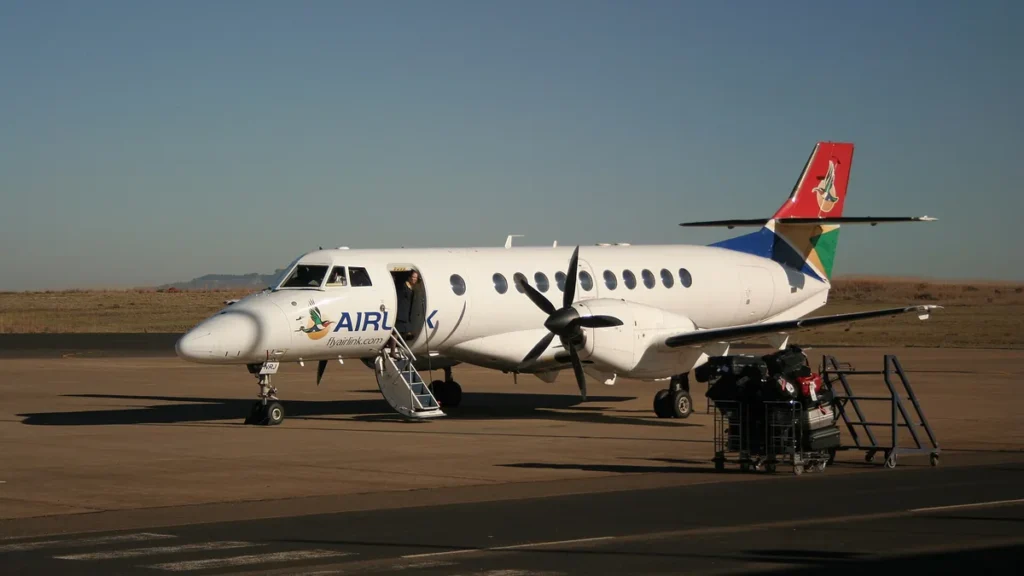
Moshoeshoe I International Airport does not currently host a full-service national flag carrier in the traditional sense. Lesotho’s previous national airline, Lesotho Airways, ceased operations decades ago, and subsequent attempts to establish a successor carrier have faced the structural difficulties common to small-state aviation: thin route economics, limited domestic demand, and the proximity of major South African hubs. As of 2026, the airport functions primarily as a point-to-point destination served by visiting regional carriers rather than as a hub for a home airline. South African Express, during its operational years, was among carriers that connected Maseru to Johannesburg; following that airline’s liquidation, other operators have stepped into the corridor. Airlink, the South African independent regional carrier, has been the most consistent commercial presence on the Maseru–Johannesburg route, operating scheduled services that provide the airport’s primary lifeline to the global aviation network. Charter operators and air ambulance services also maintain a presence, serving the humanitarian, mining, and diplomatic communities active in Lesotho.
Flights and Destinations
The scheduled network at MSU is compact, reflecting the airport’s small-hub status and Lesotho’s geographic position. The dominant and most commercially significant route is the short hop to O.R. Tambo International Airport in Johannesburg, South Africa — a connection that effectively plugs Maseru into one of Africa’s largest aviation hubs and, by extension, into intercontinental itineraries across Europe, the Middle East, Asia, and the Americas. Beyond Johannesburg, the airport has at various times seen services to Cape Town, providing an alternative South African gateway. Regional African connectivity beyond South Africa has historically been limited and subject to seasonal or charter arrangements rather than year-round scheduled service. Travellers requiring connections to destinations such as Nairobi, Addis Ababa, Lusaka, Harare, or Maputo typically transit through Johannesburg. Intercontinental travel from Maseru is therefore almost entirely indirect, with O.R. Tambo serving as the functional transfer hub for long-haul itineraries to London, Dubai, Doha, Frankfurt, and beyond.
Facilities and Capacity
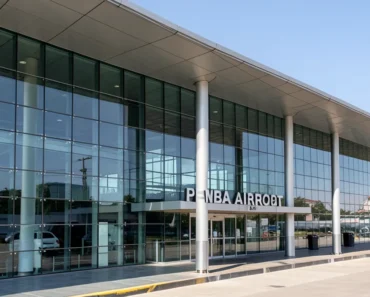
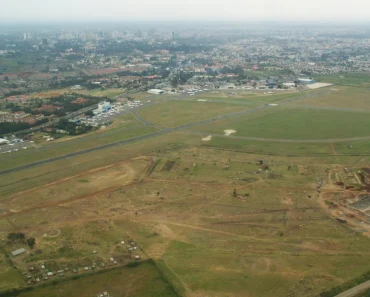
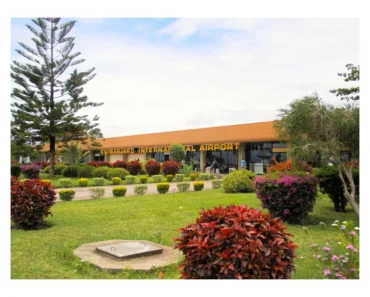
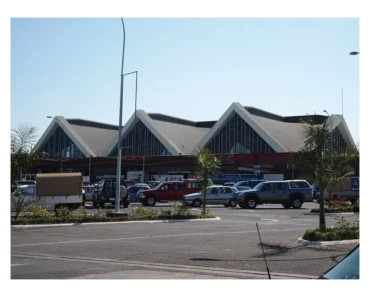
Moshoeshoe I International Airport operates a single terminal building that handles both arriving and departing passengers, with separate processing areas for international and domestic movements. The airport has one paved runway — designated 18/36 — with a published length sufficient to accommodate narrow-body jet aircraft such as the Embraer E-jet family and smaller Boeing and Airbus types, though the high-altitude elevation imposes payload and performance restrictions that operators must account for in their flight planning. The apron capacity is limited, consistent with the airport’s traffic class. Cargo facilities exist but are modest in scale, serving primarily express freight, diplomatic pouches, and humanitarian supply chains rather than high-volume commercial cargo operations. According to publicly disclosed aeronautical information, the airport holds instrument approach procedures that support operations in reduced visibility conditions, an important capability given the region’s variable weather patterns. Passenger throughput places MSU firmly in the small-hub category by African and global benchmarks, with industry estimates suggesting annual movements well below the threshold of major regional airports. Planned or proposed expansion works have been referenced in Lesotho government development strategies, though the scope, financing, and timelines of any such projects should be verified against current official disclosures.
Visa Regulations
Lesotho operates a relatively open visa regime for many source markets, though travellers should verify requirements well in advance of travel as policies are subject to change. Citizens of the United States, the United Kingdom, and most European Union member states have historically been able to enter Lesotho without a prior visa for short stays, typically up to 30 days, with extensions available in-country. Holders of passports from regional African nations — particularly SADC member states — have generally benefited from visa-free or simplified entry arrangements under regional integration agreements. Visitors from some other regions may be required to obtain a visa on arrival or in advance through Lesotho’s diplomatic missions abroad. An eVisa system has been discussed and developed in the context of Lesotho’s broader tourism promotion efforts, though travellers should confirm current availability and functionality through official government channels. Visa rules change, and the information above reflects general historical patterns rather than a live policy statement.
→ Check the live visa requirements lookup for Lesotho
Recent Developments
In the 24 months leading to mid-2026, Moshoeshoe I International Airport has remained a focus of discussion within Lesotho’s transport and economic planning circles, even as its operational footprint has stayed relatively stable. Airlink has continued to anchor the Maseru–Johannesburg corridor, and the airline’s regional expansion strategy across southern Africa has kept this route commercially viable. The Lesotho Civil Aviation Authority has engaged with ICAO’s African regional office on safety oversight and compliance matters, consistent with the broader ICAO Universal Safety Oversight Audit Programme (USOAP) framework applied across the continent. Tourism promotion initiatives by the Lesotho Tourism Development Corporation have referenced improved air access as a strategic priority, and discussions with potential new carriers have been reported in the local press, though no confirmed new scheduled services had been publicly announced as of the time of writing. Infrastructure conversations have touched on terminal modernisation and apron expansion, with feasibility considerations linked to broader public investment planning. Travellers and analysts should monitor official announcements from the LCAA and the Ministry of Transport for confirmed developments.
News and Reports
Ongoing operational and regulatory news relating to Moshoeshoe I International Airport can be tracked through several authoritative channels. The Lesotho Civil Aviation Authority publishes regulatory notices, aeronautical information circulars, and policy updates through its official communications. The Government of Lesotho’s Ministry of Transport issues periodic statements on infrastructure and aviation policy. At the continental level, the African Airlines Association (AFRAA) and IATA’s Africa and Middle East regional office produce market intelligence reports that contextualise Lesotho’s connectivity within broader southern African aviation trends. ICAO’s Eastern and Southern African Office (ESAF), based in Nairobi, covers the regulatory environment relevant to Lesotho’s airspace. For route and schedule data, aviation intelligence platforms such as OAG and Cirium track scheduled capacity on the Maseru corridor. Local Lesotho media, including the Lesotho Times and Public Eye, regularly report on transport policy and airport-related developments. Researchers and journalists are advised to cross-reference multiple sources given the limited volume of dedicated aviation reporting from within the country.
Related Research
- Lesotho Expert Briefing — in-depth political, economic, and social analysis of Lesotho
- Lesotho Statistics — key demographic, economic, and infrastructure data
- African Airports — profiles of airports across the continent
- African Airlines — carrier profiles, route maps, and fleet data for African aviation
- Visa Requirements — live lookup tool for entry requirements by nationality and destination
- Country Comparison — compare Lesotho with peer nations across key indicators