Blaise Diagne International Airport
Blaise Diagne International Airport
About
Blaise Diagne International Airport (IATA: DSS | ICAO: GOBD) stands as one of West Africa’s most strategically significant aviation gateways. Serving Dakar, the capital of Senegal and a longstanding hub of commerce, diplomacy, and culture on the Atlantic coast of the continent, the airport has repositioned Senegal as a serious node in the emerging architecture of African aviation. For travellers, journalists, and analysts tracking the continent’s infrastructure story, DSS represents both a model of deliberate state-led investment and a live test case for how African nations can reclaim control of their own air connectivity.
The airport opened in 2017, replacing the older Léopold Sédar Senghor International Airport, which had operated from a site uncomfortably close to central Dakar and had long been constrained by urban encroachment, limited runway capacity, and restricted expansion potential. Blaise Diagne International Airport was constructed approximately 47 kilometres southeast of the city centre, near the town of Diass, on a site chosen specifically to allow for long-term growth. The airport is named after Blaise Diagne, the Senegalese-born politician who in 1914 became the first Black African elected to the French National Assembly — a naming choice that carries deliberate historical and symbolic weight.
The facility is owned by the Senegalese state and operated under the oversight of the Agence des Aéroports du Sénégal (ADS), the national airports authority. Its construction was financed through a combination of state resources and external financing arrangements, and it was conceived from the outset as a regional hub capable of handling wide-body, long-haul aircraft. Since opening, the airport has undergone phased operational scaling as airlines and passenger volumes have grown into its considerable designed capacity.
Country
Senegal is a coastal West African republic with Dakar as its capital. With a population estimated at over 18 million people and a relatively stable democratic tradition by regional standards, Senegal occupies a pivotal geographic and diplomatic position — bordering Mauritania, Mali, Guinea, Guinea-Bissau, and The Gambia, and facing the Atlantic Ocean to the west. The country is a member of the Economic Community of West African States (ECOWAS) and the African Union, and Dakar has historically served as a gateway city for the broader Sahel and West African interior. Its economy is anchored in services, remittances, fishing, and a growing extractive sector following offshore oil and gas discoveries.
→ Read the Senegal expert briefing
Airlines based here
Air Senegal, the national carrier relaunched by the Senegalese government in 2018, uses Blaise Diagne International Airport as its primary hub and operational base. The airline has pursued an ambitious network expansion strategy, operating a fleet that has included Airbus A319, A321, and A330 aircraft, and positioning itself as a pan-African carrier with intercontinental ambitions. Air Senegal’s presence at DSS is central to the airport’s identity as a hub rather than merely a point-to-point facility.
Beyond the home carrier, DSS attracts a significant roster of visiting international airlines. Air France maintains a long-established service connecting Dakar to Paris-Charles de Gaulle, reflecting the deep historical and economic ties between Senegal and France. Turkish Airlines operates services linking Dakar to Istanbul, providing onward connectivity to a broad global network. Royal Air Maroc connects DSS to Casablanca, functioning as an important hub-to-hub link within Africa. Brussels Airlines, Corsair, and TAP Air Portugal have also operated services to European points. Within Africa, carriers including Air Côte d’Ivoire and Ethiopian Airlines have provided regional and continental connectivity at various points in the airport’s operational history.
Flights and destinations
The network supported by Blaise Diagne International Airport spans three broad tiers: intercontinental long-haul, intra-African continental, and sub-regional West African. On the intercontinental tier, Paris, Istanbul, Brussels, Lisbon, and New York (served by Air Senegal on its transatlantic route) represent the principal markets. The Paris connection, operated by both Air France and Air Senegal, is among the highest-frequency routes at the airport and reflects the volume of business, diaspora, and tourism traffic between Senegal and France.
Within Africa, DSS connects to major hubs including Casablanca, Addis Ababa, Abidjan, and Bamako. Air Senegal’s own continental network has at various points included services to Conakry, Banjul, Ziguinchor, Cotonou, and Libreville, among others. The sub-regional tier is particularly important for Senegal’s role as a transit and trade hub for landlocked neighbours. Industry observers note that the airport’s geographic position on the Atlantic coast makes it a natural first or last stop for transatlantic routings, a factor that several carriers have cited in route planning discussions.
Facilities and capacity
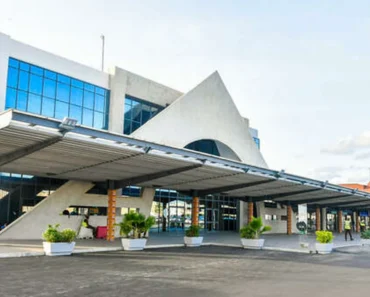
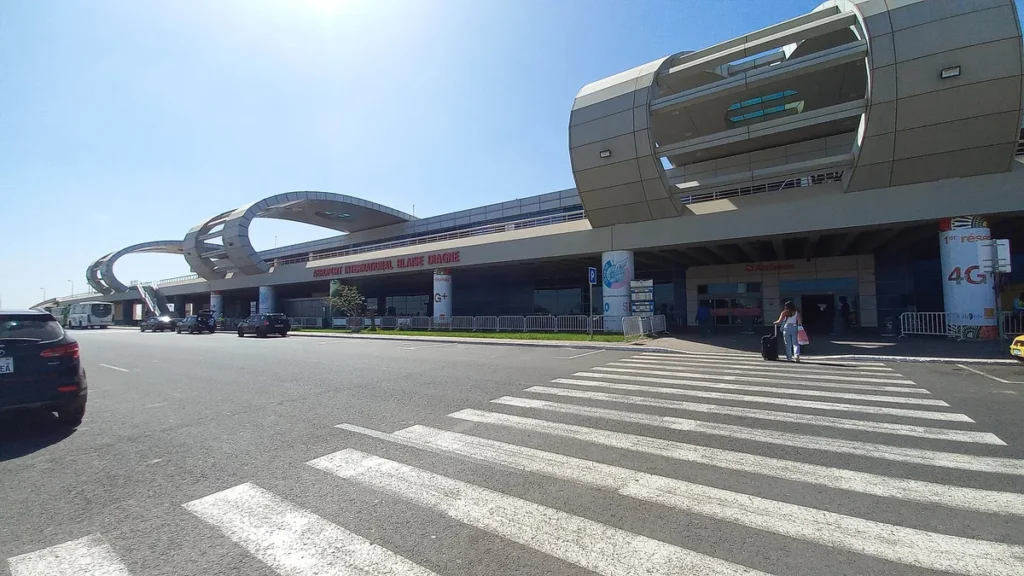
Blaise Diagne International Airport was designed and built to international standards befitting a major regional hub. The airport features a single passenger terminal building of substantial scale, constructed to handle both domestic and international traffic under one roof, with the international departures and arrivals halls occupying the principal operational zones. The terminal incorporates jet bridges, a duty-free retail zone, food and beverage concessions, and dedicated VIP and business-class lounges.
The airport has a single primary runway, oriented to accommodate the prevailing wind conditions of the site, and designed to full Code F specifications — meaning it is capable of handling the largest commercial aircraft in current operation, including the Airbus A380 and Boeing 747 families. A dedicated cargo terminal supports Senegal’s growing air freight sector, which handles perishables including fresh fish and horticultural products destined for European markets. In terms of passenger traffic classification, DSS is best described as a medium-to-large hub by African standards, with publicly disclosed traffic data indicating passenger volumes that place it among the more active airports in West Africa, though it has not yet reached the throughput levels of the continent’s largest hubs such as Johannesburg O.R. Tambo or Cairo International.
Visa regulations
Senegal operates a relatively open visa regime by global standards, which is a practical consideration for travellers arriving at DSS. Citizens of the United States, the United Kingdom, and European Union member states are generally permitted to enter Senegal without a prior visa for short stays, typically up to 90 days, under Senegal’s visa-free access policy for these source markets — though travellers are advised to verify current conditions before departure, as entry requirements can be adjusted by ministerial decree. Citizens of ECOWAS member states benefit from the community’s freedom of movement protocols, which facilitate entry without a visa. For nationalities not covered by visa-free arrangements, Senegal has in recent years expanded the availability of visa-on-arrival processing and has made progress toward eVisa infrastructure, though the maturity and reliability of these systems should be confirmed through official channels prior to travel. Visa rules change — check the live visa requirements lookup for the most current information.
Recent developments
The period from 2024 to 2026 has been consequential for Blaise Diagne International Airport. Air Senegal has continued to refine its network following a period of strategic review, with the airline making adjustments to its European and transatlantic route portfolio in response to both commercial pressures and fleet considerations. The airport authority has pursued ongoing works to improve ground transport connectivity between DSS and central Dakar — a persistent operational challenge given the airport’s distance from the city — with road infrastructure upgrades and discussions around dedicated bus rapid transit links forming part of the broader transport planning agenda.
New airline interest in the Dakar market has been reported by regional aviation media, reflecting the broader expansion of Gulf and Turkish carriers across African secondary markets. Senegal’s offshore energy sector development has also generated incremental demand for business aviation and charter services operating through DSS. Regulatory coordination between the Agence des Aéroports du Sénégal and the Direction de l’Aviation Civile et de la Météorologie (DACM) has continued as Senegal works toward full compliance with ICAO safety oversight standards under the Universal Safety Oversight Audit Programme.
News and reports
Researchers and journalists tracking developments at Blaise Diagne International Airport should consult several authoritative source categories. The Agence des Aéroports du Sénégal publishes operational announcements and press releases through its official communications channels. The Direction de l’Aviation Civile et de la Météorologie (DACM), Senegal’s civil aviation authority, issues regulatory notices and safety oversight updates. At the continental level, IATA’s Africa and Middle East regional office produces periodic market intelligence reports covering West African aviation trends, including traffic data and airline economics. The ICAO West and Central Africa Regional Office (WACAF), based in Dakar, is itself a primary source for safety audit findings and regulatory development across the region. Trade publications including African Business Aviation, ch-aviation, and The Africa Report provide ongoing commercial and operational coverage of DSS and the carriers serving it.