South Sudan statistics — population, economy, trade and telecom
As the world’s youngest nation enters its second decade of independence, South Sudan remains one of the most closely watched — and most challenging — development cases on the African continent. In 2026, with fragile peace agreements still being tested, humanitarian pressures persisting, and oil revenues fluctuating, accurate and up-to-date data on South Sudan is essential for policymakers, investors, aid organisations, and regional partners seeking to understand the country’s trajectory and its implications for the broader East and Central African region.
Population and Demographics
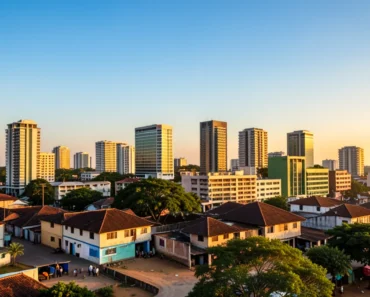
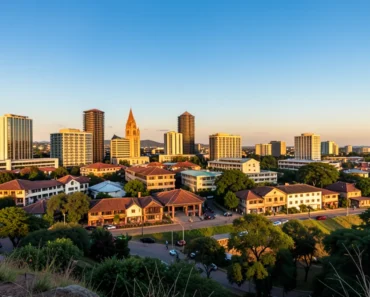
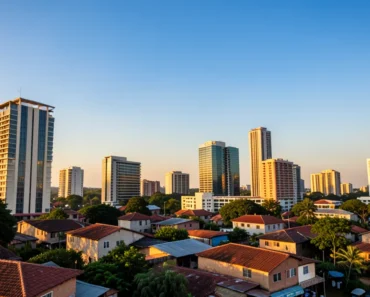
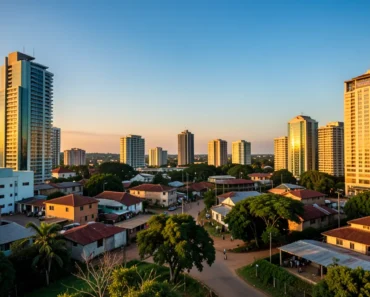
South Sudan’s population is estimated at approximately 11 to 12 million people as of 2024–2025, though reliable census data remains elusive given ongoing displacement and conflict. The UN and World Bank both acknowledge significant uncertainty in these figures, with some estimates placing the population closer to 10.5 million when accounting for refugees abroad — a population that numbers well over two million, primarily in Uganda, Sudan, Ethiopia, and Kenya. The country has one of the youngest populations in the world, with a median age estimated at roughly 18 to 19 years. The population growth rate is high, approximately 2.5 to 3 percent annually, reflecting elevated fertility rates. Urbanisation remains low by regional standards, with only around 20 to 22 percent of the population living in urban areas. Juba, the capital, is by far the largest urban centre and functions as the political, commercial, and administrative hub of the country. Internal displacement continues to distort demographic patterns, with the Internal Displacement Monitoring Centre tracking millions of internally displaced persons in fluctuating numbers depending on security conditions.
Economic Indicators
South Sudan’s economy remains overwhelmingly dependent on oil revenues, which account for the vast majority of government income and export earnings. The IMF estimates GDP at roughly 4 to 5 billion USD in recent years, though figures vary considerably depending on oil price movements and production levels. GDP per capita is among the lowest in the world, estimated at approximately 350 to 500 USD, placing South Sudan near the bottom of global income rankings. Economic growth has been deeply volatile — the country experienced severe contraction during the civil war period and has seen modest recoveries interrupted by renewed conflict, flooding, and commodity price swings. Inflation has been a persistent and severe challenge; World Bank and IMF data indicate that South Sudan has experienced some of the highest inflation rates globally in recent years, with consumer price inflation running into double or even triple digits during periods of currency stress, though more recent figures suggest some moderation. The South Sudanese Pound (SSP) has faced chronic depreciation pressure against the US dollar. Unemployment and underemployment are widespread, though formal labour market data is extremely limited. Debt sustainability is a significant concern, with debt-to-GDP ratios that industry and multilateral reports suggest are elevated relative to the country’s revenue base, particularly given oil-backed borrowing arrangements.
Trade and External Accounts
Crude oil dominates South Sudan’s export profile, accounting for roughly 95 percent or more of total export revenues. The country exports its oil primarily through Sudan’s pipeline infrastructure to Port Sudan — an arrangement that has been severely disrupted by the conflict in Sudan that escalated in 2023 and continued into 2025, dealing a major blow to South Sudan’s fiscal position. Top import categories include food and beverages, machinery, vehicles, fuel products, and manufactured goods. Uganda, Kenya, and China are among the most significant trading partners, with China playing a particularly prominent role in the oil sector through investment and offtake arrangements. The current account balance has historically been in deficit outside of oil boom periods, and the disruption to oil export routes has placed additional strain on external accounts. Regional trade through informal cross-border channels with Uganda and Kenya is significant but poorly captured in official statistics.
Key Sectors
The oil and extractives sector is the backbone of the formal economy, but its benefits have been unevenly distributed and have not translated into broad-based development. Agriculture is the primary livelihood for the majority of the population, with subsistence farming, pastoralism, and fishing predominant across rural areas. South Sudan has significant agricultural potential — including fertile land along the Nile and its tributaries — but this potential remains largely unrealised due to conflict, displacement, lack of infrastructure, and limited access to inputs and markets. The services sector, concentrated in Juba, includes trade, finance, telecommunications, and public administration, and has grown in relative importance as oil revenues have fluctuated. Construction and real estate activity in Juba has been notable during periods of relative stability. Manufacturing is minimal. Tourism is effectively non-existent as a formal economic contributor given security conditions, though the country possesses notable natural assets including Boma National Park and the Sudd wetlands. Mining of non-oil minerals remains largely unexplored and underdeveloped, though South Sudan is believed to hold deposits of gold, iron ore, and other minerals.
Telecommunications and Digital
South Sudan’s telecommunications sector is underdeveloped relative to regional peers but has shown gradual growth. Mobile penetration is estimated at roughly 25 to 35 percent of the population, according to ITU and GSMA data, though active SIM counts may overstate actual user numbers. Internet penetration remains very low, with estimates suggesting fewer than 10 percent of the population has regular internet access, constrained by infrastructure gaps, electricity shortages, affordability, and low digital literacy. The dominant mobile operators include MTN South Sudan and Zain South Sudan, with a small number of additional providers operating in limited areas. Mobile money services have been introduced and are growing in relevance as a financial inclusion tool, particularly given the very low rates of formal banking access — World Bank estimates suggest that fewer than 10 percent of adults hold a formal bank account. The digital economy is nascent, and regulatory frameworks are still developing. Fibre and broadband infrastructure is extremely limited outside of Juba.
Sources and Methodology
The statistics and estimates presented in this dashboard draw on a range of authoritative sources, including the World Bank’s World Development Indicators and South Sudan country data portal, the International Monetary Fund’s Article IV consultations and World Economic Outlook database, the United Nations Population Fund and UNHCR for demographic and displacement data, the International Telecommunication Union for telecommunications and internet penetration figures, the GSMA Intelligence database for mobile sector data, the African Development Bank’s African Economic Outlook, the Internal Displacement Monitoring Centre, and the South Sudan National Bureau of Statistics where data is available. Given the significant challenges of data collection in a conflict-affected environment, many figures carry wide confidence intervals and should be treated as indicative rather than precise. Readers are encouraged to consult primary sources directly and to note publication dates, as conditions in South Sudan can change rapidly. Where exact figures were uncertain, this article has used qualifying language such as “approximately,” “roughly,” or “estimates suggest” to reflect that uncertainty transparently.
For deeper qualitative and strategic analysis of South Sudan’s political economy, governance landscape, and investment environment, visit our South Sudan expert briefing. To benchmark South Sudan against other African nations, explore our full library of all African country statistics. For broader context on growth, trade, and development trends across the continent, see our African economy pillar.