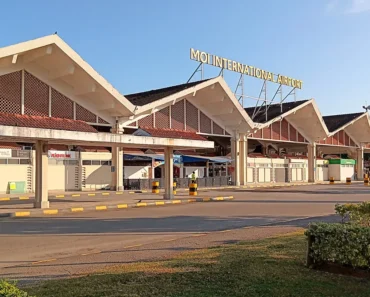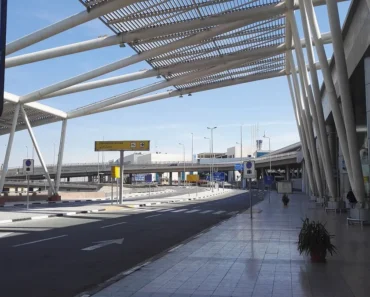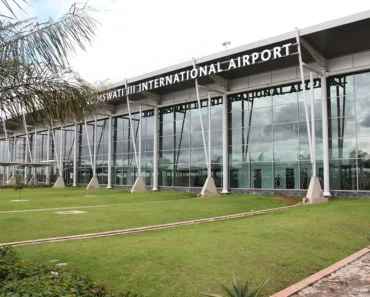
Libreville International Airport
Libreville International Airport
Libreville International Airport (LBV) — Airport Profile
Libreville International Airport (IATA: LBV / ICAO: FOOL) is the principal gateway to Gabon and one of the more strategically positioned airports along Central Africa’s Atlantic coastline. Serving the capital city of Libreville, the airport functions as a key node connecting the Gulf of Guinea region to Europe, the Middle East, and the broader African continent. For travellers, journalists, and aviation analysts tracking Central African connectivity, LBV offers a revealing case study in how a mid-sized resource-rich nation manages its air infrastructure in an era of increasing regional competition and post-pandemic network rebuilding.
About
Libreville International Airport has served as Gabon’s primary commercial aviation hub since the country’s independence era, with its origins traceable to the mid-twentieth century when French colonial administration developed the site to support both civil and military operations. The airport sits approximately 11 kilometres north of Libreville’s city centre, positioned on a coastal strip that has historically constrained its physical expansion. Ownership and operational oversight fall under the Gabonese state, with the airport historically managed through frameworks involving the Agence Nationale de l’Aviation Civile (ANAC Gabon) and successive concession arrangements that have drawn varying degrees of private-sector involvement over the decades.
Major infrastructure investment has been a recurring theme in the airport’s modern history. Expansion programmes have at various points targeted terminal capacity, apron space, and navigational systems, though the pace and completion of these projects have not always matched announced timelines — a pattern familiar across many African airport development stories. The airport’s single passenger terminal has undergone phased improvements, and according to publicly disclosed planning documents, further modernisation has remained a stated government priority heading into the mid-2020s.
The airport’s role extends beyond passenger movement. As Gabon’s economy has historically been anchored in oil extraction, timber, and manganese mining, LBV also serves as a critical logistics point for business aviation, charter operations, and cargo movements supporting the extractive sector. This dual commercial-industrial character distinguishes it from purely tourism-oriented gateways elsewhere on the continent.
Country
Gabon is a Central African republic bordering Cameroon to the north, Equatorial Guinea to the northwest, the Republic of the Congo to the east and south, and the Atlantic Ocean to the west. Libreville serves as the national capital and is home to a significant share of the country’s population, which numbers in the low single-digit millions — making Gabon one of the less densely populated nations on the continent relative to its land area. Despite modest population figures, Gabon’s comparatively high per-capita income (driven largely by hydrocarbon revenues) and its membership in the Economic Community of Central African States (ECCAS) and the Central African Economic and Monetary Community (CEMAC) give it an outsized regional economic and diplomatic presence. The country’s political landscape shifted notably following the military-led transition of August 2023, a development that continues to shape its international relationships and investment climate as of 2026. → Read the Gabon expert briefing
Airlines Based Here
Libreville International Airport has historically been the home base of Gabon’s national carrier. Afrijet Business Service, a Gabonese airline operating under an ANAC licence, has long maintained a focus-city presence at LBV, operating regional turboprop and jet services across Central and West Africa. The airline has positioned itself as a reliable intra-regional connector rather than a long-haul operator. Separately, Gabon Airlines has at various points sought to fill the role of a fuller-service national carrier, though the sector has seen considerable flux in terms of fleet, licensing status, and route authority.
On the visiting carrier side, Air France has historically been the most prominent long-haul operator at LBV, reflecting the deep Franco-Gabonese economic and cultural ties that have persisted since independence. Ethiopian Airlines, which has aggressively expanded its pan-African network, serves Libreville as part of its Central African routing. Turkish Airlines has also operated services to LBV, connecting Libreville to its Istanbul hub and onward to a wide intercontinental network. Royal Air Maroc provides connectivity northward through Casablanca, offering travellers an alternative hub-and-spoke option for reaching Europe and the Americas. Kenya Airways has at times included LBV within its West and Central African network, though schedule continuity across carriers in this market warrants verification with individual airlines before booking.
Flights and Destinations
The route network at Libreville International Airport reflects the airport’s dual role as a national hub and a regional connector. Intercontinental services link LBV most reliably to Paris (Charles de Gaulle), Istanbul, and Casablanca, providing onward access to European, North American, and Asian markets via connecting hubs. Within Africa, the airport supports scheduled services to Douala and Yaoundé in Cameroon, Malabo in Equatorial Guinea, Brazzaville and Pointe-Noire in the Republic of the Congo, and Cotonou in Benin — destinations that reflect both commercial demand and the movement of workers across the CEMAC zone. Addis Ababa features as a key African hub connection via Ethiopian Airlines, opening eastward routing toward Asia and the Indian subcontinent. Domestic services within Gabon, connecting Libreville to secondary cities such as Port-Gentil and Franceville, are an important component of the airport’s overall traffic, given the country’s limited road infrastructure. Industry estimates suggest that regional and domestic traffic collectively account for a substantial share of total passenger movements at LBV.
Facilities and Capacity
Libreville International Airport operates with a single main passenger terminal building that handles both international and domestic departures and arrivals, with functional separation managed operationally rather than through fully distinct terminal structures. The airport is served by one primary commercial runway — runway 16/34 — which, according to publicly available aeronautical data, extends to a length sufficient to accommodate wide-body jet operations including aircraft in the Airbus A330 and Boeing 767 class. A parallel taxiway system and apron areas support simultaneous handling of multiple aircraft, though apron capacity has at times been cited as a constraint during peak periods.
Cargo facilities at LBV serve both the commercial freight market and the specialised logistics demands of Gabon’s extractive industries. A dedicated cargo apron and handling infrastructure support freighter operations, though the airport is not classified among Africa’s primary cargo hubs. In terms of overall passenger throughput, LBV is best characterised as a small-to-medium hub by continental standards — significant within the CEMAC sub-region but modest when compared to major African gateway airports such as Addis Ababa Bole, Johannesburg O.R. Tambo, or Casablanca Mohammed V. Planned expansion works, including terminal upgrades and apron extensions, have been referenced in government communications, though according to publicly disclosed project timelines, delivery schedules have been subject to revision.
Visa Regulations
Travellers arriving at Libreville International Airport should be aware that Gabon operates a visa regime that has undergone meaningful changes in recent years. As of 2026, Gabon has moved to expand its visa-on-arrival and eVisa options as part of broader efforts to stimulate tourism and business travel — a policy direction consistent with trends seen across several African nations. Citizens of many CEMAC and ECCAS member states benefit from facilitated entry arrangements, while travellers holding passports from the United States, the United Kingdom, and European Union member states have generally been eligible to obtain visas on arrival or through an eVisa portal, subject to fee payment and documentation requirements. However, visa policies are subject to change at short notice, and the specific conditions — including validity periods, permitted activities, and fee structures — can vary. Travellers are strongly advised to verify current requirements with the nearest Gabonese embassy or consulate before departure. → Check the live visa requirements lookup
Recent Developments
The period from 2024 to 2026 has been consequential for Libreville International Airport against a backdrop of Gabon’s broader political and economic transition following the August 2023 change of government. The transitional authorities have publicly signalled an intent to attract new investment into aviation infrastructure, framing airport modernisation as part of a wider economic diversification agenda. On the commercial side, route network activity has reflected cautious optimism: industry observers have noted efforts to retain existing long-haul carrier commitments while exploring new bilateral air services agreements that could open additional European and Middle Eastern connections. Discussions around improving ground handling standards and customs processing efficiency at LBV have featured in aviation sector consultations, with ANAC Gabon engaging with ICAO technical assistance frameworks. Any traveller or analyst tracking the airport’s operational status should monitor announcements from ANAC Gabon directly, as the regulatory and commercial environment remains in active development.
News and Reports
Ongoing operational and commercial news relating to Libreville International Airport is best sourced through a combination of official and specialist channels. The Agence Nationale de l’Aviation Civile du Gabon (ANAC Gabon) publishes regulatory notices, safety directives, and periodic operational updates through its official communications. IATA’s Africa regional office produces market intelligence reports covering Central African aviation trends, including route development and traffic analysis, accessible through IATA’s member and public-facing publications. The ICAO Western and Central African Regional Office (WACAF), based in Dakar, covers Gabon within its safety oversight and technical assistance reporting. For commercial aviation news, specialist trade publications including Aviation Week Network, ch-aviation, and The Africa Report’s business aviation coverage regularly feature developments affecting LBV and the broader Gabonese market. Researchers are encouraged to cross-reference multiple sources given the rapidly evolving nature of the operating environment.
Related Research
- Gabon Expert Briefing — in-depth political, economic, and investment analysis for Gabon
- Gabon Statistics — key demographic, economic, and infrastructure data
- African Airports — comparative profiles across the continent
- African Airlines — carrier profiles, route maps, and fleet data
- Visa Requirements — live lookup tool for entry requirements by nationality
- Country Comparison — benchmark Gabon against peer economies and aviation markets