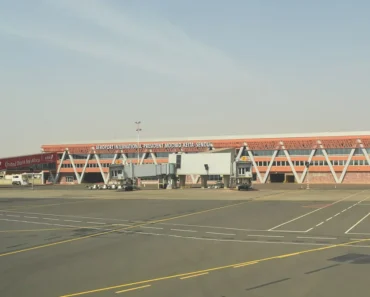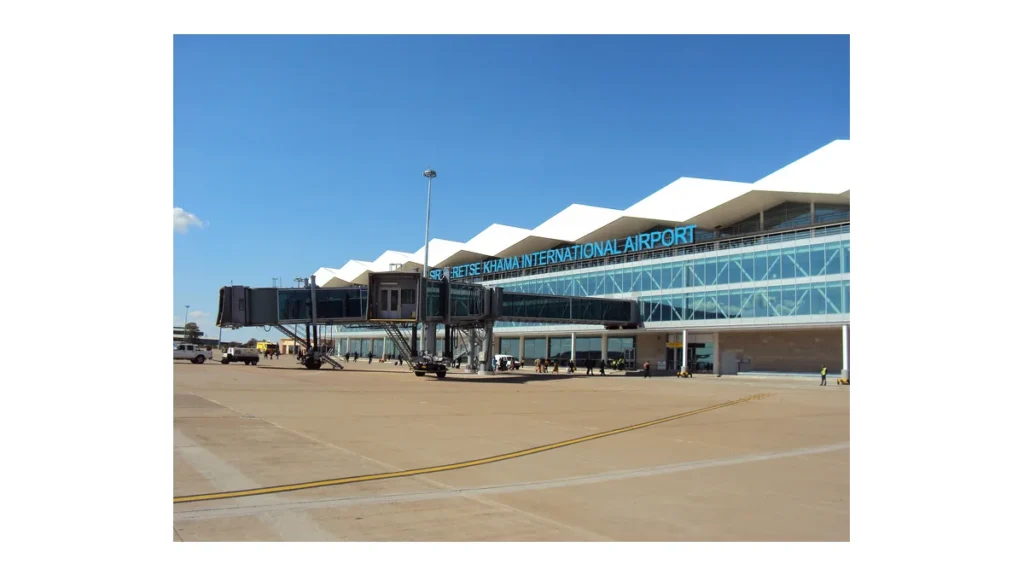
Sir Seretse Khama International Airport
Sir Seretse Khama International Airport
About
Sir Seretse Khama International Airport (IATA: GBE / ICAO: FBSK) is Botswana’s principal gateway to the world, serving the capital city of Gaborone and functioning as the country’s primary hub for both scheduled commercial aviation and government air transport. Named in honour of Botswana’s founding president and independence hero, the airport occupies a symbolic as well as a logistical position in southern African aviation — a region increasingly defined by competition between emerging hubs and the consolidation of long-haul connectivity through a small number of gateway cities. For travellers, journalists, and aviation analysts tracking the continent’s development, GBE represents a mid-sized but strategically important node in the southern African air transport network.
The airport’s origins trace to the early post-independence era, when Botswana required a functioning international facility commensurate with its new sovereign status. Infrastructure was developed incrementally through the 1970s and 1980s as Botswana’s diamond-driven economy expanded and demand for business and government travel grew. The facility was formally upgraded to international status and given its current name in recognition of the country’s first president, cementing its role as both a transport hub and a national institution.
The airport is owned by the Government of Botswana and operated under the authority of the Civil Aviation Authority of Botswana (CAAB), the statutory body responsible for regulating and developing civil aviation across the country. Over the decades, the airport has undergone a series of capacity improvements, including terminal refurbishments and airside upgrades, though it has historically operated at a scale more modest than the major continental hubs of Johannesburg, Nairobi, or Addis Ababa. Discussions around a more comprehensive modernisation programme have featured in Botswana’s national development planning cycles, with the airport’s long-term capacity a recurring subject of policy interest.
Country
Botswana is a landlocked nation in southern Africa, bordered by South Africa to the south and southeast, Zimbabwe to the northeast, Zambia to the north, and Namibia to the west and north. Gaborone, the capital, sits in the southeast of the country near the South African border and is home to a significant share of Botswana’s population of roughly two to three million people — a figure that reflects a country with one of Africa’s lower population densities but one of its more stable and prosperous economies, underpinned by diamond mining, financial services, and a growing tourism sector centred on the Okavango Delta and Chobe National Park. Botswana is a member of the Southern African Development Community (SADC) and the African Union, and its relative political stability and open economic posture have made it a point of interest for investors and researchers across the continent.
→ Read the Botswana expert briefing
Airlines Based Here
Air Botswana, the national flag carrier, has historically used Sir Seretse Khama International Airport as its operational base and primary hub. The airline operates a small fleet on regional routes, connecting Gaborone to neighbouring capitals and domestic points including Maun and Kasane — the latter two serving as critical gateways to Botswana’s wildlife tourism regions. Air Botswana has faced periodic financial and operational challenges common to smaller African flag carriers, and its network and fleet status are subject to ongoing government review and restructuring discussions.
Beyond the national carrier, GBE attracts a number of visiting international airlines that operate scheduled services into Gaborone without basing aircraft there. South African Airways and its low-cost affiliate Airlink have maintained services connecting Gaborone to Johannesburg’s O.R. Tambo International Airport, which functions as the primary intercontinental transfer point for most GBE passengers. Ethiopian Airlines, one of the continent’s most expansive carriers, has also operated services to Gaborone as part of its pan-African network strategy. The airport’s visiting carrier profile reflects its role as a point-to-point and feeder destination rather than a transfer hub in its own right.
Flights and Destinations
The route network at Sir Seretse Khama International Airport is primarily regional and continental in character, with the overwhelming majority of passengers connecting onward to intercontinental destinations via Johannesburg or Addis Ababa. Direct scheduled services have included routes to Johannesburg (South Africa), Harare (Zimbabwe), Lusaka (Zambia), Nairobi (Kenya), and Addis Ababa (Ethiopia), alongside domestic services to Maun and Kasane. The Johannesburg corridor is by far the busiest, reflecting the deep economic and logistical ties between Botswana and South Africa and the role of O.R. Tambo as the de facto intercontinental gateway for southern African travellers. Charter and seasonal services also connect GBE to leisure-oriented destinations, and the airport handles a meaningful volume of private and business aviation traffic given Botswana’s profile as a destination for high-value, low-volume tourism and corporate travel.
Facilities and Capacity
Sir Seretse Khama International Airport operates with a single main passenger terminal handling both international and domestic departures and arrivals, with airside facilities divided between international and domestic processing zones. The airport has one principal runway — designated 08/26 — which is capable of handling narrow-body and, under appropriate conditions, wide-body jet aircraft, supporting the range of aircraft types operated by regional and continental carriers. Cargo facilities are present on site, serving Botswana’s import-export needs, though the airport is not a major continental cargo hub. By the classification standards used in African aviation analysis, GBE is best described as a small-to-medium international airport, with annual passenger throughput — according to publicly disclosed traffic data from the Civil Aviation Authority of Botswana — placing it well below the volumes handled by the continent’s tier-one hubs. Infrastructure investment discussions have centred on terminal expansion, improved airside capacity, and modernisation of passenger processing systems, with various proposals having been advanced under successive national development plans.
Visa Regulations
Botswana maintains a relatively open visa regime by regional standards. Citizens of the United States, the United Kingdom, and most European Union member states have historically been able to enter Botswana visa-free for short stays, typically up to 90 days, making GBE an accessible entry point for Western business travellers, journalists, and tourists. Citizens of most southern African Development Community (SADC) member states similarly benefit from visa-free or simplified entry arrangements, reflecting the bloc’s broader commitment to regional freedom of movement. For nationals of countries not covered by visa-free arrangements, Botswana has offered visa-on-arrival facilities at the airport, and the government has at various points advanced eVisa initiatives as part of broader efforts to streamline tourism and business travel. Visa regulations are subject to change, and travellers are strongly advised to verify current requirements before travel. → Check the live visa requirements lookup
Recent Developments
In the period leading into 2026, Sir Seretse Khama International Airport has been the subject of renewed attention in the context of Botswana’s broader economic diversification agenda. The government’s ambitions to grow tourism and position Gaborone as a regional financial and services hub have placed airport capacity and connectivity back on the policy agenda. Industry estimates suggest that post-pandemic traffic recovery at GBE broadly tracked the southern African regional trend, with leisure and business travel rebounding through 2023 and 2024. Airlink has maintained and in some periods expanded its Johannesburg services, reinforcing the airport’s dependence on the South Africa corridor. Discussions regarding the future structure and capitalisation of Air Botswana have continued, with the national carrier’s route network and fleet renewal remaining unresolved questions of significance for the airport’s long-term connectivity profile. Terminal improvement works and airside upgrades have been referenced in government budget and planning documents, though the pace and scope of physical development have proceeded incrementally.
News and Reports
Researchers and journalists tracking developments at Sir Seretse Khama International Airport should consult several authoritative sources for ongoing operational and regulatory news. The Civil Aviation Authority of Botswana (CAAB) publishes regulatory notices, traffic data, and policy updates through its official communications channels. The airport operator issues periodic press releases on operational matters. At the continental level, IATA’s Africa and Middle East regional office produces market analysis and connectivity reports that contextualise GBE’s performance within broader African aviation trends. The ICAO regional office for eastern and southern Africa (ESAF), based in Nairobi, is the relevant body for safety oversight and regulatory framework reporting. Botswana’s national press — including the Daily News and Mmegi — regularly covers aviation policy and airport developments, and regional aviation trade publications provide additional analytical coverage of the southern African market.