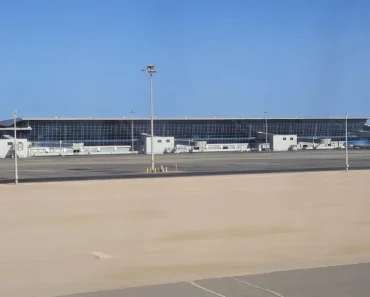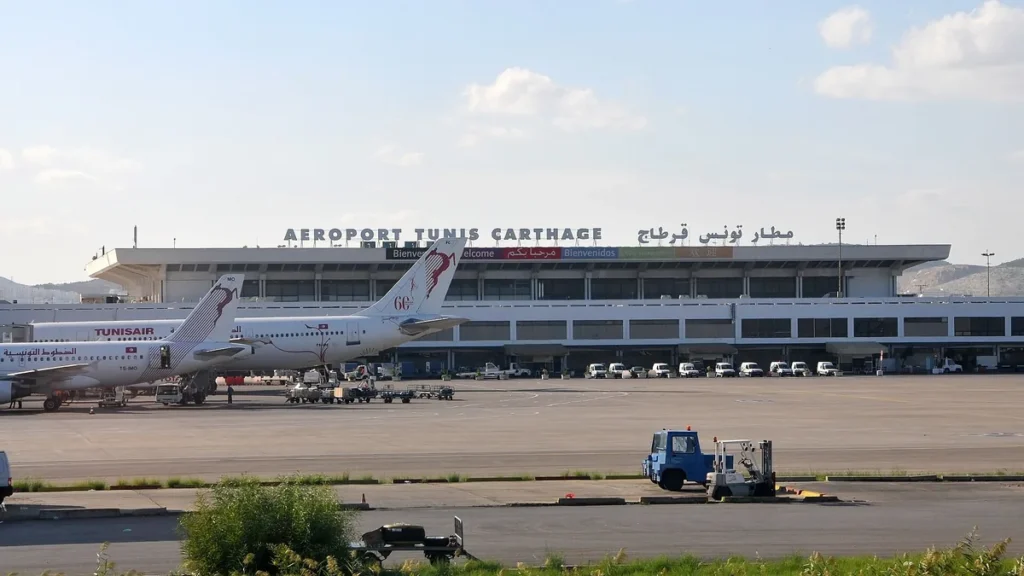
Tunis–Carthage International Airport
Tunis–Carthage International Airport
About
Tunis–Carthage International Airport (IATA: TUN / ICAO: DTTA) is Tunisia’s principal international gateway and one of the most strategically positioned airports on the African continent. Sitting at the crossroads of Europe, the Middle East, and sub-Saharan Africa, it serves as the primary entry point for business travellers, tourists, diaspora passengers, and cargo operators moving goods across the Mediterranean corridor. For aviation analysts tracking North African connectivity, TUN is a reference hub — a mid-sized but commercially active airport whose traffic patterns reflect both Tunisia’s domestic economic cycles and broader shifts in European leisure demand.
The airport takes its name from the ancient city of Carthage, whose ruins lie only a few kilometres to the northeast of the terminal complex — a detail that underscores the long history of this stretch of Tunisian coastline as a node of international exchange. The facility was formally established in the mid-twentieth century and expanded progressively through the latter decades of the 1900s to accommodate jet-age traffic. Ownership and operational oversight rests with the Office de l’Aviation Civile et des Aéroports (OACA), the Tunisian state body responsible for civil aviation infrastructure across the country.
Major infrastructure investments have been carried out in phases since the 1990s, including terminal upgrades, apron expansions, and improvements to airside security and passenger processing. The airport has periodically been the subject of modernisation studies and public-private partnership discussions, though the pace of capital investment has been shaped by Tunisia’s broader fiscal environment. As of 2026, OACA continues to manage the airport directly, with ongoing attention to capacity constraints during peak summer charter seasons.
Country
Tunisia is a North African republic with its capital in Tunis, a city of several million inhabitants that anchors the country’s political, commercial, and cultural life. With a national population in the range of twelve million people, Tunisia occupies a pivotal geographic position — bordered by Algeria to the west, Libya to the southeast, and facing Italy and Malta across a relatively narrow stretch of the central Mediterranean. This location has historically made it a bridge between Europe and Africa, a role that Tunis–Carthage Airport embodies in practical terms every day. Tunisia is a member of the African Union and the Arab League, and its economy draws significantly on tourism, manufacturing, and remittances from a large diaspora concentrated in France, Italy, and Germany.
→ Read the Tunisia expert briefing
Airlines based here
Tunisair is the flag carrier of Tunisia and treats Tunis–Carthage as its primary hub. The airline operates scheduled services across Europe, the Middle East, and within Africa, and its maintenance base and operational headquarters are co-located at the airport. Tunisair Express, the regional subsidiary, also operates from TUN, serving domestic Tunisian routes as well as short-haul international connections. Nouvelair Tunisie, a privately held Tunisian carrier, uses TUN as a focus city for its charter and leisure-oriented scheduled services, with a strong concentration of routes to European sun-and-sea markets. Transavia Tunisia, which operates under a joint-venture structure with a European parent, has also used TUN as a base for low-cost leisure routes. Visiting international carriers — including Air France, Lufthansa, Turkish Airlines, Royal Air Maroc, Emirates, and a range of European charter operators — serve the airport on scheduled and seasonal bases, reflecting demand from the Tunisian diaspora and inbound tourism markets.
Flights and destinations
The route network at Tunis–Carthage is dominated by European connections, which account for the largest share of seat capacity. Paris Charles de Gaulle and Paris Orly are among the highest-frequency routes, driven by the large Franco-Tunisian community. Frankfurt, Rome Fiumicino, Milan Malpensa, Brussels, Geneva, and London Heathrow are all served by a combination of scheduled and charter services. Within the Arab world, connections to Jeddah, Riyadh, Dubai, and Doha are maintained, catering to labour migration flows and religious travel. On the African continent, Casablanca, Cairo, and Tripoli represent key regional links, while Tunisair’s wider African network has historically extended to cities including Dakar, Abidjan, and Bamako, though frequency and continuity on sub-Saharan routes have varied with commercial conditions. Domestically, connections to Djerba–Zarzis, Sfax, and Monastir are operated, though Monastir’s Habib Bourguiba International Airport also handles significant charter volume independently.
Facilities and capacity
Tunis–Carthage operates with two asphalt runways — designated 01/19 and 11/29 — which allow for simultaneous ground operations and provide resilience during maintenance periods. The airport has two principal passenger terminal buildings: Terminal 1, which handles the majority of international scheduled traffic, and Terminal 2, which has historically been used for charter and overflow operations, though the functional division between the two has shifted over time with operational demand. The airport includes dedicated cargo facilities managed under OACA’s oversight, serving both belly-hold freight on passenger aircraft and dedicated freighter movements. By African airport classification standards, TUN is considered a medium-to-large hub, with according to publicly disclosed traffic data handling several million passengers annually in pre-disruption years, though figures have fluctuated with Tunisia’s tourism cycles and broader global events. Expansion and modernisation plans have been discussed at various intervals, with industry estimates suggesting that terminal capacity and airside infrastructure will require sustained investment to meet projected medium-term demand growth.
Visa regulations
Tunisia operates a relatively open visa regime for many of the nationalities most likely to arrive at Tunis–Carthage. Citizens of European Union member states, the United Kingdom, the United States, and Canada have generally been able to enter Tunisia without a prior visa for short stays, receiving a stamp on arrival that permits tourism and business visits for a defined period — historically up to ninety days in some cases, though conditions vary. Citizens of Arab League member states similarly benefit from facilitated entry arrangements in most cases. For travellers holding passports from sub-Saharan African countries, entry conditions are more varied: some nationalities may obtain a visa on arrival, while others are required to obtain a visa in advance from a Tunisian diplomatic mission. An eVisa system has been under development and discussion within Tunisian civil aviation and immigration policy circles, though travellers should verify current availability before departure. Visa rules are subject to change without notice, and the information above reflects general arrangements rather than a current legal guarantee. For the most current requirements by nationality, consult the live lookup tool at /visa-requirements/.
Recent developments
Over the twenty-four months leading into 2026, Tunis–Carthage has seen a number of operationally significant developments. Route network recovery following the disruptions of the early 2020s has continued, with several European carriers restoring or increasing frequencies to TUN in response to recovering leisure demand. Tunisair has undergone internal restructuring discussions, with the airline’s financial position and fleet renewal plans attracting attention from aviation analysts and the Tunisian government as majority shareholder. New low-cost carrier interest in the Tunisian market has been reported in trade press, with the airport’s catchment area seen as underserved by budget operators relative to comparable Mediterranean destinations. Airside security and border management upgrades have been progressed in line with ICAO standards and bilateral agreements with European partners. Terminal maintenance and passenger experience improvements have been noted in traveller feedback channels, though the airport continues to face criticism during peak summer periods when charter volumes strain processing capacity.
News and reports
Researchers and journalists tracking developments at Tunis–Carthage International Airport should consult several authoritative sources. The Office de l’Aviation Civile et des Aéroports (OACA) publishes operational notices, traffic summaries, and infrastructure announcements through its official communications channels. The Tunisian Ministry of Transport issues policy-level statements relevant to airport investment and bilateral air service agreements. At the regional level, the ICAO Middle East and Africa regional offices publish safety oversight and infrastructure development reports that cover Tunisian civil aviation. IATA’s Africa and Middle East regional publications provide market analysis and connectivity data relevant to TUN’s competitive positioning. Specialist aviation trade publications including ch-aviation, anna.aero, and The Air Current periodically cover North African airport and airline developments. For academic and policy research, the African Development Bank and the World Bank have published infrastructure assessments covering North African transport hubs that include relevant benchmarking data.