Republic of the Congo — Expert Briefing
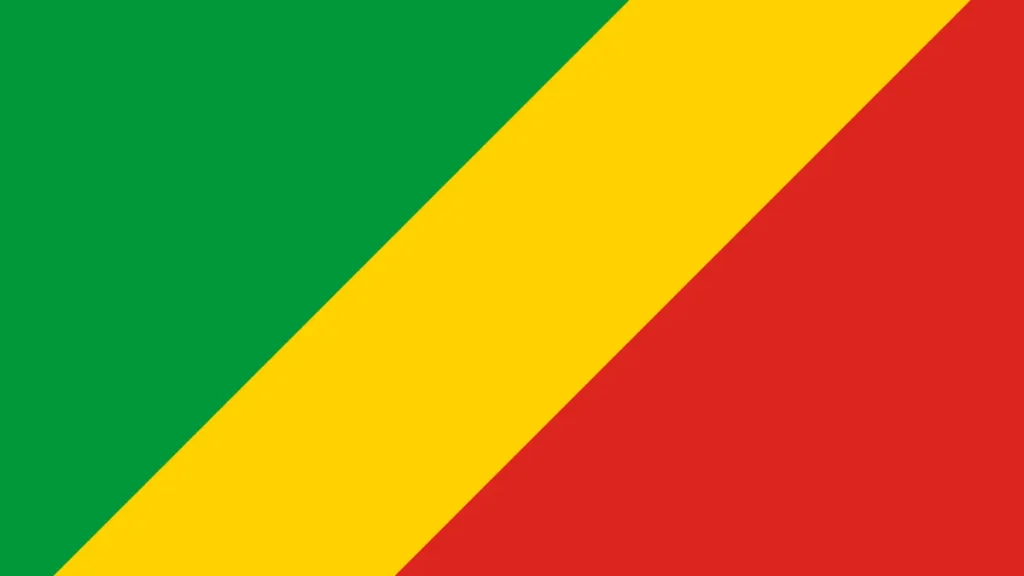
Republic of the Congo at a glance: A mid-sized Central African petro-state navigating fiscal fragility, entrenched one-party dominance, and the accelerating pressure to diversify beyond oil before reserves run thin.
Overview
The Republic of the Congo — commonly called Congo-Brazzaville to distinguish it from the much larger Democratic Republic of the Congo across the river — has its capital at Brazzaville, a city of roughly 2.5 million people that sits directly opposite Kinshasa on the Congo River, forming one of the world’s only pairs of national capitals visible from each other across an international border. The country’s total population is estimated at approximately 6.1 million as of 2025, according to UN Population Division projections, spread across a territory of 342,000 square kilometres that is more than 60 percent covered by equatorial rainforest. French is the sole official language, though Lingala and Munukutuba function as widely spoken national lingua francas. The currency is the Central African CFA franc (XAF), pegged to the euro at a fixed rate of 655.96 XAF per euro and managed collectively by the six member states of the Economic and Monetary Community of Central Africa (CEMAC). GDP per capita sits in the lower-middle-income band — the World Bank placed it at roughly USD 2,100 in 2024 — a figure that flatters the underlying poverty rate because oil revenues are concentrated at the top of the economy. Congo-Brazzaville matters in 2026 for two intersecting reasons: it holds significant untapped hydrocarbon and forestry resources that global energy and carbon-credit markets are actively courting, and its political stability — such as it is — remains a reference point for a sub-region that includes several fragile or conflict-affected neighbours.
Government and Politics
The Republic of the Congo is a presidential republic in which executive authority is heavily concentrated in the head of state. President Denis Sassou Nguesso has held power for a combined total of more than four decades — first from 1979 to 1992, and continuously again since 1997 following a brief civil war — making him one of the longest-serving leaders on the African continent. He governs through the Parti Congolais du Travail (PCT), which dominates both chambers of the bicameral Parliament: the Senate (upper house, 72 seats) and the National Assembly (lower house, 151 seats). The most consequential recent constitutional moment was the 2015 referendum that removed presidential term limits and lowered the maximum age ceiling, clearing the path for Sassou Nguesso to stand again. Presidential elections were last held in March 2021; Sassou Nguesso was declared the winner with approximately 88 percent of the vote in a poll that opposition groups and several international observers characterised as neither free nor fair. The next presidential election is scheduled for 2026, and there is no credible indication that the political landscape will shift materially: the opposition remains fragmented, key figures operate in exile or under legal constraint, and civil society space is tightly managed. Legislative elections held in 2022 returned the PCT and its allies to an overwhelming parliamentary majority. There have been no significant constitutional amendments since 2015, but the government has used decree powers extensively to manage economic policy, particularly around oil revenue allocation and debt restructuring.
Economy
The Republic of the Congo’s GDP was estimated at approximately USD 12.5 billion in current prices in 2024, according to IMF Article IV data, with real growth hovering in the 2–3 percent range — modest, and heavily contingent on global oil prices. Hydrocarbons account for roughly 60–65 percent of government revenues and more than 80 percent of export earnings; the country produces around 250,000–280,000 barrels of crude oil per day, with the Moho-Bilondo and Moho Nord deepwater fields operated by TotalEnergies representing the most productive assets. Beyond oil, the formal economy includes timber (Congo-Brazzaville holds the world’s second-largest tropical forest after the Amazon basin), potash mining (the Sintoukola project has been in development for years), and a small but growing services sector in Brazzaville and Pointe-Noire. The CFA franc peg provides monetary stability but removes exchange-rate flexibility as an adjustment tool. The country’s debt position remains a serious structural concern: after years of opaque borrowing — much of it from Chinese state-linked creditors collateralised against future oil deliveries — the government entered an IMF Extended Credit Facility arrangement in 2019 and has been working through successive reviews since. The single most consequential economic story of the past 24 months is the renegotiation and partial restructuring of Congo’s external debt, including agreements with the Paris Club and ongoing bilateral discussions with Chinese creditors, which has partially restored fiscal headroom but left the country’s long-term debt sustainability dependent on oil prices remaining above approximately USD 65 per barrel. Diversification rhetoric is present in government planning documents, but structural transformation remains limited in practice.
Demographics and Society
With a population of approximately 6.1 million, the Republic of the Congo is one of Central Africa’s less densely populated countries, but it is strikingly urban: the UN estimates that around 68–70 percent of the population lives in cities, one of the highest urbanisation rates in sub-Saharan Africa, concentrated almost entirely in Brazzaville and the Atlantic port city of Pointe-Noire. The country is ethnically diverse, with more than 60 distinct groups; the largest are the Kongo (roughly 48 percent of the population, predominantly in the south and Pool region), the Sangha and related groups in the north, the Teke in the centre, and the M’Bochi, from whom President Sassou Nguesso hails, in the north. This ethnic geography maps imperfectly but meaningfully onto political and economic fault lines. The Baka and other forest-dwelling indigenous peoples — sometimes referred to collectively as Pygmies, a term many communities reject — number in the tens of thousands and remain among the most marginalised populations in the country, with limited access to formal land rights, healthcare, or education. Christianity is the dominant religion, practised by an estimated 85–90 percent of the population in various forms, including a significant Kimbanguist and syncretic Christian presence; Islam accounts for roughly 2 percent. The defining social trend of the current moment is youth unemployment and urban informality: more than 60 percent of the population is under 25, and the formal labour market — overwhelmingly dependent on the oil sector and the civil service — cannot absorb this cohort, driving a large and growing informal economy in both cities and generating persistent social pressure that the government manages through patronage networks rather than structural reform.
Key Issues Right Now
The Pool Region and residual internal security fragility. The Pool region, south of Brazzaville, was the epicentre of militia violence led by the Pastor Ntumi-aligned Ninja movement, which flared most recently in 2016–2017 and resulted in significant civilian displacement. A ceasefire and disarmament agreement was reached in 2017, and the government declared the situation resolved, but the underlying grievances — political marginalisation of the Kongo south, land disputes, and economic exclusion — have not been structurally addressed. Humanitarian organisations continue to flag residual protection concerns, and the region’s road infrastructure remains degraded. Any deterioration in the political environment ahead of the 2026 elections could reactivate tensions in this corridor.
The Congo Basin forest and the global carbon economy. The Republic of the Congo, alongside the DRC and Gabon, sits at the centre of the Congo Basin, the world’s largest tropical carbon sink. The government has been actively positioning itself in international carbon credit and REDD+ (Reducing Emissions from Deforestation and Forest Degradation) negotiations, arguing that forest-rich nations deserve direct financial compensation for preservation. In 2023–2024, Congo-Brazzaville participated in high-profile multilateral discussions at COP28 and in bilateral talks with European and Gulf state partners around forest bond instruments. The opportunity is real, but so are the governance risks: transparency around how carbon revenues would be managed, and whether indigenous forest communities would benefit, remains a live and contested question among civil society and international watchdog organisations.
CEMAC regional integration and CFA franc pressure. The Republic of the Congo is a member of CEMAC, the six-nation Central African monetary union, and the bloc has faced recurring pressure on its pooled foreign exchange reserves, driven by oil revenue volatility across member states. The CEMAC zone has been under an IMF-supported reform programme, and the Bank of Central African States (BEAC) has tightened capital controls and pushed for greater fiscal coordination. For Congo-Brazzaville specifically, compliance with CEMAC’s convergence criteria — including limits on fiscal deficits and public debt ratios — has been inconsistent, creating periodic friction with regional partners and complicating the country’s own IMF programme management. The broader question of whether the CFA franc architecture remains fit for purpose is increasingly debated in Francophone African policy circles, and Congo-Brazzaville’s position within that debate will matter for its medium-term monetary options.
Travel and Connectivity
The principal international gateway is Maya-Maya Airport in Brazzaville, which handles the majority of international traffic; Agostinho Neto Airport in Pointe-Noire serves as the country’s second international hub and is the primary entry point for the oil industry. Both airports are served by a limited number of carriers, with Air France, Ethiopian Airlines, Kenya Airways, and ASKY among the most reliable options for international connections. Overland travel is constrained by the country’s limited road network — large portions of the interior are accessible only by river or light aircraft, particularly in the northern Sangha and Likouala departments. Tourism is nascent and largely oriented toward wildlife and forest experiences: Odzala-Kokoua National Park in the north is the flagship ecotourism destination, known for habituated western lowland gorillas and forest elephants, and is managed in partnership with African Parks. Nouabalé-Ndoki National Park, co-managed with the Wildlife Conservation Society, is a second significant conservation asset. Visitor numbers remain low by regional standards, and infrastructure outside the two main cities is sparse. Internet penetration stands at approximately 35–40 percent of the population, with mobile internet the dominant access mode; fixed broadband is limited almost entirely to Brazzaville and Pointe-Noire. Mobile money adoption is growing but lags behind West African comparators — MTN Congo and Airtel Congo are the principal operators offering mobile financial services, and uptake has accelerated since 2022 among urban informal sector workers.
Further Research
Analysts and researchers seeking to go deeper on the Republic of the Congo should consult the following institutions and resources. The World Bank Congo-Brazzaville country page provides the most consistently updated macroeconomic data, poverty assessments, and project documentation, and is the first port of call for GDP, debt, and development indicator series. The IMF Republic of the Congo country page holds Article IV consultation reports and Extended Credit Facility programme reviews that are indispensable for understanding the fiscal and monetary situation in granular detail. The Bank of Central African States (BEAC) publishes regional monetary and banking statistics covering all CEMAC member states, including Congo-Brazzaville, and is the authoritative source on CFA franc reserve levels and financial sector data. The Africa Center for Strategic Studies, based in Washington D.C., produces security-focused briefings and mapping tools covering Central Africa that are useful for tracking the Pool region situation and broader regional dynamics. The Congo Basin Forest Partnership and associated REDD+ documentation provide the most detailed publicly available analysis of forest governance, carbon credit negotiations, and conservation finance in the country. Finally, the Extractive Industries Transparency Initiative (EITI) — Congo-Brazzaville is a member country — publishes annual reconciliation reports on oil revenues, government receipts, and company payments that are essential reading for anyone examining the hydrocarbon economy and its fiscal management.