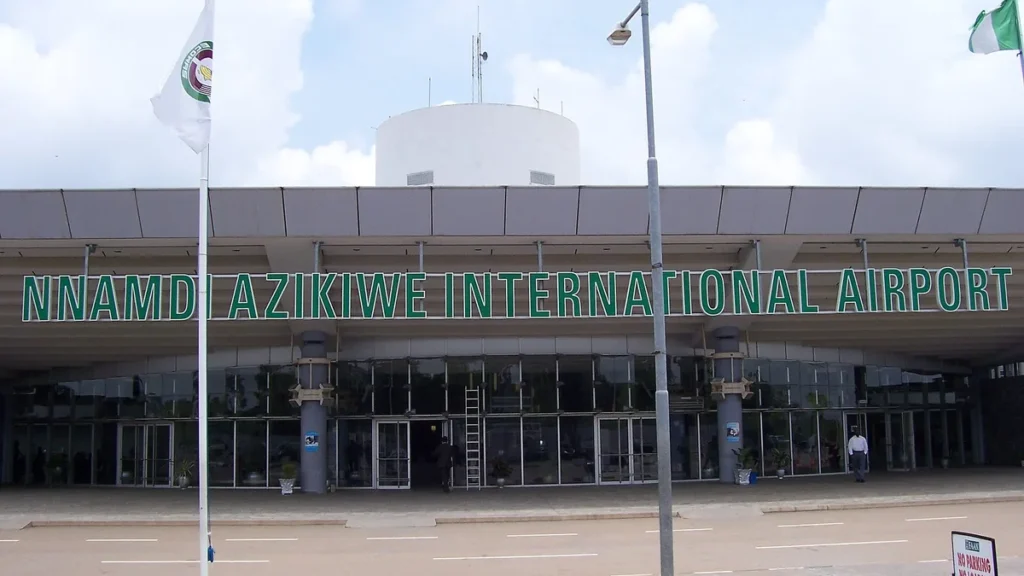
Nnamdi Azikiwe International Airport
Nnamdi Azikiwe International Airport
About
Nnamdi Azikiwe International Airport (IATA: ABV / ICAO: DNAA) is Nigeria’s principal gateway for government, diplomatic, and business travel, serving the Federal Capital Territory of Abuja. Named after Nigeria’s first president and a founding figure of pan-African nationalism, the airport occupies a symbolic as well as functional position in African aviation. As the seat of Nigeria’s federal government, Abuja draws a steady flow of heads of state, multilateral delegations, international journalists, and development-sector professionals, making ABV one of the continent’s most politically significant air hubs even as Lagos’s Murtala Muhammed International Airport handles higher aggregate passenger volumes.
The airport opened in 1982, coinciding with the phased relocation of Nigeria’s capital from Lagos to the purpose-built city of Abuja. It was conceived from the outset as an international facility commensurate with the ambitions of Africa’s most populous nation. The Federal Airports Authority of Nigeria (FAAN) operates the airport under the oversight of the Nigerian Civil Aviation Authority (NCAA), with policy direction from the Federal Ministry of Aviation and Aerospace Development.
Over the decades, ABV has undergone several rounds of infrastructure investment. A significant terminal expansion and rehabilitation programme was undertaken in the 2000s and 2010s, improving landside and airside capacity. More recently, the airport has been at the centre of Nigeria’s broader aviation reform agenda, which includes public-private partnership discussions around airport concession arrangements that, as of 2026, remain an active area of policy debate.
Country
Nigeria is the most populous country in Africa and the largest economy on the continent by several measures, with a population that industry estimates place well above 220 million people. It occupies a pivotal position in West Africa, sharing borders with Benin, Niger, Chad, and Cameroon, and its federal capital, Abuja, sits at the geographic centre of the country. Nigeria is a member of the African Union, ECOWAS, and the Commonwealth, and its diplomatic weight means that Abuja’s airport serves a uniquely dense schedule of government and multilateral traffic relative to its overall size. → Read the Nigeria expert briefing
Airlines Based Here
No single carrier uses Nnamdi Azikiwe International Airport as a primary hub in the traditional sense, but several Nigerian carriers treat ABV as a major focus city alongside Lagos. Air Peace, Nigeria’s largest privately owned airline, operates a substantial domestic and regional schedule through Abuja, connecting the capital to cities across Nigeria and to select West African destinations. Ibom Air, a carrier associated with Akwa Ibom State, also maintains meaningful Abuja operations. United Nigeria Airlines serves ABV on key domestic trunk routes. On the international side, ABV is a point-of-call rather than a hub for visiting foreign carriers: Ethiopian Airlines, Kenya Airways, and Egypt Air each serve Abuja as part of their intra-African networks, while carriers including British Airways, Lufthansa, and Qatar Airways have at various times operated or codeshared services into the airport, reflecting its diplomatic and business demand profile. The precise current schedule of any carrier should be verified directly with the airline or through FAAN’s published slot data, as network decisions in the Nigerian market have been subject to frequent revision.
Flights and Destinations
ABV supports a mixed network of domestic trunk routes, intra-African services, and intercontinental long-haul connections. Domestically, the airport is linked to Lagos (LOS), Port Harcourt (PHC), Kano (KAN), Enugu (ENU), and Owerri (QOW), among other Nigerian cities. Regionally, scheduled services connect Abuja to Addis Ababa (ADD), Nairobi (NBO), Accra (ACC), Cairo (CAI), and Johannesburg (JNB), providing onward connectivity to the broader African and global network. Intercontinental services have included routes to London Heathrow (LHR), Frankfurt (FRA), and Doha (DOH), though the frequency and continuity of long-haul operations at ABV have historically been more variable than at Lagos, and travellers requiring the widest intercontinental choice often connect through LOS or a regional hub. Researchers and analysts should consult current OAG or Cirium schedule data for verified route-level detail.
Facilities and Capacity
The airport operates from a single main passenger terminal complex, which handles both international and domestic traffic, with distinct international and domestic wings. The facility includes a VIP and state protocol terminal that serves the airport’s heavy diplomatic traffic. ABV has two runways — the primary instrument runway oriented to handle the prevailing wind conditions of the FCT — supporting operations by wide-body aircraft including the Boeing 777 and Airbus A330 series. A dedicated cargo terminal serves freight operators, and the airport functions as a logistics node for humanitarian and government supply chains given Abuja’s administrative role. By African standards, ABV is classified as a medium-to-large international hub in terms of infrastructure footprint, though according to publicly disclosed traffic data its annual passenger throughput is lower than Lagos. Ongoing discussions around airport concession and private sector management, if concluded, could unlock further capital investment in terminal modernisation and capacity expansion.
Visa Regulations
Travellers arriving at Nnamdi Azikiwe International Airport are subject to Nigeria’s national visa regime, administered by the Nigeria Immigration Service. As of 2026, Nigeria operates a visa-on-arrival scheme for passport holders from a range of countries, and an eVisa system has been progressively expanded to cover additional nationalities, including many travellers from the United States, the United Kingdom, and European Union member states, who may apply online in advance of travel. Citizens of a number of African Union member states benefit from simplified or visa-free arrangements under bilateral agreements and ECOWAS protocols, though the precise list of eligible nationalities is subject to change. Travellers are strongly advised to verify their specific visa category before booking, as requirements can shift with limited notice. → Check the live visa requirements lookup
Recent Developments
The past 24 months at ABV have been shaped by Nigeria’s wider aviation reform agenda and the turbulent operating environment facing carriers in the Nigerian market. The federal government’s airport concession programme — which proposes to hand operational management of Abuja, Lagos, Kano, and Port Harcourt airports to private operators under long-term lease arrangements — has advanced through successive rounds of stakeholder consultation and regulatory review, though as of early 2026 final concession agreements had not been publicly confirmed. On the route network side, Air Peace has continued to expand its international footprint, adding and adjusting services that touch Abuja. The NCAA has also been active in enforcing consumer protection standards and airworthiness compliance, issuing directives that have affected scheduling at ABV. Infrastructure maintenance works on airside facilities have caused periodic operational adjustments. Journalists and analysts tracking developments should monitor FAAN’s official communications and NCAA regulatory bulletins for authoritative updates.
News and Reports
Ongoing operational and regulatory news about Nnamdi Azikiwe International Airport is best sourced from a combination of official and industry channels. The Federal Airports Authority of Nigeria publishes press releases and operational notices through its official communications office. The Nigerian Civil Aviation Authority issues airworthiness directives, safety oversight reports, and consumer advisories that directly affect ABV operations. At the continental level, IATA’s Africa and Middle East regional office publishes periodic market analysis covering Nigerian aviation, and the ICAO West and Central Africa Regional Office (WACAF) in Dakar provides safety and regulatory oversight documentation relevant to DNAA. Nigerian aviation trade publications and the aviation desks of major Nigerian newspapers provide timely reporting on route changes, airline disputes, and infrastructure news. Researchers requiring historical traffic and safety data should consult ICAO’s publicly available GANP and safety audit databases.