São Tomé International Airport
São Tomé International Airport
About
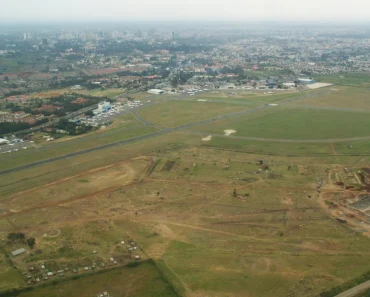
São Tomé International Airport (IATA: TMS | ICAO: FPST) is the principal gateway to the Democratic Republic of São Tomé and Príncipe, a small island nation sitting in the Gulf of Guinea roughly 250 kilometres off the west coast of Central Africa. Though modest in scale by continental standards, the airport occupies a strategically meaningful position in African aviation: it is the sole international entry point for an archipelago that depends almost entirely on air connectivity for tourism, trade, diplomatic access, and humanitarian logistics. For researchers, journalists, and aviation analysts tracking the development of sub-Saharan African air transport, TMS offers a compelling case study in how a micro-state manages international connectivity under significant infrastructure and financial constraints.
The airport was established during the Portuguese colonial era and has operated continuously since São Tomé and Príncipe gained independence in 1975. Its origins as a functional but basic airfield reflect the infrastructural inheritance common to many former Portuguese territories in Africa. Over the decades, the facility has undergone incremental upgrades to bring it into compliance with international safety and operational standards, with notable improvement works carried out in the 1990s and 2000s to extend and reinforce the runway and modernise the terminal building. Ownership and operational oversight rest with the São Tomé and Príncipe government, with the civil aviation authority — the Instituto de Aviação Civil de São Tomé e Príncipe (IACSP) — holding regulatory responsibility.
Expansion efforts have historically been constrained by the country’s limited public finances and its dependence on international development partners. Various proposals for terminal expansion and runway upgrades have been discussed over the years in partnership with multilateral lenders and bilateral donors, though the pace of implementation has been gradual. The airport remains classified as a small international hub, serving a passenger base that, according to publicly disclosed traffic data from the IACSP and ICAO regional reporting, is consistent with the country’s population and tourism profile rather than with high-volume transit traffic.
Country
São Tomé and Príncipe is a small island nation in the Gulf of Guinea, comprising two main islands and several smaller islets. Its capital, São Tomé, is located on the larger of the two main islands and serves as the political, economic, and cultural centre of the country. With a population estimated in the low hundreds of thousands, São Tomé and Príncipe is one of Africa’s smallest states by both area and population, yet it maintains full membership in the African Union, the Community of Portuguese Language Countries (CPLP), and the Economic Community of Central African States (ECCAS). Its economy is oriented around cocoa production, a growing tourism sector, and international development assistance, with oil exploration potential in its exclusive economic zone attracting periodic international attention. The country’s geographic isolation makes air transport not merely convenient but structurally essential to national life. → Read the São Tomé and Príncipe expert briefing
Airlines Based Here
São Tomé International Airport does not host a large home-based carrier in the conventional sense. STP Airways, the national flag carrier, has operated services from TMS and has historically served as the primary domestic and regional link for the archipelago, including the inter-island connection between São Tomé and Príncipe Island. The carrier’s operational continuity has, however, been subject to the financial pressures common to small African national airlines, and its schedule and fleet status should be verified against current IACSP and airline announcements before travel planning. On the visiting carrier side, TMS has been served by a number of Portuguese and African airlines. TAP Air Portugal has historically been among the most significant international operators at the airport, providing a critical link to Lisbon that functions as the primary intercontinental gateway for the islands. African carriers including TAAG Angola Airlines have also operated services to TMS, reflecting the country’s regional ties with Lusophone Africa. Carriers from Equatorial Guinea and Gabon have at various points provided regional connectivity, though schedules on these routes have fluctuated with commercial demand.
Flights and Destinations
The route network operating through São Tomé International Airport is compact but geographically diverse relative to the country’s size. The most strategically important route is the connection to Lisbon, Portugal, which serves as the primary intercontinental link and the main conduit for the São Tomé diaspora in Europe. Within Africa, the airport maintains connections to Luanda, Angola — a route of particular importance given the shared Lusophone heritage and business ties between the two countries. Libreville, Gabon, and Malabo, Equatorial Guinea, provide regional Gulf of Guinea connectivity. Douala, Cameroon, has also featured as a regional destination, supporting both commercial and humanitarian travel. Accra, Ghana, represents a link to West Africa’s largest aviation hub and provides onward connectivity across the continent. Industry estimates suggest that the majority of international passenger movements at TMS are concentrated on the Lisbon and Luanda routes, with regional African services accounting for a smaller but operationally significant share. Charter and seasonal services have at times supplemented the scheduled network, particularly in support of the tourism sector.
Facilities and Capacity
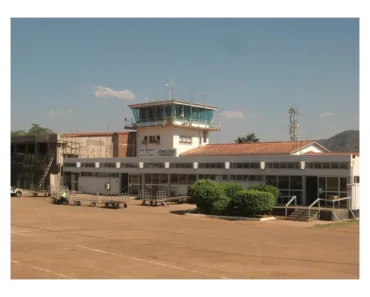
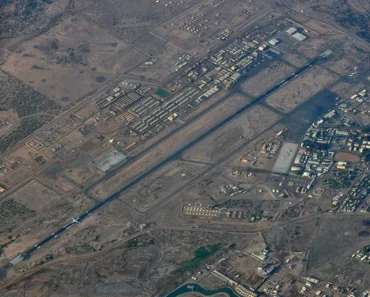
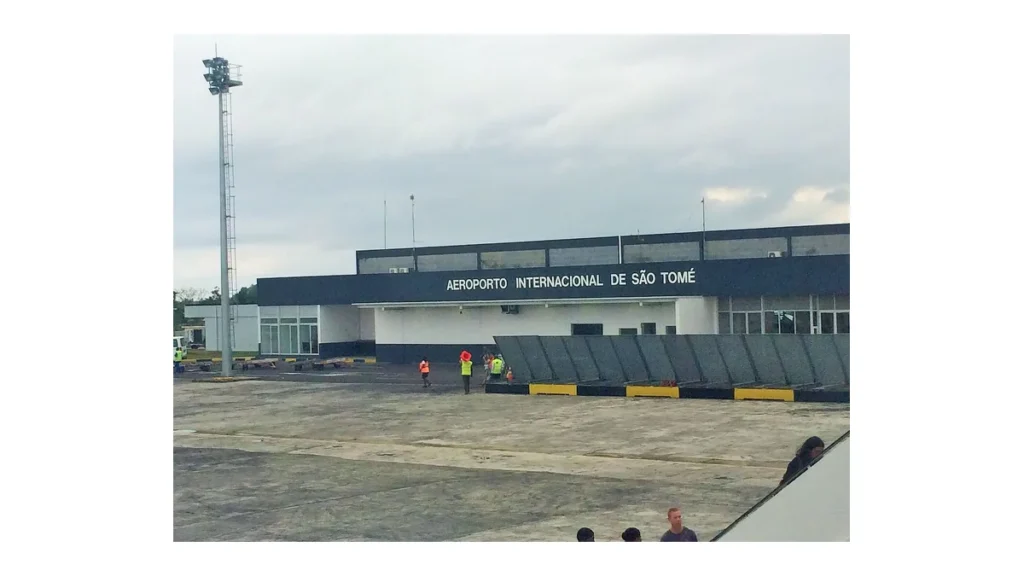
São Tomé International Airport operates with a single terminal building that handles both arriving and departing international passengers. The terminal is functional and equipped with the essential facilities expected at a small international airport — check-in counters, immigration and customs processing, a departure lounge, and basic retail and catering provision — though it does not offer the range of amenities associated with larger African hub airports. The airport is served by a single runway, which has been subject to reinforcement and resurfacing works over the years to accommodate the jet aircraft types used on its primary routes. The runway’s length and load-bearing capacity are sufficient for narrow-body jet operations, including the Airbus A320 family and Boeing 737 variants commonly deployed on African regional and medium-haul routes, though it imposes practical limitations on wide-body operations. Cargo facilities exist at the airport and serve the country’s import-dependent economy, handling general freight as well as perishable exports, most notably the premium cocoa products for which São Tomé and Príncipe has gained international recognition. By standard aviation classification, TMS is a small international hub. Planned or ongoing expansion works, where announced, are subject to funding confirmation and should be verified with the IACSP or official government communications.
Visa Regulations
Travellers arriving at São Tomé International Airport should be aware that São Tomé and Príncipe operates a relatively open visa regime by African standards, though the specifics vary by nationality and are subject to change. Citizens of the European Union, the United Kingdom, and the United States have generally been eligible to obtain a visa on arrival at TMS, making the country accessible for short-stay visitors without the need for advance consular processing. Regional African passport holders face a more varied picture: citizens of the Economic Community of Central African States (ECCAS) member states and the Community of Portuguese Language Countries (CPLP) have historically benefited from facilitated entry arrangements, though the precise conditions — including fees, permitted stay durations, and documentation requirements — differ by nationality. An eVisa option has been available for pre-travel processing, offering travellers the ability to secure authorisation before departure and reduce processing time on arrival. As visa regulations are subject to revision by the São Tomé and Príncipe government and may change with limited advance notice, travellers, journalists, and researchers are strongly advised to consult the live lookup tool for current requirements: → Check current visa requirements
Recent Developments
In the period leading into 2026, São Tomé International Airport has seen a number of operationally significant developments. Route activity has been a primary focus, with discussions and announcements around the restoration or launch of services by both African and European carriers reflecting a broader post-pandemic recovery in the Gulf of Guinea aviation market. The inter-island service between São Tomé and Príncipe Island has remained a priority for national connectivity, with the government and IACSP engaging with potential operators to ensure reliable scheduling. Infrastructure conversations have continued, with the condition of the runway and terminal facilities attracting attention from both the civil aviation authority and international development partners interested in supporting the country’s tourism growth strategy. Regulatory alignment with ICAO standards has been an ongoing process, consistent with the IACSP’s participation in ICAO’s Universal Safety Oversight Audit Programme (USOAP). Any specific capital expenditure commitments or new airline agreements announced in this period should be verified against official IACSP and government press releases, as industry estimates and media reports may not fully reflect the current operational status.
News and Reports
Researchers and analysts seeking current operational intelligence on São Tomé International Airport have several authoritative sources to consult. The Instituto de Aviação Civil de São Tomé e Príncipe (IACSP) is the primary regulatory and operational authority and periodically publishes notices, safety audits, and policy updates relevant to the airport. The São Tomé and Príncipe government’s official communications channels provide context on infrastructure investment and aviation policy. At the continental level, IATA’s Africa and Middle East regional office produces periodic reports on African aviation market trends that situate TMS within the broader Gulf of Guinea and Lusophone Africa context. ICAO’s Western and Central Africa Regional Office (WACAF), based in Dakar, is the relevant regional body for safety oversight and regulatory compliance reporting. Aviation trade publications including ch-aviation, Anna.aero, and The Africa Report cover route developments and airline news across the continent and have reported on São Tomé and Príncipe’s aviation sector. Journalists and researchers are advised to cross-reference multiple sources given the limited volume of dedicated English-language reporting on this market.