Moi International Airport
Moi International Airport
Moi International Airport (MBA) — Mombasa, Kenya
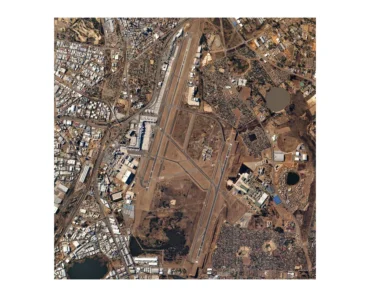
Moi International Airport (IATA: MBA | ICAO: HKMO) is Kenya’s second-busiest international gateway and the primary air entry point for one of East Africa’s most visited coastal destinations. Situated approximately 13 kilometres west of Mombasa’s city centre in the Chaani area, the airport serves as the aviation anchor for Kenya’s Indian Ocean tourism corridor, connecting the beaches of Diani, Malindi, and the broader Swahili Coast to long-haul markets in Europe, the Gulf, and across the African continent. For travellers, journalists, and aviation analysts tracking sub-Saharan Africa’s recovery and growth trajectory, Moi International represents a telling case study in how a mid-sized, tourism-dependent airport navigates seasonal demand, infrastructure constraints, and the competitive pressures of an evolving African aviation landscape.
About
Moi International Airport occupies a strategically significant position in African aviation as the continent’s gateway to Kenya’s coast. While Nairobi’s Jomo Kenyatta International Airport (NBO) commands the bulk of Kenya’s traffic and serves as a continental hub, Moi International functions as a specialist leisure and regional airport — one whose fortunes track closely with global tourism cycles, charter aviation demand, and the health of the East African hospitality sector. Its role is not peripheral: for millions of visitors arriving specifically for coastal Kenya, MBA is their first and last experience of Kenyan aviation infrastructure.
The airport’s origins date to the colonial era, with the site developed for aviation use in the mid-twentieth century. It was formally established and expanded in the post-independence period, with Kenya’s government investing in the facility to support the rapid growth of coastal tourism through the 1970s and 1980s. The airport is owned by the Government of Kenya and operated by the Kenya Airports Authority (KAA), the statutory body responsible for developing and managing all major Kenyan airports. The KAA operates under the Ministry of Roads and Transport and is accountable to the Kenya Civil Aviation Authority (KCAA) for safety and regulatory compliance.
Major infrastructure works have been carried out at the airport across successive decades, including runway rehabilitation, terminal upgrades, and the expansion of apron capacity to accommodate wide-body charter aircraft. The airport’s single terminal has been reconfigured over the years to separate international and domestic flows, though capacity constraints remain a recurring operational challenge during peak European winter charter seasons. Further modernisation works have been discussed under various KAA capital programmes, with the airport identified in Kenya’s national aviation master plan as a priority facility for medium-term investment.
Country
Kenya is an East African republic with its capital in Nairobi, a population estimated at well over 55 million people, and one of the continent’s most diversified economies, anchored by agriculture, services, technology, and tourism. Strategically positioned on the Indian Ocean coast and sharing borders with Tanzania, Uganda, South Sudan, Ethiopia, and Somalia, Kenya functions as a regional logistics, diplomatic, and aviation hub for the broader East and Horn of Africa. Its political stability relative to several neighbours, combined with a well-developed tourism infrastructure, makes it one of Africa’s most visited countries and a consistent focus for international investors and development institutions. → Read the Kenya expert briefing
Airlines Based Here
Moi International Airport does not serve as a primary hub for any major carrier in the way that Nairobi functions for Kenya Airways, but several airlines treat MBA as a focus city or seasonal base. Kenya Airways, the national flag carrier and a member of the SkyTeam alliance, operates scheduled services between Mombasa and Nairobi, providing the critical domestic connection that feeds international itineraries. Jambojet, a low-cost subsidiary of Kenya Airways, also serves the Mombasa route from Nairobi and has expanded its domestic network to include coastal connections, positioning MBA as part of its point-to-point leisure network.
On the international side, the airport is served predominantly by visiting carriers rather than home-based operators. European charter specialists have historically been significant users of MBA, with carriers including TUI fly (operating on behalf of various TUI group entities), Condor, and Edelweiss Air bringing leisure passengers from Germany, Switzerland, and other European markets during the northern winter season. Gulf carriers including flydubai have operated scheduled services to Mombasa, reflecting demand from the large Kenyan diaspora in the UAE and connecting traffic from South Asia. Ethiopian Airlines has also served MBA on regional routes. The precise current schedule of any carrier should be verified directly with the airline or the KAA, as seasonal and commercial adjustments are frequent.
Flights and Destinations
The route network at Moi International Airport reflects its dual identity as a domestic connector and an international leisure gateway. Domestically, the Mombasa–Nairobi corridor is the airport’s busiest and most commercially important route, served with high frequency by Kenya Airways and Jambojet. Regional African connections have included services to Zanzibar (ZNZ) in Tanzania, Dar es Salaam (DAR), and periodic links to other East African cities, though regional route sustainability at MBA has historically been variable.
Intercontinentally, the airport’s strongest connections are to European leisure markets. Representative destinations that have been served — on scheduled or charter bases — include London (via connecting itineraries or charter programmes), Frankfurt, Zurich, Amsterdam, and various Scandinavian cities during peak season. Dubai (DXB) represents the airport’s most significant year-round intercontinental scheduled connection, given the Gulf’s role as both a transit hub and a source market. Industry observers note that MBA’s intercontinental network is more seasonal and charter-dependent than that of Nairobi, making it sensitive to European consumer confidence and tour operator contracting cycles.
Facilities and Capacity
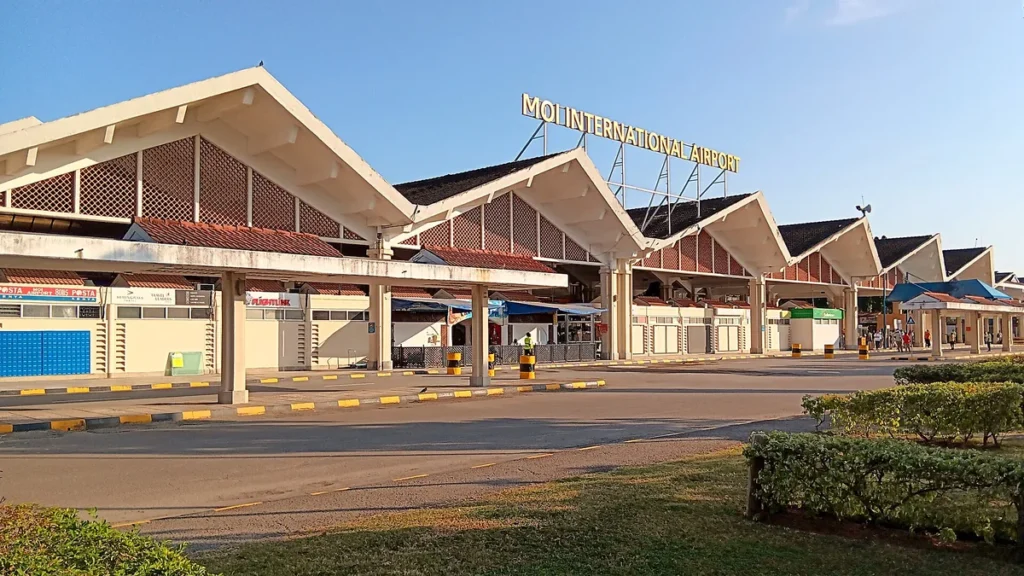
Moi International Airport operates with a single passenger terminal that handles both international and domestic traffic, with segregated processing areas for each passenger category. The terminal includes standard international facilities: check-in halls, immigration and customs processing, departure lounges, and a modest retail and food and beverage offer. The airport is classified as a medium-sized regional hub by industry convention, with throughput capacity that, according to publicly disclosed KAA planning documents, has at times been strained during peak charter season arrivals.
The airport has a single primary runway — Runway 03/21 — with a published length sufficient to accommodate wide-body aircraft including the Boeing 767 and Airbus A330, which are commonly used on charter operations from Europe. Runway condition and lighting have been subjects of periodic KAA maintenance programmes. Cargo facilities exist on site and support both belly-hold freight on passenger services and some dedicated freighter operations, particularly for perishable exports including fresh fish and horticultural products from the coastal region. The airport is not a primary cargo hub, with the bulk of Kenya’s air freight moving through Nairobi. Planned or ongoing expansion works should be verified with the KAA directly, as project timelines and budgets are subject to government procurement and financing processes.
Visa Regulations
Travellers arriving at Moi International Airport are subject to Kenya’s national visa regime, which applies uniformly across all international ports of entry. Kenya introduced an Electronic Travel Authorisation (eTA) system in 2023, replacing the previous visa-on-arrival arrangement for most nationalities. Under the eTA framework, travellers from the United States, the United Kingdom, European Union member states, and most other countries are required to apply online before travel and receive authorisation electronically — there is no longer a standard visa-on-arrival option for these markets. Citizens of several African countries benefit from visa-free access under bilateral agreements or the African Union’s free movement frameworks, though the specific list of exempt nationalities is subject to change. East African Community (EAC) member state passport holders generally enjoy facilitated entry. Visa rules change with limited notice; travellers, journalists, and researchers should consult the official KAA or Kenyan immigration authority sources before travel. → Check the live visa requirements lookup
Recent Developments
In the 24 months to mid-2026, Moi International Airport has seen a number of operationally significant developments. The post-pandemic recovery of Kenya’s coastal tourism sector has driven increased charter seat capacity from European source markets, with tour operators reporting stronger forward bookings for the Kenyan coast compared to the immediate post-COVID period. Jambojet has consolidated its domestic presence at MBA, and Kenya Airways has maintained its Nairobi–Mombasa frequency as one of its most commercially important domestic routes.
The KAA has continued to advance infrastructure dialogue around terminal capacity and airside improvements at MBA, with the airport featuring in broader national aviation investment conversations linked to Kenya’s Vision 2030 development framework. Regional connectivity discussions — including potential new routes to Zanzibar and other East African leisure destinations — have been reported in Kenyan aviation and tourism trade media, though confirmed scheduled services should be verified with carriers directly. The KCAA has also maintained its ongoing safety oversight programme across all Kenyan airports, with MBA subject to standard ICAO-aligned audit and compliance processes.
News and Reports
Researchers and analysts seeking current operational intelligence on Moi International Airport should consult several authoritative source categories. The Kenya Airports Authority publishes press releases and operational notices on its official website and is the primary source for infrastructure, capacity, and concession developments. The Kenya Civil Aviation Authority issues safety directives, aeronautical information publications (AIPs), and regulatory notices relevant to MBA operations. At the continental level, IATA’s Africa and Middle East regional office produces periodic market analysis reports covering East African aviation trends, including traffic recovery data and route development intelligence. The ICAO Eastern and Southern African Regional Office (ESAF), based in Nairobi, publishes safety and regulatory oversight information relevant to Kenyan airports. Aviation trade publications including ch-aviation, anna.aero, and the African Aviation Tribune provide route-level and commercial intelligence on a subscription or open-access basis. For tourism-linked traffic context, the Kenya Tourism Board and Kenya National Bureau of Statistics publish visitor arrival data that can be cross-referenced with airport throughput trends.
Related Research
- Kenya Expert Briefing — in-depth country analysis for researchers and investors
- Kenya Statistics — population, economic, and infrastructure data
- African Airports — comparative profiles across the continent
- African Airlines — carrier profiles, alliances, and route networks
- Visa Requirements — live lookup tool for entry requirements by nationality
- Country Comparison — benchmark Kenya against peer economies and aviation markets