Royal Air Maroc
Royal Air Maroc
About
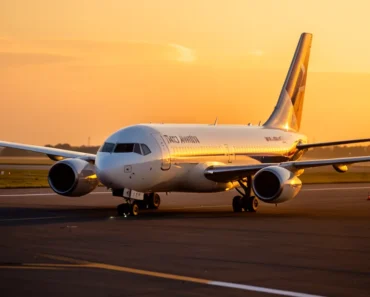
Royal Air Maroc (IATA: AT / ICAO: RAM) is Morocco’s flag carrier and one of the continent’s most strategically positioned airlines, operating at the intersection of Africa, Europe, and the Americas from its Casablanca hub. In a crowded field of African carriers navigating post-pandemic recovery, fleet renewal pressures, and intensifying Gulf competition, Royal Air Maroc stands out as a rare example of a state-backed African airline that has sustained intercontinental ambitions while simultaneously deepening its intra-African footprint.
The airline was founded in 1957, shortly after Moroccan independence, and has operated under state ownership throughout its history. The Moroccan government, through its holding structures, retains a controlling stake, a position that has shaped both the airline’s strategic priorities and its financial resilience during downturns. In recent years, the carrier has pursued a more commercially oriented management culture, bringing in professional leadership and aligning more closely with global aviation standards.
A landmark corporate development came in 2020 when Royal Air Maroc joined Star Alliance, becoming the first North African carrier to hold full membership in one of the three major global airline groupings. That accession signalled a clear strategic intent: to position Casablanca as a genuine connecting hub between sub-Saharan Africa and transatlantic markets, competing directly with hubs such as Addis Ababa (Ethiopian Airlines) and Nairobi (Kenya Airways) for sixth-freedom traffic.
Bases and Hubs
Casablanca Mohammed V International Airport (CMN) — The airline’s principal hub and primary maintenance base, handling the vast majority of Royal Air Maroc’s scheduled operations and serving as the connecting point for its Africa-Europe-Americas triangle traffic.
Marrakech Menara Airport (RAK) — A secondary focus city serving high-volume leisure routes to Europe, particularly during peak tourism seasons, with Royal Air Maroc operating point-to-point services alongside its CMN connections.
Agadir Al Massira Airport (AGA) — A further domestic and leisure-oriented focus point, reflecting the airline’s role in supporting Morocco’s southern tourism economy.
Fleet
Royal Air Maroc operates a mixed fleet spanning narrowbody, widebody, and regional categories. According to publicly disclosed fleet data, the airline’s mainline operations are anchored by Boeing 737 family aircraft — including Next Generation variants — which handle the bulk of short- and medium-haul flying across Europe and within Africa. Widebody capacity for long-haul routes to North America and beyond is provided by Boeing 787 Dreamliner aircraft, a type the airline has used to extend its transatlantic reach with improved fuel economics.
Regional and thinner-route flying has historically been supported by ATR turboprop aircraft, suited to Morocco’s domestic network and some shorter African sectors. The airline has in recent years signalled intent to modernise and rationalise its fleet, and industry observers have noted ongoing discussions around additional narrowbody capacity to replace ageing frames. Any confirmed order details should be verified against Royal Air Maroc’s official communications and manufacturer announcements at time of publication.
Destinations
Royal Air Maroc’s network is structured around three broad pillars. The European network — its largest by frequency — connects Casablanca and secondary Moroccan cities to major Western European capitals including Paris (CDG), London (LHR), Madrid (MAD), and Amsterdam (AMS), serving both the Moroccan diaspora and inbound tourism markets. The transatlantic pillar, operated primarily with Boeing 787 equipment, includes services to New York (JFK), Montreal (YUL), and Washington (IAD), making Royal Air Maroc one of a small number of African carriers with meaningful North American presence.
The intra-African network is arguably the most strategically significant dimension of the airline’s growth story. Royal Air Maroc serves a substantial number of sub-Saharan African destinations — spanning West, Central, and East Africa — positioning Casablanca as a transit node for passengers moving between African cities and onward to Europe or North America. Routes to Dakar (DSS), Abidjan (ABJ), Lagos (LOS), Douala (DLA), and Nairobi (NBO) represent the kind of connectivity that underpins the airline’s sixth-freedom commercial model.
Codeshare and Alliance
Royal Air Maroc is a full member of Star Alliance, having joined in 2020. This membership provides interline and codeshare connectivity with carriers including Lufthansa, United Airlines, Air Canada, Turkish Airlines, and Ethiopian Airlines, among others. The alliance relationship is particularly commercially valuable on transatlantic itineraries, where Royal Air Maroc can feed Star Alliance metal and benefit from reciprocal feed in return. The airline also maintains bilateral codeshare arrangements with select carriers outside the alliance framework; travellers and travel managers should verify current codeshare agreements directly with the airline, as these arrangements are subject to change.
Notable Incidents
Royal Air Maroc does not feature prominently in recent international aviation safety incident reporting. The airline operates under Moroccan civil aviation authority oversight and is subject to European Union safety assessments given the volume of its European operations. Journalists and researchers requiring a comprehensive safety history should consult the Aviation Safety Network database and the Moroccan Directorate of Civil Aeronautics (DAC) directly, as africa-research.org does not independently verify historical incident records.
Financial and Operational Situation
As a state-owned enterprise, Royal Air Maroc does not publish financial results to the same standard of transparency as publicly listed carriers, and detailed profit-and-loss data is not consistently available in the public domain. Industry estimates suggest the airline, like many African flag carriers, faced severe revenue compression during the 2020–2021 pandemic period and has been in a recovery and restructuring phase since. The Moroccan government’s broader economic reform agenda — including ambitions to develop Casablanca as a regional financial and logistics hub — provides a degree of political and financial backstop that smaller African carriers do not enjoy.
Operationally, the airline has focused on load factor improvement, network rationalisation, and ancillary revenue development. Investors and analysts tracking the carrier should note that any privatisation or partial divestiture of state holdings would represent a significant market event; as of the time of writing, no such transaction has been publicly confirmed.
Recent Developments
In the 24 months to early 2026, Royal Air Maroc has continued to expand its sub-Saharan African network, adding or restoring frequencies on a number of West and Central African routes as demand recovered post-pandemic. The airline has also been an active participant in Morocco’s broader aviation diplomacy, benefiting from open-skies agreements that the Moroccan government has pursued with African Union member states under the Single African Air Transport Market (SAATM) framework.
Fleet renewal discussions have remained a consistent theme in the airline’s public communications, with the Boeing 787 fleet central to its long-haul strategy. Royal Air Maroc has also invested in its Safar loyalty programme, seeking to improve customer retention on competitive European routes where low-cost carriers — including Ryanair and easyJet, both of which operate into Morocco — present sustained pricing pressure. The airline’s role as a key enabler of Morocco’s tourism sector has taken on added significance ahead of the country’s co-hosting of the 2030 FIFA World Cup, which is expected to drive substantial aviation infrastructure investment and demand uplift.
Related Research
- Morocco Expert Briefing — full country profile, economic data, and aviation regulatory context
- African Airlines — the africa-research.org airline sector pillar
- African Airports — hub and gateway airport profiles across the continent
- Country Comparison Tool — benchmark Morocco against peer aviation markets