Marrakech Menara Airport
Marrakech Menara Airport
About
Marrakech Menara Airport (IATA: RAK | ICAO: GMMX) is Morocco’s second-busiest international gateway and one of the most strategically significant tourist-oriented airports on the African continent. Positioned at the edge of the Haouz Plain, roughly six kilometres southwest of Marrakech’s historic medina, the airport functions as a critical bridge between Europe, the Middle East, and sub-Saharan Africa — channelling millions of leisure and business travellers annually into one of the world’s most visited heritage cities. For aviation analysts tracking North Africa’s growth corridor, RAK represents a textbook case of how targeted infrastructure investment and liberal air service agreements can transform a regional airfield into a continental hub of genuine consequence.
The airport’s origins trace to the mid-twentieth century, when a modest aerodrome was established to serve the then-French protectorate’s administrative and military needs. Following Moroccan independence in 1956, the facility was progressively transferred to civilian management and expanded to accommodate the nascent tourism industry that Marrakech was already beginning to attract. The Moroccan Airports Authority — known by its French acronym ONDA (Office National Des Aéroports) — assumed operational control and has remained the airport’s owner and operator ever since, managing RAK as part of a national network that includes Mohammed V International Airport in Casablanca and Fès–Saïss Airport.
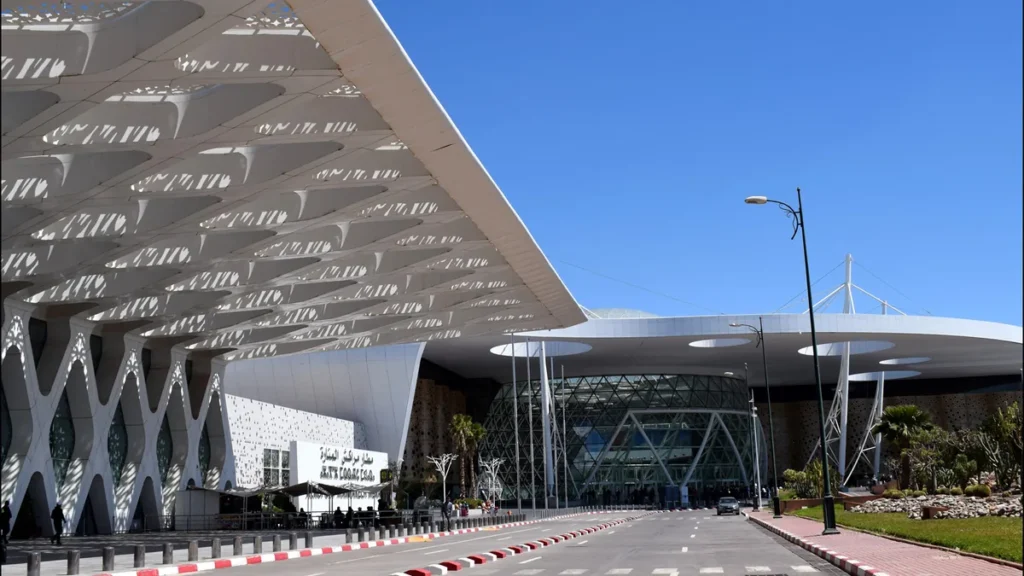
The airport’s most transformative chapter opened in the early 2000s, when Morocco signed an Open Skies agreement with the European Union in 2006 — one of the first such agreements between the EU and an African nation. The accord catalysed a wave of low-cost carrier entry that fundamentally reshaped RAK’s traffic profile. A major terminal expansion programme delivered Terminal 1, a purpose-built international facility capable of handling significantly larger passenger volumes, with a design aesthetic that nods to traditional Moroccan architecture through arched colonnades and terracotta tiling. Subsequent works have progressively upgraded airside capacity, baggage handling systems, and apron stands to accommodate wide-body aircraft.
Country
Morocco is a constitutional monarchy located at the northwestern tip of the African continent, sharing land borders with Algeria to the east and Mauritania to the south, and separated from Spain by the Strait of Gibraltar — a geography that has historically made it a crossroads of African, Arab, Berber, and European civilisations. The capital is Rabat, while Casablanca functions as the economic and commercial centre. With a population estimated in the tens of millions and a GDP that positions it among Africa’s larger middle-income economies, Morocco has pursued an ambitious strategy of regional integration, renewable energy development, and tourism-led growth that directly shapes the fortunes of airports like RAK. The country’s political stability relative to several of its neighbours has reinforced its appeal to international investors and carriers alike.
→ Read the Morocco expert briefing
Airlines based here
Royal Air Maroc (RAM), Morocco’s flag carrier and a full member of the oneworld alliance since 2020, treats Marrakech Menara as a significant focus city within its domestic and international network, operating scheduled services to Casablanca’s Mohammed V hub and select European and African destinations. RAM’s presence at RAK is that of a network carrier using the airport as a spoke-and-feed point rather than a primary base, with its main hub operations concentrated at CMN.
The more dominant commercial force at RAK is the low-cost sector. Ryanair, Europe’s largest low-cost carrier by passenger volume, operates an extensive programme of routes from RAK to points across the United Kingdom, Ireland, Spain, France, Italy, Germany, Belgium, the Netherlands, and Portugal, making it arguably the single largest carrier by seat capacity at the airport. easyJet similarly maintains a strong presence, connecting Marrakech to London Gatwick, London Luton, Manchester, Paris Charles de Gaulle, Lyon, and several other European cities. Transavia — operating under both its French and Dutch banners — adds further low-cost European connectivity, particularly to French regional cities where Moroccan diaspora communities generate strong visiting-friends-and-relatives (VFR) traffic. Wizz Air has also expanded its footprint at RAK in recent years, adding Central and Eastern European routes. Charter and leisure-focused carriers, including TUI fly variants operating from the UK, Belgium, and the Netherlands, supplement scheduled services during peak summer and winter sun seasons.
Flights and destinations
Marrakech Menara’s route network is heavily weighted toward Europe, reflecting the city’s status as a premier short-haul leisure destination for European travellers. The airport offers direct or near-direct connections to a broad sweep of European capitals and regional cities. Representative European destinations served include London (both Heathrow via Royal Air Maroc and Gatwick/Stansted/Luton via low-cost carriers), Paris Charles de Gaulle and Orly, Madrid, Barcelona, Amsterdam, Brussels, Rome, Milan, and Frankfurt. Seasonal charter operations extend the reach to Scandinavian cities including Copenhagen and Stockholm during peak periods.
Beyond Europe, Royal Air Maroc provides intercontinental connectivity through its Casablanca hub, and RAK itself hosts direct or near-direct services to select Middle Eastern points. Domestic connectivity links Marrakech to Casablanca, Agadir, and other Moroccan cities. African regional connectivity — a growing priority for ONDA and the Moroccan government under its broader Africa engagement strategy — includes routes to West African cities, with industry estimates suggesting further sub-Saharan expansion is under active commercial review. According to publicly disclosed route data, destinations such as Dakar and Abidjan have featured in RAK’s African network, though frequency and operator details are subject to seasonal scheduling changes.
Facilities and capacity
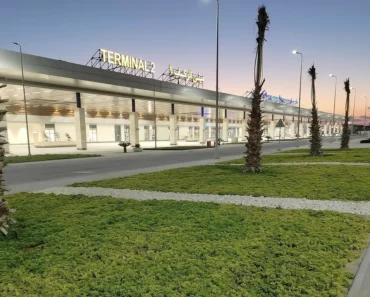
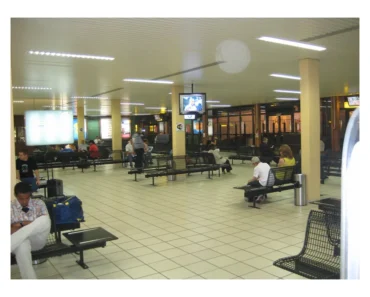
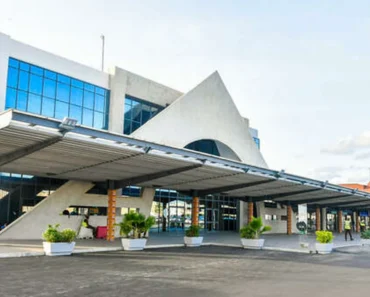
Marrakech Menara Airport operates from a single primary passenger terminal — Terminal 1 — which handles the overwhelming majority of international and domestic traffic. The terminal is organised across multiple levels, with departures processed on the upper floor and arrivals on the ground level, a layout common to airports of this generation and scale. The facility includes a range of retail and food and beverage concessions airside, along with VIP lounges, car rental desks, and ground transportation connections to the city centre via taxi, bus, and private transfer services.
The airport is served by two runways: the primary instrument runway oriented broadly northeast-southwest and a secondary runway, giving the airport the operational flexibility to manage simultaneous or alternating movements during peak periods and maintenance rotations. The apron is capable of accommodating wide-body aircraft including the Airbus A330, which Royal Air Maroc operates on certain long-haul services. Cargo facilities exist but are modest relative to the airport’s passenger throughput, reflecting RAK’s predominantly leisure-passenger profile rather than a freight-intensive one. In terms of traffic classification, RAK sits comfortably in the medium-hub category within the African context — larger than most regional airports on the continent but operating below the mega-hub volumes of Casablanca’s Mohammed V or Cairo International. ONDA has signalled ongoing investment in capacity enhancements aligned with Morocco’s broader Vision 2030 tourism targets, though specific budget figures from official sources should be verified against ONDA’s published capital expenditure disclosures.
Visa regulations
Morocco operates a relatively open visa regime for travellers arriving at Marrakech Menara Airport, particularly for citizens of Western countries and many African states. As of 2026, nationals of the United States, the United Kingdom, the European Union member states, Canada, and Australia are generally permitted to enter Morocco visa-free for stays of up to 90 days, presenting a valid passport on arrival. No advance visa application is typically required for these source markets, making RAK an accessible entry point for leisure and short-stay business travellers from these regions. Citizens of many Arab League countries also benefit from visa-free or simplified entry arrangements under bilateral agreements.
For travellers holding passports from sub-Saharan African nations, the position is more varied: some nationalities benefit from visa-free access under Morocco’s expanding bilateral agreements, while others are required to obtain a visa in advance from a Moroccan consulate or embassy. Morocco does not currently operate a universal eVisa system comparable to those of Kenya or Ethiopia, meaning advance consular applications remain the standard route for nationalities that do require a visa. Visa rules are subject to change at short notice in response to diplomatic developments, reciprocal arrangements, and security considerations. Travellers, journalists, and researchers are strongly advised to verify current requirements before travel. → Check the live visa requirements lookup
Recent developments
The 24 months leading into 2026 have been a period of notable activity at Marrakech Menara. The airport has benefited from Morocco’s broader tourism recovery and expansion following the disruptions of the early 2020s, with according to publicly disclosed traffic data, passenger volumes returning to and in some metrics surpassing pre-pandemic benchmarks. Several low-cost carriers have announced new or reinstated routes to RAK, with Ryanair and Wizz Air both adding Central European city pairs that reflect growing demand from Polish, Hungarian, and Romanian travellers. Royal Air Maroc has also used the period to reinforce its African network ambitions, with Marrakech featuring in promotional campaigns positioning Morocco as a gateway to the continent.
Infrastructure works at the terminal have continued, with airside retail and passenger processing areas undergoing phased upgrades. The September 2023 Al Haouz earthquake, which caused significant damage in the Marrakech region and resulted in tragic loss of life, had a temporary but measurable impact on inbound tourism and airport operations in the immediate aftermath, according to reporting by international news agencies and Moroccan government communications. Recovery was relatively swift, with the tourism sector and airport operations stabilising through 2024. Ongoing discussions around Morocco’s co-hosting of the 2030 FIFA World Cup — shared with Spain and Portugal — have added urgency to infrastructure planning conversations, with RAK identified in industry commentary as a likely beneficiary of associated capacity investment.
News and reports
Researchers and analysts seeking current operational intelligence on Marrakech Menara Airport have several authoritative sources to consult. ONDA — the Office National Des Aéroports — publishes press releases, traffic statistics, and infrastructure announcements through its official communications channels; its publications represent the primary source for verified passenger and movement data. Morocco’s Direction Générale de l’Aviation Civile (DGAC), the national civil aviation authority, issues regulatory notices, safety oversight reports, and air service agreement updates relevant to carriers operating at RAK. At the continental level, IATA’s Africa and Middle East regional office produces periodic market analysis reports covering North African aviation trends, route development, and liberalisation progress; these are available to IATA member organisations and through the association’s public research portal. The ICAO Regional Office for Africa and the Indian Ocean (ESAF), based in Nairobi, publishes safety and regulatory oversight data relevant to Moroccan airspace. For day-to-day route and schedule intelligence, platforms such as OAG and Cirium provide subscription-based data that aviation analysts typically rely upon for granular capacity and frequency tracking.