Cabo Verde Airlines
Cabo Verde Airlines
About
Cabo Verde Airlines — operating under the IATA code VR and ICAO designator TCV — is the flag carrier of the Republic of Cabo Verde, an Atlantic archipelago nation positioned at the crossroads of Africa, Europe, and the Americas. Small in absolute scale but strategically significant, the airline serves as the primary air bridge connecting a country whose economy is heavily dependent on tourism and diaspora remittances to the wider world. Within African aviation, it occupies a distinctive niche: less a continental carrier than an island connector with genuine intercontinental reach, linking the Cape Verdean archipelago to European leisure markets, West African capitals, and the large Cape Verdean diaspora communities in the United States and Portugal.
The airline traces its origins to the state-owned TACV — Transportes Aéreos de Cabo Verde — which was established in 1958 under Portuguese colonial administration and continued as the national carrier after independence in 1975. For decades TACV operated as a classic African state airline: strategically important, chronically underfunded, and dependent on government support to sustain routes that the market alone would not justify. A long-running privatisation process eventually resulted in a landmark transaction in 2019, when the Icelandic low-cost group Loftleiðir Icelandic — operating under the Icelandair Group umbrella — took a majority stake in the restructured carrier, which was rebranded as Cabo Verde Airlines to signal a new commercial era.
The ownership structure has continued to evolve. The Cabo Verdean state has retained a meaningful equity stake, reflecting the airline’s role as critical national infrastructure, while the private management partnership has brought operational expertise and fleet discipline. Industry observers have noted that the airline’s post-rebranding trajectory has been complicated by the Covid-19 pandemic, which devastated the tourism-dependent Cabo Verdean economy and grounded international routes at a particularly sensitive moment in the carrier’s transformation. Subsequent years have seen a gradual recovery, with management focused on restoring network breadth and rebuilding passenger confidence.
Bases and Hubs
Praia / Sal International Airport (RAI) — The airline’s principal hub, located on Santiago Island, serving as the main gateway for government, business, and diaspora traffic and the operational centre for the carrier’s intercontinental services.
Sal / Amílcar Cabral International Airport (SID) — A critical secondary hub and the traditional entry point for European charter and leisure traffic, given Sal Island’s established resort infrastructure; Cabo Verde Airlines maintains a meaningful operational presence here to capture the tourism flow.
São Vicente / Cesária Évora Airport (VXE) — A focus city serving the culturally significant island of São Vicente, connecting it to both the inter-island network and select international services.
Fleet
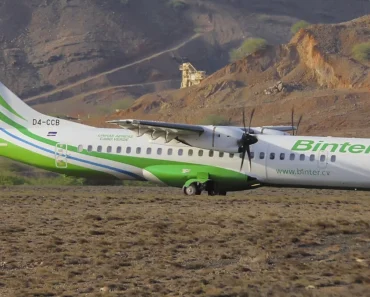
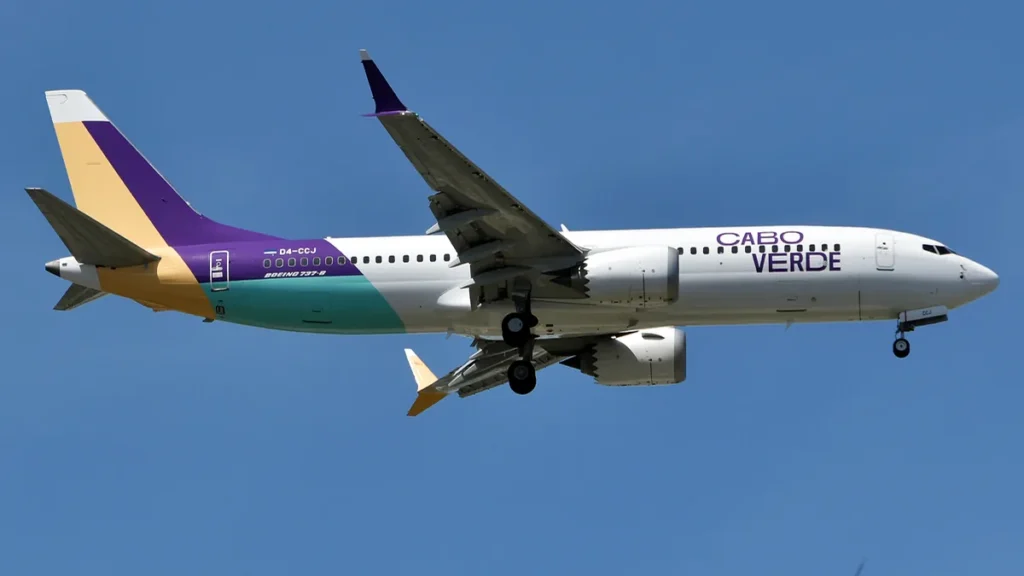
According to publicly disclosed fleet data, Cabo Verde Airlines operates a mixed fleet centred on Airbus narrowbody types, with the Airbus A220 family — formerly the Bombardier C Series — forming the backbone of its intercontinental and medium-haul operations. The A220 is well suited to the airline’s route profile, offering the range to serve transatlantic and European destinations from a thin-market island hub without requiring the seat capacity of a widebody aircraft. The carrier has also historically operated ATR turboprop aircraft for inter-island services within the archipelago, where short runways and modest passenger volumes make turboprops the economically rational choice. Industry estimates suggest the total operating fleet remains modest in size, consistent with the airline’s boutique flag-carrier positioning. Fleet renewal discussions, aligned with the post-pandemic recovery strategy, have focused on maintaining the efficiency advantages of the A220 platform.
Destinations
The network divides into three clear tiers. Inter-island services form the essential domestic spine, connecting the inhabited islands of the archipelago — including Santiago, Sal, São Vicente, Fogo, and São Nicolau — and providing the social and economic connectivity that no other mode of transport can replicate across open Atlantic waters. At the regional level, the airline operates services to West African capitals, with Dakar in Senegal representing the most commercially significant regional route given geographic proximity and strong trade ties. Intercontinental services are the network’s commercial engine: routes to Lisbon reflect the deep historical and diaspora relationship with Portugal, while services to Boston and other North American points serve the substantial Cape Verdean-American community concentrated in New England. European leisure routes, particularly to the United Kingdom and other Western European markets, channel the tourism traffic that underpins the national economy.
Codeshare and Alliance
Cabo Verde Airlines is not a member of any of the three major global airline alliances — Star Alliance, SkyTeam, or oneworld. The carrier has historically pursued bilateral codeshare arrangements rather than full alliance membership, a common approach among smaller flag carriers for whom the cost and compliance burden of alliance membership outweighs the network benefits. TAP Air Portugal has been a notable codeshare and interline partner, given the Lisbon hub’s role as a natural connecting point for Cape Verdean passengers travelling deeper into Europe. The airline has also engaged in interline arrangements with carriers serving West African markets. Expansion of partnership agreements has been identified as a strategic priority as the network recovery continues.
Notable Incidents
Cabo Verde Airlines does not have any major safety incidents on its publicly documented record in recent years. The airline operates under the oversight of the Cabo Verdean civil aviation authority and complies with ICAO standards applicable to its operational category. Travellers and investors researching the carrier’s safety profile are advised to consult the Aviation Safety Network database and ICAO audit disclosures for the most current and authoritative information.
Financial and Operational Situation
The financial profile of Cabo Verde Airlines reflects the structural challenges common to small island-state flag carriers: a limited domestic market, high dependence on seasonal tourism revenue, significant fuel cost exposure on thin long-haul routes, and the legacy costs of a state-owned predecessor. The 2019 privatisation was intended to impose commercial discipline and attract private capital, but the timing — immediately preceding the Covid-19 pandemic — meant that the restructured carrier faced an existential revenue shock before the new management model had fully bedded in. Recovery has been gradual. Industry observers note that the airline’s financial sustainability remains closely tied to the health of Cabo Verde’s tourism sector, which itself recovered strongly in the post-pandemic period. The state’s retained equity stake implies an ongoing implicit support relationship, though the terms of any government financial backing are not fully disclosed in public reporting. Operational metrics, including load factors on intercontinental routes, are understood to have improved as travel demand normalised, but the carrier’s path to sustained profitability on a standalone commercial basis remains a work in progress.
Recent Developments
In the period leading into 2026, Cabo Verde Airlines has focused on consolidating its post-pandemic network recovery and deepening its commercial partnerships. Route restoration and selective expansion — particularly on European leisure corridors and the North Atlantic diaspora routes — have been the primary operational priorities. The airline has engaged in ongoing dialogue with aircraft lessors and manufacturers regarding fleet planning, with the A220 platform remaining central to its long-haul strategy. On the regulatory front, the carrier has worked to maintain its EU safety listing status, which is a prerequisite for operating into European airports and a commercially critical certification. Partnership discussions with regional African carriers have also been reported in trade press, reflecting a broader strategic interest in strengthening the West African regional network. Stakeholders tracking the airline should monitor announcements from the Cabo Verdean Ministry of Tourism and Transport, which retains policy oversight of the national carrier’s strategic direction.