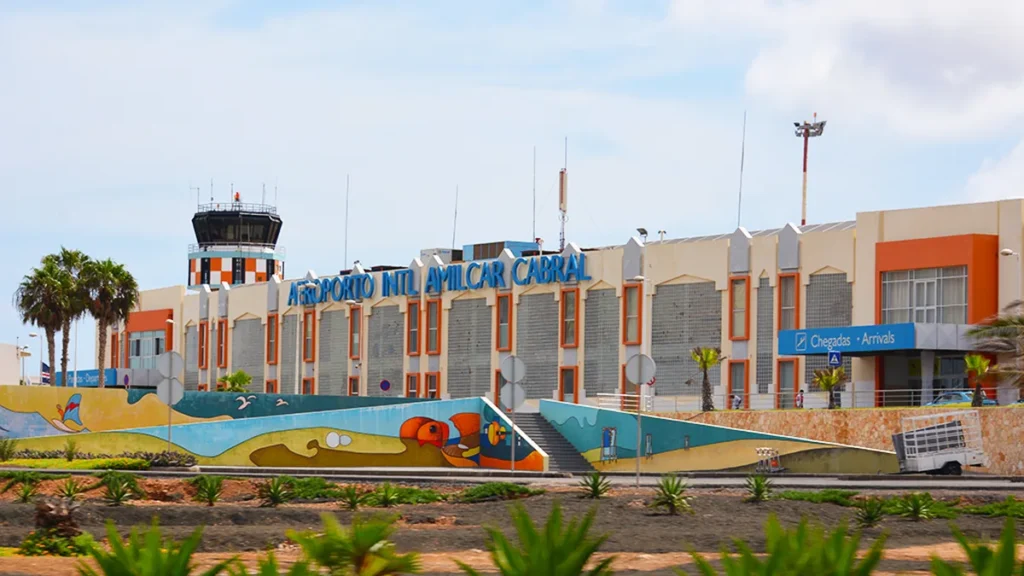
Amílcar Cabral International Airport
Amílcar Cabral International Airport
Amílcar Cabral International Airport (SID / GVAC) — Airport Profile
Amílcar Cabral International Airport — IATA code SID, ICAO code GVAC — is the principal international gateway serving the island of Sal in the Republic of Cabo Verde. Located adjacent to the town of Espargos in the north of Sal island, the airport functions as one of the busiest and most strategically positioned air hubs in the Atlantic-facing tier of West Africa, connecting the archipelago to Europe, the Americas, and the African continent. For travellers, researchers, and aviation analysts tracking the development of African aviation infrastructure, SID represents a compelling case study: a small-island airport that punches well above its weight in terms of international connectivity.
About
Amílcar Cabral International Airport takes its name from the celebrated anti-colonial theorist, agronomist, and independence leader Amílcar Cabral, who led the liberation movement that ultimately freed both Cabo Verde and Guinea-Bissau from Portuguese rule. The airport’s naming is a deliberate act of national memory, situating an infrastructure asset within the broader story of African self-determination. Operationally, the airport is managed under the authority of ASA — Aeroportos e Segurança Aérea, the state-owned enterprise responsible for managing all of Cabo Verde’s airports and air navigation services. ASA operates under the regulatory oversight of the Instituto Nacional de Aeronáutica Civil (INAC), Cabo Verde’s civil aviation authority.
The airport’s origins trace to the mid-twentieth century, when Sal island’s flat, arid terrain and its mid-Atlantic position made it a natural refuelling stop on long-haul transatlantic routes. The facility was formally developed and expanded during the Portuguese colonial period and continued to grow after Cabo Verde’s independence in 1975. Over subsequent decades, the airport underwent a series of infrastructure upgrades aligned with the country’s strategic pivot toward tourism as an economic pillar. A significant modernisation programme in the 2000s expanded terminal capacity and improved airside facilities to accommodate the surge in European charter and scheduled traffic that accompanied Cabo Verde’s emergence as a sun-and-beach destination.
Further investment in the 2010s and into the 2020s has focused on improving passenger processing, cargo handling, and ground support infrastructure. ASA has publicly signalled ongoing ambitions to raise the airport’s capacity and service standards in line with projected growth in both leisure and business travel to the archipelago. The airport today operates as a medium-capacity international hub by African standards, capable of handling wide-body aircraft and serving a diverse mix of scheduled, charter, and cargo operations.
Country
Cabo Verde is a small island nation comprising ten islands and several islets situated in the central Atlantic Ocean, approximately 570 kilometres off the coast of Senegal in West Africa. The capital city is Praia, located on Santiago island. With a population estimated in the low hundreds of thousands, Cabo Verde is one of Africa’s smaller states by population, though it maintains a notably high human development index relative to regional peers and a stable democratic political system. Its economy is heavily oriented toward tourism, services, and remittances from a large diaspora concentrated in Portugal, the Netherlands, the United States, and Senegal. Cabo Verde holds associate membership in the Economic Community of West African States (ECOWAS) and maintains close diplomatic and economic ties with both the European Union and the African Union, giving it a distinctive bridging role between Atlantic Europe and sub-Saharan Africa.
→ Read the Cabo Verde expert briefing
Airlines Based Here
The national carrier of Cabo Verde, Cabo Verde Airlines (formerly TACV — Transportes Aéreos de Cabo Verde), treats Amílcar Cabral International Airport as one of its two primary operational bases alongside Nelson Mandela International Airport in Praia. Cabo Verde Airlines operates both inter-island services connecting Sal to the other inhabited islands of the archipelago and international scheduled routes to Europe and North America. The airline has historically maintained a focus-city operation at SID given Sal’s dominant role in the country’s tourism economy.
Beyond the national carrier, the airport attracts a substantial volume of visiting carriers, particularly European airlines operating scheduled and charter services. TAP Air Portugal maintains a consistent presence given the historical and linguistic ties between Portugal and Cabo Verde. TUI fly, Condor, and other European leisure carriers operate seasonal and year-round charter and scheduled services from key European leisure markets including the United Kingdom, Germany, the Netherlands, and Scandinavia. easyJet and other low-cost carriers have at various points operated routes to SID from UK and European bases, reflecting the airport’s appeal as a winter-sun destination. Analysts should note that carrier schedules at SID are subject to seasonal variation, and the precise mix of operating airlines in any given season should be verified against current IATA schedule data or the ASA official communications.
Flights and Destinations
Amílcar Cabral International Airport supports a network that is predominantly oriented toward Europe, reflecting the tourism-driven demand profile of Sal island. Representative scheduled and charter destinations served from SID include Lisbon (Portugal), London Gatwick and London Stansted (United Kingdom), Amsterdam Schiphol (Netherlands), Frankfurt and Munich (Germany), Paris Charles de Gaulle (France), and various Scandinavian gateways. Transatlantic connectivity has been a strategic priority for Cabo Verde Airlines, with Boston serving as a key North American destination given the large Cape Verdean diaspora community in New England.
Within Africa, the airport provides connections to Dakar (Senegal) and to other Cabo Verdean islands including Santiago (Praia), São Vicente (Mindelo), and Boa Vista, the latter being a competing tourism island with its own international airport. Regional African connectivity beyond the immediate West African neighbourhood remains limited relative to the airport’s European network, though this is an area that industry observers have identified as a potential growth corridor as intra-African aviation infrastructure continues to develop under frameworks such as the Single African Air Transport Market (SAATM).
Facilities and Capacity
Amílcar Cabral International Airport operates with a single main terminal building that handles both arriving and departing international passengers. The terminal has been progressively upgraded to improve passenger flow, check-in capacity, and retail and catering offerings, though by the standards of major African hub airports it remains a relatively compact facility. The airport is served by a single primary runway, oriented to take advantage of the prevailing wind conditions on Sal island, and is certified to handle wide-body aircraft including the Airbus A330 family and Boeing 757 and 767 variants, which are commonly deployed on European leisure routes to the island.
Cargo facilities at SID are functional but modest in scale, primarily supporting the import of goods essential to the island’s tourism economy and the export of fish and seafood products. According to publicly disclosed traffic data and ASA operational reports, the airport falls into the medium-capacity category by African aviation benchmarks — handling volumes that are significant for a small-island economy but that do not place it in the same tier as major continental hubs such as Johannesburg O.R. Tambo, Cairo, or Nairobi Jomo Kenyatta. Planned and ongoing expansion works, as communicated by ASA and the Cabo Verde government in publicly available statements, aim to increase apron capacity, improve terminal processing times, and enhance cargo handling infrastructure in line with projected tourism growth targets.
Visa Regulations
Travellers arriving at Amílcar Cabral International Airport are subject to Cabo Verde’s national visa regime, which is administered by the Serviço de Estrangeiros e Fronteiras (SEF) and the relevant consular authorities. Cabo Verde operates a relatively open visa policy designed to facilitate tourism. Citizens of the European Union and the Schengen Area generally benefit from visa-free or simplified entry arrangements, reflecting Cabo Verde’s Special Partnership status with the EU. Citizens of the United Kingdom, the United States, and Canada have historically been able to obtain a visa on arrival or access an eVisa system prior to travel, though the precise mechanism and any associated fees should be confirmed before departure. Citizens of ECOWAS member states benefit from the community’s freedom of movement protocols, which facilitate entry without a standard visa requirement. Holders of passports from other African Union member states should verify their specific entitlements, as arrangements vary by bilateral agreement.
Visa regulations are subject to change at short notice. Travellers, journalists, and researchers should consult the live lookup tool for the most current entry requirements: → Check current visa requirements for Cabo Verde.
Recent Developments
In the period from approximately 2024 to 2026, Amílcar Cabral International Airport has seen a number of operationally significant developments. The post-pandemic recovery of European leisure travel has driven a sustained increase in seat capacity on routes from the United Kingdom, Germany, and the Netherlands to SID, with both legacy carriers and charter operators restoring and in some cases expanding their pre-pandemic schedules. Cabo Verde Airlines has continued its efforts to stabilise and grow its international network following the restructuring challenges that affected the carrier in the late 2010s and early 2020s, with route announcements and codeshare discussions forming part of the airline’s publicly communicated strategy.
On the infrastructure side, ASA has publicly referenced ongoing works to improve apron and terminal capacity at SID as part of a broader national airports investment programme. Industry estimates suggest that Sal island’s tourism accommodation pipeline, which includes several large resort developments, will place additional pressure on airport capacity in the medium term, making infrastructure investment a continuing priority. Regulatory developments at the ICAO and IATA level relating to sustainable aviation fuel (SAF) adoption and carbon offsetting frameworks are also relevant to SID’s operational planning, as European carriers operating to the airport face increasing compliance obligations under EU and UK emissions trading schemes.
News and Reports
Researchers and analysts seeking ongoing operational intelligence on Amílcar Cabral International Airport should consult several authoritative source categories. ASA — Aeroportos e Segurança Aérea publishes press releases and operational updates through its official institutional channels, and these represent the primary source for infrastructure announcements, traffic summaries, and concession developments. INAC, the Instituto Nacional de Aeronáutica Civil, is the appropriate regulatory authority for safety, certification, and air navigation matters affecting the airport. At the regional and global level, IATA’s Africa and Middle East regional office produces periodic reports on African aviation market trends that contextualise SID’s performance within the broader continental picture. The ICAO West and Central Africa regional office (WACAF), based in Dakar, is the relevant ICAO body for regulatory and safety oversight matters affecting Cabo Verde’s airspace and airports. Aviation trade publications including ch-aviation, Cirium, and the African Aviation journal provide commercially oriented route and fleet data that can supplement official sources.
Related Research
- Cabo Verde Expert Briefing — in-depth political, economic, and investment analysis
- Cabo Verde Statistics — demographic, economic, and trade data
- African Airports Directory — profiles of airports across the continent
- African Airlines Directory — carrier profiles and route network analysis
- Visa Requirements Lookup — live entry requirement data by passport and destination
- Country Comparison Tool — compare Cabo Verde against regional and global peers