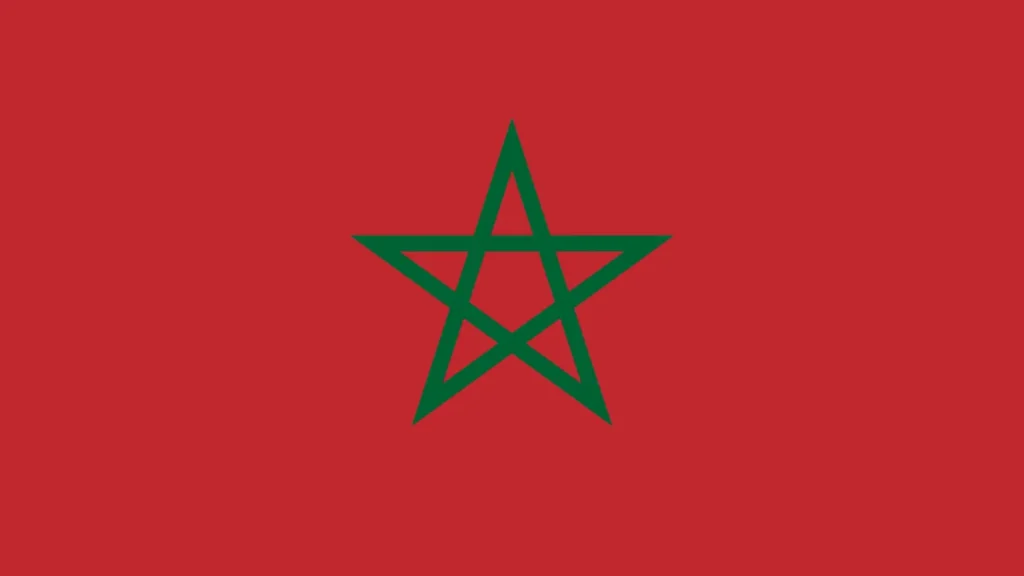
Morocco — Expert Briefing
Morocco at a glance: A constitutional monarchy navigating an ambitious modernisation agenda, deepening Atlantic and Gulf partnerships, and a pivotal role in African connectivity — all while managing the aftershocks of a devastating 2023 earthquake and the long-term pressures of climate stress and irregular migration.
Overview
Capital: Rabat (seat of government); Casablanca is the commercial and financial centre. Population: approximately 38.1 million (World Bank, 2024 estimate), with the UN projecting the country will cross 40 million before 2030. Official languages: Arabic and Tamazight (Amazigh), with French functioning as the dominant language of business, higher education, and administration; Darija (Moroccan Arabic) is the everyday vernacular. Currency: Moroccan Dirham (MAD), partially convertible and pegged to a basket of the euro and US dollar. GDP per capita: approximately USD 3,900–4,200 (current prices, World Bank 2024 band), placing Morocco firmly in the lower-middle-income category. Morocco matters in 2026 for two compounding reasons: it is co-hosting the 2030 FIFA World Cup alongside Spain and Portugal — a once-in-a-generation infrastructure and soft-power catalyst — and it has emerged as the African country most actively courted by both Western and Gulf capitals as a stable hub for green hydrogen, semiconductor supply-chain diversification, and sub-Saharan connectivity. Its position at the intersection of Europe, the Sahel, and the Atlantic makes it structurally impossible to ignore.
Government and Politics
Morocco is a constitutional monarchy with a parliamentary system, a form of government sometimes described in comparative literature as an “executive monarchy” to reflect the substantial reserve powers retained by the Crown. King Mohammed VI, who has reigned since July 1999, serves as head of state, Commander of the Faithful (Amir al-Mu’minin), and the ultimate arbiter of strategic policy — including foreign affairs, security, and religious affairs. Day-to-day executive authority is exercised by a head of government (Prime Minister); the current Prime Minister is Aziz Akhannouch, leader of the centre-right Rassemblement National des Indépendants (RNI), who has led a three-party coalition government since the September 2021 legislative elections. The bicameral Parliament consists of the Chamber of Representatives (395 seats, directly elected) and the Chamber of Councillors (120 seats, indirectly elected). The next legislative elections are constitutionally due in 2026. The 2011 constitution — adopted following Arab Spring-era protests and the February 20 Movement — transferred some executive functions to the elected government and entrenched Amazigh as an official language, but critics and civil society organisations continue to argue that meaningful accountability mechanisms remain constrained by the palace’s informal authority. No major constitutional revision has been enacted since 2011, though periodic debate about judicial independence and press freedom surfaces in domestic and international human rights reporting. The Polisario Front’s claim over Western Sahara — a territory Morocco controls and considers its Southern Provinces — remains the single most sensitive political issue, shaping foreign policy alignments and periodically straining relations with Algeria, which backs the Sahrawi independence movement and has kept its border with Morocco closed since 1994.
Economy
Morocco’s GDP stood at approximately USD 142–148 billion in 2024 (current prices, IMF/World Bank estimates), making it the fifth-largest economy in Africa. The economy rests on several structural pillars: phosphate mining and fertiliser production (Morocco holds an estimated 70 percent of global phosphate reserves, managed through the state-owned OCP Group); agriculture (employing roughly 35–40 percent of the labour force and highly vulnerable to rainfall variability); tourism (which recovered strongly post-pandemic, with over 14 million arrivals in 2023); remittances from the Moroccan diaspora in Europe (consistently one of the top three sources of foreign exchange); and a growing manufacturing base, particularly automotive components and aerospace parts, anchored around the Tanger Med port complex — now the largest container port in Africa and the Mediterranean. Key exports include phosphates and derivatives, automobiles and auto parts, electronics, fish products, and citrus. The dirham’s managed peg provides relative exchange-rate stability but limits monetary policy flexibility. Public debt stands at roughly 70 percent of GDP, elevated by post-earthquake reconstruction spending and energy subsidy reform costs, though the IMF has assessed the trajectory as manageable given Morocco’s access to international capital markets and its Precautionary and Liquidity Line with the Fund. The single most consequential economic story of the past 24 months is the acceleration of Morocco’s green hydrogen and renewable energy ambitions. The government’s “Green Hydrogen Roadmap,” backed by partnerships with Germany, the European Union, and Gulf sovereign wealth funds, positions Morocco as a potential exporter of green ammonia and hydrogen to European markets by the early 2030s. Alongside this, OCP’s multi-billion-dollar fertiliser expansion programme — timed to capitalise on post-Ukraine global food-security anxiety — has repositioned Morocco as a strategic supplier in ways that have materially altered its diplomatic leverage.
Demographics and Society
Morocco’s population is predominantly Arab-Berber (Amazigh), with Amazigh communities — including Tachelhit, Tamazight, and Tarifit speakers — estimated to constitute between 40 and 60 percent of the population depending on methodology, though identity and language use are deeply intertwined and contested. The country is overwhelmingly Sunni Muslim (approximately 99 percent), with Islam enshrined in the constitution as the state religion; small Jewish and Christian communities exist, the former historically significant and now largely diaspora-connected. Urbanisation is advancing rapidly: approximately 65 percent of Moroccans now live in urban areas, up from under 50 percent in the 1990s, with Casablanca, Rabat-Salé, Marrakech, Fès, Tangier, and Agadir as the principal urban centres. The median age is around 30, reflecting a relatively young population, though fertility rates have declined significantly over two generations. The defining social trend of the current moment is the tension between a young, digitally connected, and increasingly educated urban population — with rising expectations around employment, housing, and political participation — and a formal economy that has historically struggled to absorb graduates at scale. Youth unemployment, particularly among women and university graduates, remains structurally elevated. This demographic pressure intersects with irregular migration: Morocco is simultaneously a country of origin, transit, and increasingly destination for sub-Saharan African migrants, a dynamic that generates both social friction and policy complexity.
Key Issues Right Now
Post-earthquake reconstruction and resilience. The Al Haouz earthquake of September 2023 — magnitude 6.8, centred in the High Atlas mountains south of Marrakech — killed nearly 3,000 people and destroyed or severely damaged tens of thousands of homes across remote Berber villages. As of 2025–2026, reconstruction remains uneven: urban infrastructure has been prioritised for World Cup readiness, while rural mountain communities report slower progress. The disaster exposed longstanding gaps in rural housing standards, emergency response capacity, and the integration of climate-resilient construction into national building codes. International donors pledged support, but Morocco’s government — sensitive about sovereignty — initially limited the scope of foreign assistance, a decision that drew criticism from humanitarian organisations.
Water scarcity and climate stress. Morocco is experiencing one of its most sustained drought cycles in recorded history. Dam reservoir levels have fallen to critical lows in multiple regions, threatening both agricultural output and urban water supply. The government’s National Water Plan includes desalination expansion, wastewater reuse, and drip irrigation incentives, but implementation has lagged demand. The Souss-Massa basin in the south — Morocco’s primary fruit and vegetable export zone — is drawing on fossil aquifers at unsustainable rates. Climate stress is not a future risk for Morocco; it is a present-tense economic and social emergency that is reshaping internal migration patterns and agricultural viability across the country’s breadbasket regions.
Western Sahara and regional realignment. The Western Sahara dispute entered a new phase following the United States’ recognition of Moroccan sovereignty over the territory in December 2020 (under the Trump administration, a position maintained under Biden and into 2025). Spain and Germany have since moved toward recognising Morocco’s autonomy plan as a credible basis for negotiation, significantly shifting the diplomatic balance. Algeria’s severing of diplomatic relations with Morocco in 2021 and its closure of the Maghreb-Europe gas pipeline have deepened the regional fracture. The Sahel’s deteriorating security environment — with military juntas in Mali, Burkina Faso, and Niger expelling French forces and pivoting toward Russia — has increased Morocco’s value to Western partners as a stable, pro-Western anchor in the region, further entrenching Rabat’s strategic leverage on the Sahara question.
Travel and Connectivity
Morocco is well-served by international aviation. Mohammed V International Airport in Casablanca is the primary hub and one of Africa’s busiest, with direct connections to Europe, North America, the Gulf, and West Africa. Marrakech Menara Airport handles the largest volume of leisure tourism traffic. Tangier Ibn Battuta Airport has grown significantly with the expansion of low-cost European carriers. Agadir Al Massira and Fès-Saïss airports serve regional tourism markets. The country’s principal cities — Casablanca, Rabat, Marrakech, Fès, Tangier, Agadir, Meknès, and Oujda — are connected by an expanding motorway network and the Al Boraq high-speed rail line (LGV), which links Tangier to Casablanca in under two hours and represents the first high-speed rail service in Africa. Tourism is a cornerstone of the economy: Morocco received over 17 million international visitors in 2024, drawn by cultural heritage cities, Atlantic and Mediterranean coastlines, Saharan landscapes, and adventure tourism in the Atlas mountains. Internet penetration stands at approximately 88–90 percent of the population (GSMA/ITU estimates, 2024), driven primarily by mobile broadband. Mobile money adoption remains lower than in sub-Saharan African markets — Morocco’s relatively developed banking sector and the dominance of cash and card payments have slowed mobile wallet uptake — though services such as CIH Bank’s digital offerings and the national postal network’s Barid Cash are expanding financial inclusion, particularly in rural areas.
Further Research
Analysts and researchers seeking to deepen their understanding of Morocco should consult the following institutions and resources. The Haut-Commissariat au Plan (HCP) — Morocco’s High Planning Commission — publishes the country’s official demographic, economic, and social statistics, including census data and national accounts. The Bank Al-Maghrib (Central Bank of Morocco) produces quarterly monetary policy reports, financial stability reviews, and detailed balance-of-payments data essential for economic analysis. The World Bank Morocco Country Page provides project documentation, poverty assessments, and the most internationally comparable macroeconomic indicators. The Africa Center for Strategic Studies (Washington, D.C.) publishes regular analysis on Morocco’s security environment, Sahel dynamics, and the Western Sahara file, and is particularly useful for geopolitical context. The International Crisis Group’s North Africa programme offers in-depth reporting on the Algeria-Morocco rivalry, Western Sahara negotiations, and regional migration dynamics. Finally, the OCP Policy Center (now the Policy Center for the New South), a Rabat-based think tank affiliated with the OCP Group, produces substantive research on African political economy, climate, and Morocco’s continental role — though readers should note its institutional proximity to the Moroccan state when assessing editorial independence.