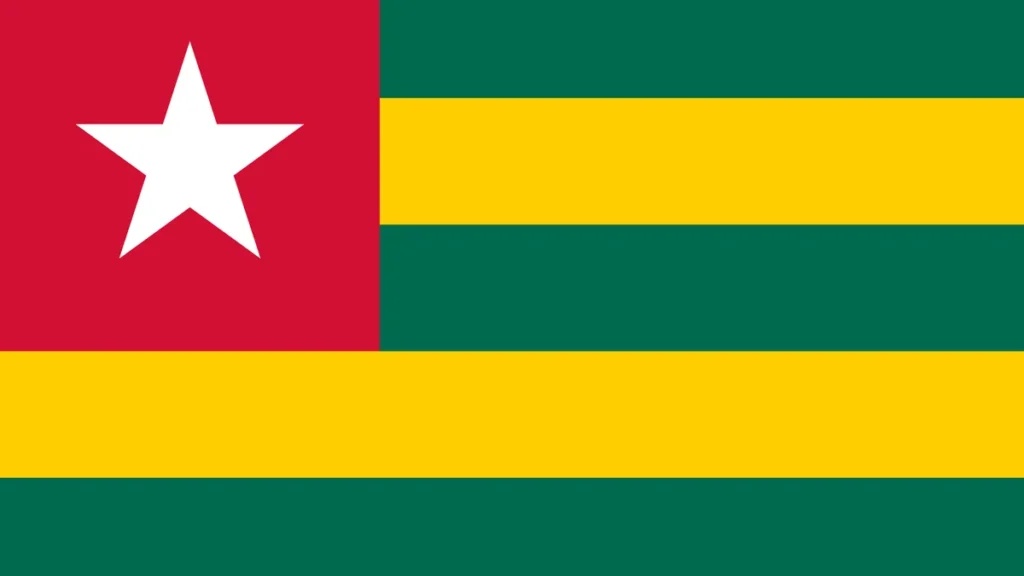
Togo — Expert Briefing
Togo at a glance: A narrow, strategically positioned West African state navigating a delicate transition from dynastic authoritarian rule toward a contested parliamentary system, while serving as a critical logistics hub and quiet diplomatic broker in an increasingly turbulent regional neighbourhood.
Overview
Togo’s capital is Lomé, a coastal city of roughly 1.9 million people that doubles as the country’s commercial engine and principal port. The country’s total population is estimated at approximately 9.2 million as of 2025, according to United Nations Population Division projections, with a median age below 20 — one of the youngest demographic profiles on the continent. The official language is French, though Ewe and Kabiyé hold recognised national status and are widely spoken in daily life. The currency is the West African CFA franc (XOF), pegged to the euro through the franc zone arrangement administered by the Banque Centrale des États de l’Afrique de l’Ouest (BCEAO). GDP per capita sits in the lower-middle band, estimated by the World Bank at approximately USD 950–1,050 in current terms for 2024, placing Togo among the lower tier of West African economies by this measure. Togo matters in 2026 for two intersecting reasons: its port and transit corridor infrastructure makes it a pivotal node for landlocked Sahelian states — particularly Burkina Faso and Mali — at a moment when those countries’ political instability and anti-French sentiment are reshaping regional trade and security architecture. Simultaneously, Togo’s own constitutional transformation, formally enacted in 2024, has made it a test case for whether West African leaders can engineer institutional change that consolidates power while maintaining a veneer of democratic legitimacy.
Government and Politics
Togo is formally a parliamentary republic following a landmark constitutional revision adopted by the National Assembly in April 2024 — a change of profound significance. The 2024 constitution abolished direct presidential elections and shifted executive authority toward a President of the Council of Ministers (effectively a prime ministerial head of government), while creating a largely ceremonial Senate-elected presidency. Critics, including opposition parties and civil society organisations, argued the reform was engineered specifically to allow Faure Gnassingbé — who had held the presidency since 2005, continuing a family grip on power dating to his father Gnassingbé Eyadéma’s 1967 coup — to remain in effective control under a new title without facing a direct popular vote. Faure Gnassingbé was subsequently designated President of the Council of Ministers under the transitional arrangements, consolidating executive authority in his person under the new framework. The legislature is bicameral under the revised constitution, comprising the National Assembly (lower house) and a newly created Senate. Legislative elections held in April 2024 returned the ruling Union for the Republic (UNIR) party with a commanding majority. The next scheduled legislative cycle falls in 2029 under the new constitutional timetable, though the precise electoral calendar for the Senate remains subject to implementing legislation. The constitutional overhaul drew condemnation from the Economic Community of West African States (ECOWAS) and prompted street protests in Lomé, though these were contained. International observers noted that the reform effectively insulated the ruling family from the electoral accountability mechanism that had been the primary lever available to opposition movements.
Economy
Togo’s GDP was estimated at approximately USD 9.5–10 billion in current prices for 2024, according to World Bank and IMF Article IV data, reflecting modest but consistent growth averaging 5–6 percent annually over the preceding five years — a performance that has outpaced several regional peers. The economy rests on three primary pillars: agriculture (employing the majority of the rural population, with cotton, cocoa, and coffee as principal cash crops), phosphate extraction (Togo holds among the world’s largest phosphate reserves and the sector is a leading foreign exchange earner), and services centred on Lomé’s port and transit trade. The Port of Lomé is the only deep-water port in the immediate sub-region capable of accommodating post-Panamax vessels, and transit fees and logistics services generate substantial fiscal revenue. Key exports include phosphates, cotton, re-exported goods, and clinker. The CFA franc’s euro peg provides monetary stability but limits exchange rate flexibility as a macroeconomic adjustment tool. Togo’s public debt-to-GDP ratio has risen to approximately 68–72 percent of GDP, elevated by post-pandemic fiscal expansion and infrastructure investment, and the IMF has flagged debt sustainability as a concern requiring consolidation. The single most consequential economic story of the past 24 months has been the accelerating rerouting of Sahelian trade through Lomé following the political ruptures in Burkina Faso and Mali. As those countries’ military governments severed or strained ties with traditional French and ECOWAS partners and faced sanctions pressure, Togolese port operators and logistics firms recorded significant volume increases. This has provided a short-term fiscal windfall but also entangles Togo’s economic fortunes with the political volatility of its hinterland neighbours.
Demographics and Society
Togo’s population of approximately 9.2 million is distributed across a country of just 56,785 square kilometres — a long, narrow strip running north from the Gulf of Guinea to the Sahel fringe. The country is ethnically diverse, with more than 40 distinct groups; the Ewe and related Gbe-speaking peoples predominate in the south, while the Kabiyé — historically the ethnic base of the Gnassingbé political network — are concentrated in the northern Kara region. This north-south ethnic and political geography has structured Togolese politics for decades. Urbanisation is advancing rapidly: approximately 45 percent of the population now lives in urban areas, with Lomé absorbing the majority of rural-to-urban migration. The urban growth rate exceeds 4 percent annually, placing acute pressure on housing, sanitation, and youth employment infrastructure. Religious affiliation is broadly pluralistic: Christianity (predominantly Catholic and various Protestant denominations) accounts for roughly 42 percent of the population, indigenous traditional religions for approximately 35 percent, and Islam for around 20 percent, with significant regional variation — Islam is more prevalent in the north. The defining social trend of the current moment is youth unemployment and its political consequences. With over 60 percent of the population under 25 and formal sector job creation lagging well behind demographic growth, a large, educated, and increasingly digitally connected young urban population represents both a development opportunity and a source of political frustration that the government has managed through a combination of social transfer programmes and periodic suppression of protest.
Key Issues Right Now
Northern insecurity and Sahelian spillover. The security situation in Togo’s Savanes region — the northernmost prefecture bordering Burkina Faso — has deteriorated markedly since 2021 and remains the country’s most acute security challenge in 2026. Jihadist armed groups affiliated with Jama’at Nusrat al-Islam wal-Muslimin (JNIM) and the Islamic State in the Greater Sahara (ISGS) have conducted attacks on military posts, villages, and civilian infrastructure in the Kpendjal and Cinkassé areas, displacing tens of thousands of people and straining the capacity of Togolese security forces. The government declared a state of emergency in the Savanes region in 2022, which has been repeatedly extended. Togo has sought bilateral security cooperation with France and the United States while carefully avoiding the anti-French posture adopted by its Sahelian neighbours — a balancing act that grows more complex as those neighbours’ hostility to Western security partnerships deepens.
Constitutional legitimacy and democratic backsliding. The 2024 constitutional overhaul remains an open and contested political wound. Opposition coalitions, bar associations, and civil society networks have continued to challenge the legitimacy of the new framework, arguing it was adopted without adequate public consultation and in violation of the spirit of earlier democratic commitments. ECOWAS issued statements of concern but stopped short of formal sanctions, reflecting the bloc’s own institutional fatigue following its interventions in Guinea, Mali, Burkina Faso, and Niger. The question of whether Togo’s political settlement is stable or merely suppressed will be a defining issue for the remainder of the decade, with implications for investor confidence, donor relations, and the country’s standing in multilateral forums.
Climate vulnerability and agricultural stress. Togo is classified as highly vulnerable to climate change by multiple indices, with the north facing increasing desertification pressure and erratic rainfall patterns that undermine subsistence agriculture, and the south exposed to coastal erosion accelerated by sea-level rise — a direct threat to Lomé’s port infrastructure and low-lying urban neighbourhoods. The 2024 agricultural season was marked by below-average rainfall in key cotton-producing regions, contributing to food insecurity estimates that the World Food Programme assessed as affecting over 700,000 people. The government’s National Climate Change Adaptation Plan identifies agriculture, water management, and coastal protection as priority areas, but implementation financing remains well below stated targets.
Travel and Connectivity
Lomé-Tokoin International Airport (also known as Gnassingbé Eyadéma International Airport, IATA: LFW) is the country’s sole international aviation hub and serves as a regional transit point, with connections to major African cities and direct routes to Paris, Brussels, and Istanbul among others. Ethiopian Airlines, Air France, Turkish Airlines, and several West African carriers operate scheduled services. There is no second international airport of comparable significance; domestic aviation is minimal. Principal cities beyond Lomé include Kara (the northern political heartland and second city), Sokodé, Atakpamé, and Kpalimé — the latter a popular destination for domestic tourism given its highland scenery and cooler climate. Tourism remains a modest contributor to GDP, with Togo attracting visitors primarily for beach tourism along the Gulf of Guinea coast, cultural heritage sites, and ecotourism in the Fazao-Malfakassa National Park. The country has invested in positioning Lomé as a conference and meetings tourism destination, with the Palais des Congrès hosting regional summits. Internet penetration stands at approximately 30–35 percent of the population, with mobile internet accounting for the overwhelming majority of connectivity; fixed broadband infrastructure is limited largely to Lomé. Mobile money adoption is high and growing rapidly: services operated through the Flooz (Moov Africa) and T-Money (Togocel) platforms have become the dominant mechanism for retail payments, remittances, and small business transactions, with the BCEAO reporting mobile money account penetration among adults in Togo among the higher rates in the UEMOA zone.
Further Research
Analysts and researchers seeking to deepen their understanding of Togo should consult the following institutions and resources. The World Bank Togo Country Page provides the most regularly updated macroeconomic data, poverty assessments, and project documentation, and is the standard starting point for economic analysis. The IMF Togo Country Report series — particularly the annual Article IV Consultation documents — offers rigorous fiscal and monetary analysis and debt sustainability assessments. The Africa Center for Strategic Studies (based in Washington, D.C.) publishes security-focused analysis on Sahelian spillover dynamics and the evolving threat landscape in coastal West Africa, with specific coverage of Togo’s northern security situation. The BCEAO (Banque Centrale des États de l’Afrique de l’Ouest) publishes monetary, banking, and mobile finance statistics for all UEMOA member states including Togo, and is the authoritative source on financial inclusion data. The Institut National de la Statistique et des Études Économiques et Démographiques (INSEED) of Togo — Togo’s national statistics office — is the primary source for census data, household surveys, and official demographic estimates. Finally, Crisis Group’s West Africa reporting provides ongoing political risk analysis covering both Togo’s internal governance dynamics and its position within the broader Sahel security complex, and is recommended for journalists and policy analysts tracking near-term developments.