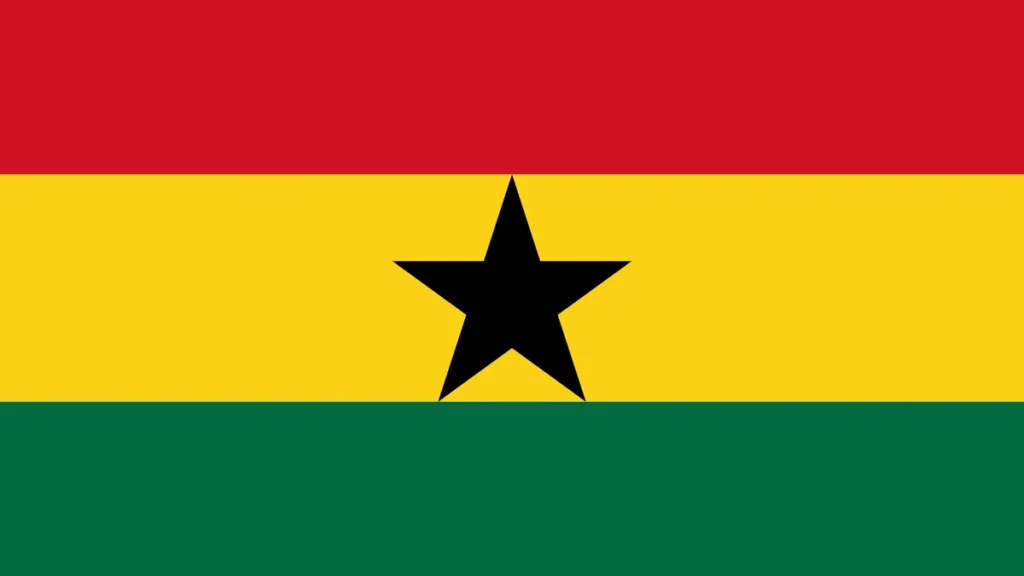
Ghana — Expert Briefing
Ghana at a glance: A constitutional democracy with deep democratic traditions, significant natural resources, and a pivotal role in West African stability, Ghana enters 2026 navigating a hard-won economic recovery while managing expectations raised by a new government and the enduring pressures of commodity dependence.
Overview
Capital: Accra (seat of government and commercial hub; Kumasi is the cultural capital of the Ashanti region). Population: approximately 34.5 million (World Bank, 2024 estimate), making Ghana the second most populous country in West Africa after Nigeria. Official language: English. Currency: Ghanaian Cedi (GHS). GDP per capita: broadly in the lower-middle-income band, estimated at approximately USD 2,200–2,400 (current prices, 2024), though purchasing-power-adjusted figures are considerably higher. Ghana matters in 2026 for two compounding reasons: it is one of the few countries in sub-Saharan Africa to have completed a full IMF programme cycle and returned to a degree of macroeconomic stability after a near-sovereign-default crisis, offering a closely watched test case for debt restructuring under the G20 Common Framework. Simultaneously, a new presidential administration that took office in January 2025 has raised expectations of structural reform, placing Ghana at the centre of debates about democratic governance and economic management across the continent.
Government and Politics
Ghana is a unitary presidential republic. The president serves as both head of state and head of government, elected by popular vote for a maximum of two four-year terms. John Dramani Mahama — a former president who served from 2012 to 2017 — won the December 2024 general election decisively, defeating the incumbent New Patriotic Party (NPP) candidate, and was inaugurated in January 2025. Mahama’s return to power on a National Democratic Congress (NDC) platform represents the seventh peaceful transfer of power between the two dominant parties since Ghana’s return to multiparty democracy in 1992, a record that remains exceptional in the West African context. The legislature is the unicameral Parliament of Ghana, comprising 275 seats; the NDC secured a working majority in the December 2024 elections, ending a period of a hung parliament that had complicated governance under the previous administration. No significant constitutional changes have been enacted recently, though debates around decentralisation, the role of the Council of State, and campaign finance reform remain live in policy circles. Ghana’s Electoral Commission has maintained credibility across successive electoral cycles, and the 2024 election was broadly assessed by domestic and international observers as free and fair. The next scheduled general election is due in December 2028.
Economy
Ghana’s GDP is estimated at approximately USD 76–80 billion (current prices, 2024), placing it among the larger economies in sub-Saharan Africa. The economy rests on three primary pillars: hydrocarbons (offshore oil and gas production, centred on the Jubilee and TEN fields operated by a consortium including Tullow Oil and Ghana National Petroleum Corporation), mining (Ghana is Africa’s largest gold producer, with output consistently exceeding 3 million troy ounces annually), and agriculture (cocoa, of which Ghana is the world’s second-largest producer, alongside food crops, timber, and horticulture). Services — particularly finance, telecoms, and retail — account for a growing share of GDP. Key exports are gold, crude oil, cocoa beans and cocoa products, and timber. The Ghanaian Cedi experienced catastrophic depreciation in 2022, losing roughly half its value against the US dollar, a crisis that drove the government to seek an IMF Extended Credit Facility arrangement, approved in May 2023 for approximately USD 3 billion. The single most consequential economic story of the past 24 months is Ghana’s completion of its external debt restructuring under the G20 Common Framework — finalised in stages through 2024 — which involved agreements with official bilateral creditors and, critically, a landmark deal with commercial Eurobond holders. While the restructuring provided meaningful debt-service relief and allowed Ghana to maintain its IMF programme, it also imposed significant losses on domestic bondholders through the Domestic Debt Exchange Programme, eroding savings and pension assets and generating lasting political grievance. Inflation, which peaked above 50 percent in late 2022, had moderated to the mid-to-high teens by late 2024, and the cedi stabilised, though it remains vulnerable to commodity price swings and global dollar strength.
Demographics and Society
Ghana’s population of approximately 34.5 million is young — the median age is estimated at around 21 years — and growing at roughly 2.2 percent annually. Urbanisation is accelerating: the United Nations estimates that over 60 percent of Ghanaians now live in urban areas, with Accra’s Greater Metropolitan Area housing upwards of 5 million people and Kumasi approaching 4 million. Ghana is ethnically and linguistically diverse, with more than 70 distinct languages spoken. The Akan group (including Ashanti and Fante subgroups) constitutes the largest ethnolinguistic cluster, accounting for roughly 47–50 percent of the population; other significant groups include the Mole-Dagbon peoples of the north, the Ewe of the Volta region, and the Ga-Dangme of the Greater Accra region. Religiously, Ghana is broadly divided between Christianity (approximately 71 percent, encompassing a wide range of Protestant, Catholic, and Pentecostal/Charismatic denominations) and Islam (approximately 20 percent, concentrated in the northern regions and among certain communities in southern cities), with traditional indigenous religions practised by a smaller proportion. The defining social trend of the current moment is the intensifying pressure of youth unemployment and underemployment. Despite relatively strong economic growth in the years before the 2022 crisis, Ghana’s formal labour market has consistently failed to absorb the approximately 300,000–400,000 young people entering the workforce each year, fuelling migration — both internal rural-to-urban flows and external emigration, particularly to Europe and North America — and generating political volatility that both major parties have struggled to address credibly.
Key Issues Right Now
Security and the northern frontier. Ghana has long been regarded as an island of stability in a turbulent region, but the southward creep of jihadist insurgency from the Sahel is now a direct policy concern rather than a distant threat. Burkina Faso — which shares Ghana’s entire northern border — has experienced a near-total collapse of state authority in its northern and eastern provinces since the 2022 coup, and armed groups affiliated with both al-Qaeda (JNIM) and the Islamic State Sahel Province have extended their operational reach toward the Ghana border. Incidents in Ghana’s Upper East and Upper West regions, including cross-border incursions and localised violence, have prompted the Ghana Armed Forces to increase deployments and the government to engage more actively with ECOWAS security frameworks. Analysts at the Africa Center for Strategic Studies and the UN Office for West Africa have flagged Ghana as a country requiring preventive investment in community resilience and border management before the threat escalates further.
Post-restructuring economic consolidation. The Mahama administration inherited an economy that is technically stabilising but remains fragile and deeply scarred by the debt crisis. The IMF programme requires continued fiscal discipline — including subsidy rationalisation and revenue mobilisation — that sits in tension with the NDC’s electoral promises of relief for households still absorbing the effects of the Domestic Debt Exchange. The government’s ability to maintain programme targets while delivering visible improvements in living standards will define its first two years in office and will be closely watched by investors considering re-engagement with Ghanaian Eurobond markets, which remain in restructured form. The cocoa sector faces additional stress: COCOBOD, the state cocoa marketing board, accumulated substantial debt during the crisis period, and reform of its financing model is a pressing structural issue.
The artisanal and small-scale mining crisis. Illegal small-scale gold mining — known locally as galamsey — continues to devastate Ghana’s river systems, farmland, and forest reserves at a scale that successive governments have failed to reverse. The Pra, Offin, Ankobra, and Birim rivers, which supply drinking water to millions, have been severely contaminated by mercury and sediment from unregulated mining operations. The Mahama government has signalled renewed commitment to enforcement, but previous crackdowns have been undermined by political patronage networks, the economic desperation of mining communities, and the involvement of foreign nationals — particularly Chinese operators — in supply chains that are difficult to regulate. The galamsey crisis sits at the intersection of environmental governance, food security, public health, and rule of law, and is arguably the most complex domestic policy challenge Ghana faces in 2026.
Travel and Connectivity
Ghana’s principal international gateway is Kotoka International Airport (IATA: ACC) in Accra, which handles the overwhelming majority of international passenger traffic and is served by a wide range of African, European, Middle Eastern, and North American carriers. Kumasi Airport (KMS) operates limited regional and domestic services. Principal cities beyond Accra and Kumasi include Tamale (the largest city in the north and a growing commercial hub), Takoradi (the oil and gas services capital and main port city), and Cape Coast (a UNESCO World Heritage site and centre of heritage tourism). Ghana’s tourism profile is diverse: the country draws significant diaspora tourism — particularly from African Americans engaging with heritage sites related to the transatlantic slave trade, including Cape Coast Castle and Elmina Castle — as well as ecotourism (Kakum National Park, Mole National Park), cultural tourism, and business travel. The government’s “Year of Return” initiative (2019) and its successor programmes have built lasting brand recognition in diaspora markets. Internet penetration is estimated at 65–70 percent of the population (ITU, 2023–24 data), with mobile internet accounting for the dominant mode of access; fixed broadband remains limited outside major urban centres. Mobile money adoption is among the highest in Africa: Ghana’s interoperable mobile money platform, built on the MTN MoMo, Vodafone Cash, and AirtelTigo Money ecosystems, processes billions of dollars in transactions annually and has become a primary financial infrastructure layer for both individuals and small businesses.
Further Research
Analysts and researchers seeking to deepen their understanding of Ghana should consult the following institutions and resources. The Bank of Ghana publishes monetary policy reports, financial stability reports, and detailed balance-of-payments data that are essential for any economic analysis. The Ghana Statistical Service (GSS) is the authoritative source for census data, national accounts, poverty statistics, and labour market surveys, including the Ghana Living Standards Survey series. The World Bank Ghana country page aggregates development indicators, project documentation, and analytical notes across sectors including health, education, and infrastructure. The Africa Center for Strategic Studies (ACSS), based in Washington DC, produces regular security-focused briefings on the Sahel spillover threat and Ghana’s defence posture that are freely available and peer-reviewed in quality. The Overseas Development Institute (ODI) and its associated researchers have published extensively on Ghana’s debt restructuring, the IMF programme, and fiscal governance, making it a valuable starting point for economic policy analysis. Finally, the Institute of Statistical, Social and Economic Research (ISSER) at the University of Ghana, Legon, produces the annual State of the Ghanaian Economy report — one of the most rigorous domestically produced economic assessments available for any African country — and its researchers are among the most credible independent voices on Ghanaian economic policy.