Fès–Saïss Airport
Fès–Saïss Airport
About
Fès–Saïss Airport (IATA: FEZ | ICAO: GMFF) serves the ancient imperial city of Fes in north-central Morocco, functioning as one of the country’s secondary international gateways and a meaningful node in the broader African aviation network. While Casablanca’s Mohammed V International Airport dominates Moroccan air traffic, Fès–Saïss plays a distinct and increasingly important role: it connects one of Africa’s most historically significant cities — a UNESCO World Heritage medina and a major centre of Islamic scholarship — to European leisure and diaspora markets, to domestic Moroccan routes, and, selectively, to destinations across the African continent. For travellers, journalists, and aviation analysts tracking the development of mid-tier African airports, FEZ offers a useful case study in how heritage tourism demand, diaspora travel flows, and low-cost carrier penetration interact at a single facility.
The airport takes its name from the Saïss plain on which it sits, roughly 15 kilometres south of Fes city centre. It has operated as a civilian aerodrome for several decades, with its origins traceable to the mid-twentieth century, when Morocco’s post-independence aviation infrastructure was being formalised. The airport is owned by the Moroccan state and operated under the authority of the Office National des Aéroports (ONDA), the national airports authority responsible for managing Morocco’s network of civilian airports. ONDA sits within the broader regulatory framework overseen by the Direction Générale de l’Aviation Civile (DGAC) of Morocco.
Over the years, Fès–Saïss has undergone successive rounds of infrastructure improvement aligned with Morocco’s national tourism and aviation development strategies. Expansion works have periodically upgraded the terminal building, apron capacity, and passenger-handling systems to accommodate growing low-cost carrier traffic, particularly from Europe. The airport is classified as an international airport and handles scheduled passenger services, charter operations, and limited cargo movements. It does not currently function as a full hub in the network-carrier sense, but it is a recognised focus city for several carriers operating point-to-point services.
Country
Morocco is a constitutional monarchy located in North Africa, bordered by Algeria to the east, Mauritania to the south, and the Atlantic Ocean and Mediterranean Sea to the west and north respectively. Its capital is Rabat, while Casablanca serves as the economic and commercial centre. With a population estimated in the tens of millions, Morocco is one of Africa’s larger economies and maintains strong trade, cultural, and migration ties with Europe — particularly France, Spain, Italy, and Belgium — as well as with Gulf states and sub-Saharan Africa. The country occupies a strategic position as a bridge between the African continent and Europe, a role that shapes its aviation market considerably. Morocco is a member of the African Union and a signatory to the Single African Air Transport Market (SAATM) framework, which has implications for the liberalisation of intra-African air routes.
→ Read the Morocco expert briefing
Airlines based here
Fès–Saïss Airport does not serve as a hub for any major network carrier in the traditional sense, but it is an important focus city for Royal Air Maroc (RAM), Morocco’s flag carrier, which operates domestic connections from FEZ to Casablanca’s Mohammed V Airport, effectively integrating Fes into RAM’s wider international network via Casablanca. Royal Air Maroc Express, the regional subsidiary, has also served domestic and short-haul routes through the airport. Beyond the national carrier, the airport’s traffic profile is substantially shaped by European low-cost carriers. Ryanair, the Irish ultra-low-cost carrier, has established a meaningful presence at FEZ, operating multiple routes to European cities and treating the airport as a point-to-point destination rather than a base. easyJet has similarly served the airport on leisure-oriented routes from the United Kingdom and France. Transavia France and Transavia Netherlands have operated seasonal and year-round services connecting Fes to French and Dutch cities, catering heavily to the Moroccan diaspora community in Europe. Charter operators from Spain, Italy, and Belgium have also used the airport on a seasonal basis to serve package-holiday and pilgrimage-related demand.
Flights and destinations
The route network at Fès–Saïss is predominantly European in orientation, reflecting both the leisure tourism draw of Fes as a heritage destination and the large Moroccan diaspora resident in Western Europe. Representative scheduled destinations served from FEZ have included Paris (Charles de Gaulle and Orly), London (Stansted and Gatwick), Brussels, Amsterdam, Madrid, Barcelona, Milan, Rome, and Lyon, among others. Domestically, Casablanca is the primary connection point, with Royal Air Maroc providing the primary link. Intercontinental services beyond Europe are limited at FEZ compared to Casablanca; however, the airport has at various points seen services connecting to Gulf destinations and to other African cities, depending on seasonal demand and carrier strategy. The network is best characterised as a medium-density European spoke system supplemented by domestic feed — a profile common among Morocco’s secondary international airports. Travellers seeking onward connections to North America, Asia, or deeper into sub-Saharan Africa will typically transit through Casablanca.
Facilities and capacity
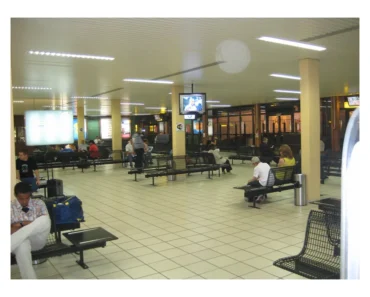
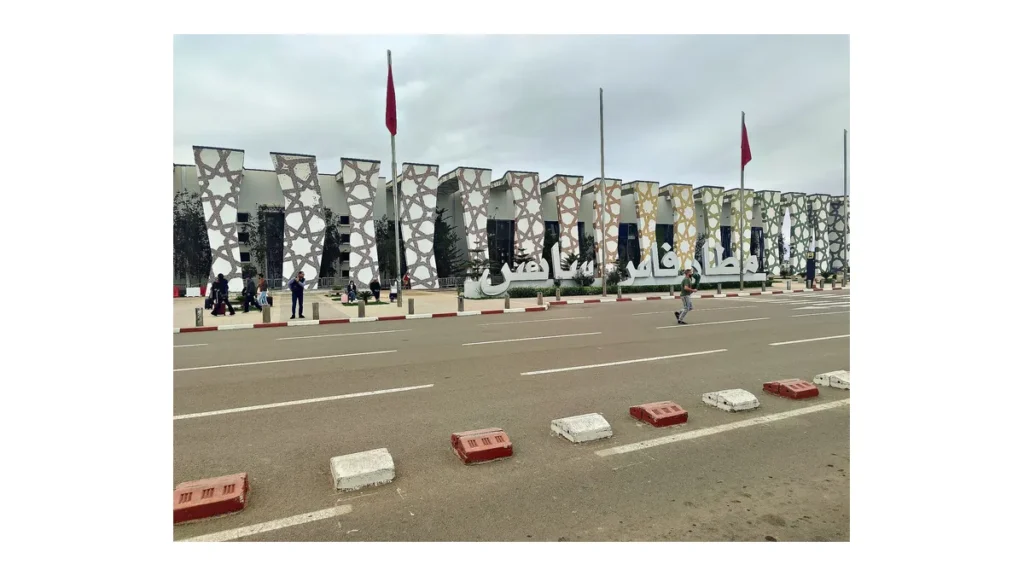
Fès–Saïss Airport operates with a single passenger terminal building that has been progressively modernised under ONDA’s national infrastructure programme. The terminal accommodates both departures and arrivals under one roof, with separate processing zones for international and domestic passengers. The airport is equipped with a single primary runway, oriented to accommodate the prevailing wind conditions of the Saïss plain, and the apron can handle multiple narrow-body aircraft simultaneously — the aircraft type most commonly operated on the European routes that define the airport’s traffic base. Cargo facilities exist but are modest in scale, consistent with the airport’s passenger-focused operational profile; significant freight volumes move through Casablanca rather than Fes. In terms of traffic classification, Fès–Saïss is best described as a medium-sized regional international airport by African standards — larger and more active than many domestic-only facilities on the continent, but operating well below the throughput levels of major African hubs such as Casablanca, Cairo, Johannesburg, or Nairobi. According to publicly disclosed traffic data from ONDA, the airport has recorded passenger volumes in the range consistent with a busy secondary gateway, though precise annual figures should be verified against ONDA’s most current published statistics. Expansion and modernisation works have been periodically announced as part of Morocco’s broader Vision strategies for tourism and infrastructure; industry estimates suggest ongoing investment in terminal capacity and airside facilities, though specific budget figures should be sourced directly from ONDA or official Moroccan government communications.
Visa regulations
Travellers arriving at Fès–Saïss Airport are subject to Morocco’s national visa regime, which is administered centrally and applies uniformly across all Moroccan ports of entry. As of 2026, Morocco operates a relatively open visa policy for many major source markets. Citizens of the United States, the United Kingdom, and European Union member states are generally permitted to enter Morocco without a prior visa for short stays, typically up to 90 days, for tourism and business purposes — though travellers should confirm current entry conditions before departure, as policies can be adjusted. Citizens of many Gulf Cooperation Council (GCC) states also benefit from visa-free or simplified entry arrangements. For travellers holding passports from sub-Saharan African countries, the situation is more varied: some African nationalities enjoy visa-free access under bilateral agreements, while others are required to obtain a visa in advance through a Moroccan consulate or embassy. Morocco does not currently operate a widely available electronic visa (eVisa) system comparable to those of Kenya or Ethiopia, though this is an area of ongoing policy discussion. Visa rules change, and travellers are strongly advised to verify current requirements before travel. → Check the live visa requirements lookup
Recent developments
In the 24 months leading into 2026, Fès–Saïss Airport has seen activity consistent with the broader recovery and growth of Moroccan aviation following the disruptions of the early 2020s. Route development has been a notable theme: carriers including Ryanair have added or reinstated frequencies on key European corridors, and Transavia has maintained its diaspora-focused services from French and Dutch cities. Morocco’s co-hosting of the 2030 FIFA World Cup — shared with Spain and Portugal — has generated significant anticipation around airport infrastructure investment across the country, with Fes identified as one of the cities likely to benefit from enhanced connectivity and facility upgrades in the lead-up to the tournament. ONDA has signalled investment priorities across its airport network, and industry observers expect FEZ to receive attention as part of this cycle. Regulatory developments at the national level, including Morocco’s continued engagement with the SAATM framework and bilateral air services agreement negotiations, have the potential to open new route opportunities, particularly for intra-African services. Travellers and analysts should monitor ONDA communications and the Moroccan Ministry of Transport for the most current project announcements.
News and reports
Ongoing operational and commercial news about Fès–Saïss Airport is best tracked through a combination of official and industry sources. The Office National des Aéroports (ONDA) publishes press releases, traffic statistics, and infrastructure announcements through its official communications channels — researchers should consult ONDA directly for authoritative data. Morocco’s Direction Générale de l’Aviation Civile (DGAC) is the relevant civil aviation regulatory authority and publishes regulatory notices and safety oversight information. At the continental level, IATA’s Africa and Middle East regional office produces periodic reports on African aviation market trends, within which Moroccan airports and carriers are frequently referenced. The ICAO regional office for Africa and the Indian Ocean (ESAF/WACAF) covers Morocco within its safety and regulatory oversight reporting. Trade publications including Aviation Week Network, ch-aviation, and The Africa Report provide commercial route and airline news relevant to FEZ. For academic and policy research, the African Development Bank and the African Union Commission have published analyses of African aviation liberalisation that contextualise Morocco’s airport development within the continent-wide picture.