Seychelles — Expert Briefing
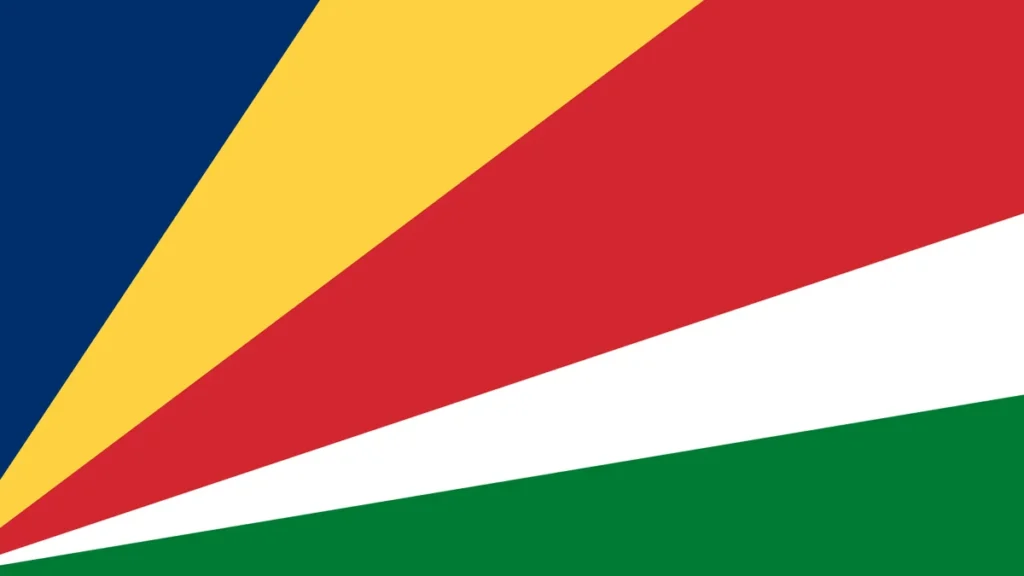
Seychelles at a glance: Africa’s smallest sovereign state by population is also its wealthiest by GDP per capita — a high-income island republic navigating climate vulnerability, democratic consolidation, and the geopolitics of a strategically contested Indian Ocean.
Overview
Capital: Victoria (on Mahé island). Population: approximately 107,000–110,000 (World Bank/UN 2024–2025 estimates), making Seychelles the least populous country on the African continent and one of the smallest sovereign states in the world. Official languages: Seychellois Creole (Kreol Seselwa), English, and French — all three carry equal constitutional status, a legacy of French colonial settlement and British administration. Currency: Seychellois Rupee (SCR). GDP per capita: approximately USD 14,000–16,000 at current prices, placing Seychelles firmly in the upper-middle to high-income band and well above every other African nation on this measure. Seychelles matters in 2026 for two compounding reasons: its 115-island archipelago sits astride critical Indian Ocean shipping lanes at a moment of intensifying great-power competition between China, India, the United States, and France; and its economy — almost entirely dependent on tourism and tuna — is being stress-tested by climate-driven coral bleaching, rising seas, and the lingering structural vulnerabilities exposed by the COVID-19 collapse of visitor arrivals.
Government and Politics
Seychelles is a presidential republic. The president serves as both head of state and head of government, elected by popular vote for a five-year term with a maximum of three terms. The current president is Wavel Ramkalawan, a former Anglican priest and long-time opposition leader who made history in October 2020 by defeating the incumbent Parti Lepep (formerly SPPF) — ending more than four decades of unbroken one-party or dominant-party rule, one of the most significant democratic transitions in the Indian Ocean region. Ramkalawan leads the Linyon Demokratik Seselwa (LDS) coalition. The legislature is the National Assembly, a unicameral body of 35 members — 26 elected from single-member constituencies and up to nine allocated by proportional representation. The LDS holds a working majority. The last presidential and legislative elections were held in October 2020; the next are constitutionally due in 2025, making the electoral cycle an active political consideration throughout 2025–2026. Seychelles has not undergone formal constitutional revision since the 1993 multi-party constitution, though debates around electoral reform, judicial independence, and the concentration of executive power have intensified under the Ramkalawan administration as it attempts to institutionalise democratic norms after decades of authoritarian consolidation. Relations between the executive and the judiciary have been a periodic flashpoint, with civil society and the independent press — notably Seychelles Nation and the online outlet Today in Seychelles — monitoring executive conduct with greater freedom than was possible under previous governments.
Economy
Seychelles’ GDP stands at approximately USD 1.8–2.0 billion (current prices, 2024 World Bank estimates), a figure that belies the structural fragility beneath the headline prosperity. The economy rests on two dominant pillars: tourism, which typically accounts for 60–70 percent of GDP and foreign exchange earnings when measured across direct and indirect contributions; and the tuna fishing and canning industry, centred on the Indian Ocean Tuna (IOT) cannery on Mahé — one of the largest tuna processing facilities in the world — which drives the country’s principal merchandise export. Financial services, including an offshore company registry and a growing blue-economy finance sector, contribute a smaller but strategically important share. The Seychellois Rupee has been freely floating since 2008 reforms mandated by the IMF following a sovereign debt default, and the Central Bank of Seychelles has maintained relative exchange-rate stability since then, though the rupee remains sensitive to tourism revenue cycles. Public debt, which ballooned to over 80 percent of GDP during the COVID-19 period, has been brought down through fiscal consolidation to approximately 60–65 percent of GDP by 2024, still elevated but on a credible downward trajectory. The single most consequential economic story of the past 24 months has been the government’s ambitious push to develop a blue economy framework — positioning Seychelles as a global model for sustainable ocean-based revenue, including regulated deep-sea mineral exploration rights, carbon credit schemes tied to marine protected areas, and the renegotiation of fishing access agreements with the European Union. The 2023 renewal of the EU-Seychelles Sustainable Fisheries Partnership Agreement, which provides both financial compensation and access for European vessels, was closely watched as a test of whether small island states can extract genuinely equitable terms from large trading blocs.
Demographics and Society
With a population of roughly 107,000–110,000, Seychelles is highly urbanised by African standards: approximately 58–60 percent of the population lives in and around Victoria on Mahé, the main island, with smaller concentrations on Praslin and La Digue. The population is ethnically and culturally creolised — the product of French colonial settlement, enslaved Africans brought from Madagascar and the East African coast, and later waves of South Asian (primarily Indian and Chinese) migrants. The resulting Seychellois Creole identity is genuinely syncretic and is reflected in the Kreol language, which functions as the primary language of daily life despite the formal trilingualism of the state. Christianity is the dominant religion, with Roman Catholicism practised by roughly 76 percent of the population, reflecting the French colonial heritage; Anglicanism, Hinduism, and Islam account for most of the remainder. One defining social trend of the current moment is the tension between a small, tight-knit society and the demands of a tourism-driven economy that requires large numbers of migrant workers — particularly from India, Madagascar, the Philippines, and increasingly Bangladesh — to staff hotels, construction sites, and domestic services. This has generated quiet but real social friction around housing costs, wage competition, and cultural change, issues that political parties are beginning to address more openly ahead of the 2025 electoral cycle.
Key Issues Right Now
Climate vulnerability and coral bleaching. Seychelles is on the front line of Indian Ocean warming. The 2024 mass coral bleaching event — driven by record sea surface temperatures linked to a strong El Niño cycle — caused severe damage to reef systems across the inner and outer islands, threatening both the marine biodiversity that underpins the tourism brand and the fish stocks on which artisanal and industrial fishing depend. The government has responded by accelerating its marine spatial planning process and expanding the network of marine protected areas to cover 30 percent of its Exclusive Economic Zone, in line with the global 30×30 biodiversity target. However, the gap between conservation ambition and enforcement capacity — given the vast ocean territory Seychelles nominally controls — remains a serious operational challenge.
Indian Ocean geopolitics and basing rights. Seychelles occupies a strategically sensitive position between the African coast, the Gulf of Aden, and the broader Indo-Pacific. India has deepened its security partnership with Seychelles significantly, completing a coastguard facility on Assumption Island after years of domestic controversy about sovereignty implications. The United States maintains a drone and surveillance presence through an agreement with the Seychellois government, while China has expanded its diplomatic and commercial footprint. France retains historical ties and contributes to maritime patrol operations. For Ramkalawan’s government, managing these overlapping security relationships without being drawn into explicit alignment — while extracting maximum development benefit from each partner — is a delicate and ongoing diplomatic exercise that will define Seychelles’ foreign policy posture through the late 2020s.
Tourism concentration risk and economic diversification. The COVID-19 pandemic, which reduced tourist arrivals by over 60 percent in 2020, exposed with brutal clarity the risk of an economy so thoroughly dependent on a single sector. While arrivals have recovered strongly — surpassing pre-pandemic levels by 2023, with Europe (particularly Germany, France, and the United Kingdom) and the Gulf states as primary source markets — the structural problem remains unresolved. The government’s economic diversification agenda, which includes fintech, aquaculture, and the blue economy, has produced policy frameworks but limited private investment so far. The challenge is compounded by the small domestic market, high labour costs relative to regional competitors, and infrastructure constraints on islands beyond Mahé.
Travel and Connectivity
Seychelles International Airport (IATA: SEZ), located on Mahé, is the country’s sole international gateway and handles direct flights from Dubai, Doha, Abu Dhabi, Nairobi, Johannesburg, Paris, Frankfurt, London, and several other European and Gulf hubs. Air Seychelles, the national carrier, operates a reduced regional network following financial restructuring. Inter-island connectivity relies on domestic air services (Twin Otter and helicopter routes to Praslin and other islands) and a network of ferry services, with the Mahé–Praslin–La Digue triangle being the most heavily used. Victoria is the only city of note; Praslin’s Baie Sainte Anne and La Digue’s La Passe function as small township centres. Tourism is overwhelmingly upmarket — Seychelles consistently ranks among the world’s most expensive destinations, with a product mix of luxury private-island resorts, boutique eco-lodges, and liveaboard diving operations. The government has resisted mass-market tourism development, partly for environmental reasons and partly to protect the premium brand. Internet penetration stands at approximately 75–80 percent of the population, high by African standards and driven by mobile broadband; fixed fibre infrastructure is expanding on Mahé. Mobile money adoption is more limited than in East African neighbours such as Kenya or Tanzania — the relatively high formal banking penetration (by regional standards) and small population have reduced the urgency of mobile-money-as-financial-inclusion that drives adoption elsewhere, though digital payment platforms are growing among the tourism and retail sectors.
Further Research
Analysts, journalists, and investors seeking to deepen their understanding of Seychelles should begin with the following institutions and resources. The Central Bank of Seychelles publishes quarterly monetary policy statements, financial stability reports, and balance-of-payments data that are essential for any economic analysis. The Seychelles National Bureau of Statistics is the primary source for population, trade, tourism arrival, and national accounts data. The World Bank Seychelles country page provides accessible macroeconomic overviews, project documentation, and the most recent systematic country diagnostic. The Africa Center for Strategic Studies (based in Washington, D.C.) covers Indian Ocean security dynamics and Seychelles’ place within broader African maritime security frameworks. The Indian Ocean Commission (Commission de l’Océan Indien), of which Seychelles is a founding member, publishes regional policy analysis relevant to fisheries governance, climate adaptation, and inter-island connectivity. Finally, the Seychelles Heritage Foundation and the government’s own Department of Environment and Energy are useful entry points for understanding the conservation and blue-economy policy landscape that is increasingly central to the country’s international identity and development strategy.