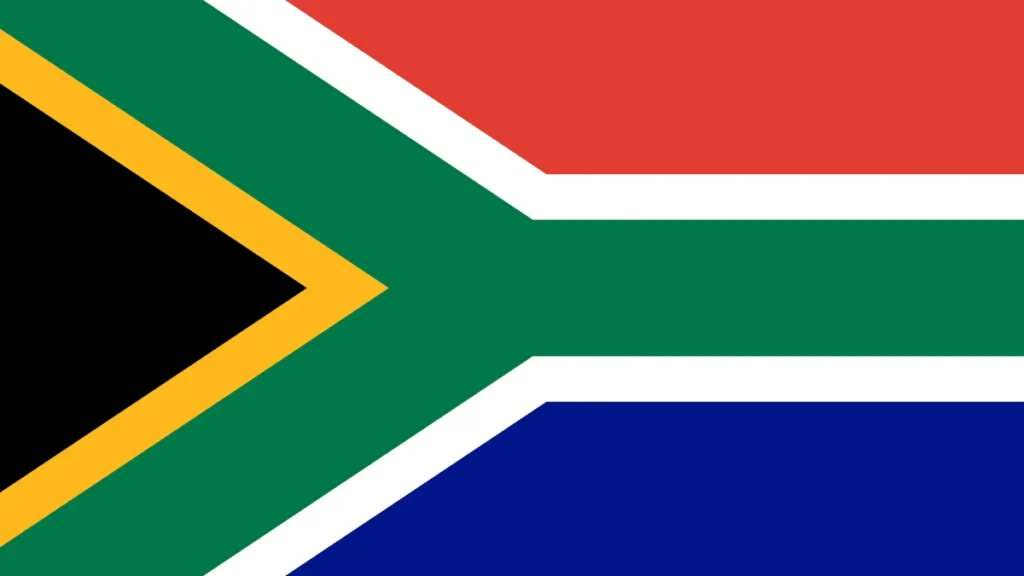
South Africa — Expert Briefing
South Africa at a glance: Africa’s most industrialised economy and its most complex democracy, South Africa enters 2026 navigating a fragile coalition government, chronic infrastructure failure, and a pivotal role in shaping the continent’s geopolitical alignment.
Overview
Capital: Pretoria (executive), Cape Town (legislative), Bloemfontein (judicial). Population: approximately 63 million (World Bank, 2024 estimate). Official languages: eleven, including Zulu, Xhosa, Afrikaans, English, Sotho, and Tswana — a constitutional recognition of the country’s extraordinary linguistic plurality. Currency: South African rand (ZAR). GDP per capita: approximately USD 6,700–7,200 (current prices, World Bank band), placing South Africa firmly in the upper-middle-income category, though this figure masks one of the world’s most extreme Gini coefficients. South Africa matters in 2026 for two compounding reasons: it is the continent’s second-largest economy by GDP and the anchor state of the Southern African Development Community (SADC), meaning its domestic stability — or instability — radiates consequences across the region. At the same time, its post-apartheid democratic experiment, now three decades old, is under genuine stress, making it a test case for whether African multiparty democracy can survive structural economic failure.
Government and Politics
South Africa is a unitary presidential republic with a constitutional parliamentary system. The President serves as both head of state and head of government, elected by the National Assembly rather than by direct popular vote — a Westminster-derived mechanism that makes parliamentary arithmetic decisive. The current President is Cyril Ramaphosa, re-elected to the presidency by the National Assembly in June 2024 following the African National Congress’s historic loss of its parliamentary majority for the first time since 1994. The ANC secured approximately 40 percent of the vote in the May 2024 general election — its worst result since the end of apartheid — and subsequently formed the Government of National Unity (GNU), a broad coalition that includes the Democratic Alliance (DA), the Inkatha Freedom Party (IFP), and several smaller parties, but notably excludes the Economic Freedom Fighters (EFF) and the newly formed uMkhonto we Sizwe (MK) party led by former President Jacob Zuma, which performed strongly in KwaZulu-Natal. The legislature is bicameral: the National Assembly (400 seats, elected by proportional representation) and the National Council of Provinces (90 seats, representing the nine provinces). The next general election is scheduled for 2029. No constitutional amendments of structural significance have been passed since the GNU’s formation, though the Basic Education Laws Amendment Act and ongoing debates around the National Health Insurance (NHI) Act — signed into law in 2024 but facing legal challenges — represent the most consequential legislative developments of the current cycle. The GNU is an inherently unstable arrangement, held together by a shared interest in keeping the MK party and EFF out of executive power rather than by ideological coherence.
Economy
South Africa’s GDP stands at approximately USD 380–400 billion (current prices, 2024 IMF/World Bank estimates), making it the second-largest economy in Africa after Nigeria, though the two are closely matched and rankings shift with exchange rate movements. The economy is structurally diversified by African standards: mining and quarrying (gold, platinum group metals, coal, iron ore, manganese, chromium) remain the backbone of export earnings, while financial services, retail, manufacturing, and telecommunications are significant contributors to GDP. Key exports include platinum group metals — South Africa holds the world’s largest known reserves of platinum — as well as gold, coal, iron ore, vehicles, and agricultural products including citrus and wine. The rand has remained volatile, trading in a wide band against the US dollar, with depreciation pressure driven by domestic political uncertainty, global risk-off sentiment, and persistent current account dynamics. Public debt has risen to approximately 75 percent of GDP, and the fiscal position remains constrained by a large public sector wage bill, state-owned enterprise bailouts (principally Eskom and Transnet), and sluggish revenue growth. The single most consequential economic story of the past 24 months is the partial stabilisation of electricity supply. Load-shedding — the rolling blackouts that at their peak in 2023 reached Stage 6 and beyond, costing the economy an estimated 1–2 percentage points of GDP annually — declined sharply through 2024 and into 2025, following emergency capacity additions, improved Eskom plant maintenance, and a surge in private rooftop solar installation. This has provided a modest growth dividend, with GDP growth edging toward 1.5–2 percent, though structural unemployment — officially above 32 percent, and above 45 percent on the expanded definition — remains the defining economic failure.
Demographics and Society
South Africa’s population of approximately 63 million is among the most ethnically and linguistically complex on the continent. The broad demographic breakdown, per Statistics South Africa, is approximately: Black African (80.9 percent), Coloured (8.8 percent), White (7.8 percent), and Indian/Asian (2.5 percent) — categories that retain legal and social salience as instruments of redress policy, even as their adequacy is increasingly contested. The largest linguistic communities are Zulu (approximately 25 percent of the population as first-language speakers), Xhosa (approximately 15 percent), and Afrikaans (approximately 12 percent). Christianity is the dominant religion, practised by roughly 85 percent of the population across a wide spectrum of denominations including African Independent Churches, which command significant cultural authority. Urbanisation is advanced and accelerating: approximately 68–70 percent of the population is classified as urban, concentrated in the Gauteng city-region (Johannesburg-Pretoria), the Cape Town metropolitan area, eThekwini (Durban), and the Nelson Mandela Bay conurbation. The defining social trend of the current moment is the rise of emigration among skilled professionals — a phenomenon colloquially termed “semigration” domestically and more formally tracked as skills emigration — driven by concerns about personal safety, service delivery collapse, and economic opportunity. South Africa loses disproportionate numbers of doctors, engineers, and IT professionals to the United Kingdom, Australia, Canada, and the Gulf states, compounding the human capital deficit that constrains growth.
Key Issues Right Now
Crime and public safety. South Africa’s murder rate — approximately 45 per 100,000 population according to the South African Police Service’s most recent annual crime statistics — places it among the most violent countries in the world outside active conflict zones. Gang violence in the Western Cape, taxi industry conflicts, and a surge in organised crime including drug trafficking and illegal mining (known as “zama-zama” operations) dominate the security landscape. The South African Police Service is under-resourced, unevenly distributed, and subject to persistent allegations of corruption and infiltration by criminal networks. The government’s deployment of the South African National Defence Force (SANDF) in support of police operations in specific hotspots has had limited systemic effect. For investors, crime raises operating costs through private security expenditure; for ordinary citizens, it is the most immediate daily constraint on quality of life.
The GNU’s political durability. The Government of National Unity is a historically unprecedented arrangement for post-apartheid South Africa, pairing the ANC with its long-standing opposition rival the DA — parties with fundamentally different economic philosophies and electoral bases. Tensions within the coalition over the NHI Act, Black Economic Empowerment policy, land reform, and foreign policy positions (South Africa’s relationship with Russia and its International Court of Justice case against Israel remain flashpoints with DA constituencies) create ongoing friction. The risk of coalition collapse before 2029 is real, and any such collapse would trigger a constitutional crisis or a minority government scenario. Analysts at institutions including the South African Institute of International Affairs (SAIIA) have noted that the GNU’s survival depends less on shared vision than on the mutual deterrent of electoral irrelevance for any party that triggers its breakdown.
Infrastructure and the logistics crisis. Beyond electricity, South Africa’s infrastructure deficit has deepened into a systemic constraint. Transnet, the state freight rail and ports operator, has experienced catastrophic operational decline: the Durban port — sub-Saharan Africa’s busiest container terminal — has suffered from equipment failures, labour disputes, and congestion that have pushed shipping lines to reroute cargo. The deterioration of the freight rail network has forced mining companies onto road transport, raising costs and damaging road infrastructure in turn. Water infrastructure in several municipalities, including parts of Johannesburg, has reached crisis point, with intermittent supply becoming routine. The National Treasury and private sector have advanced proposals for private sector participation in Transnet and water utilities, but implementation has been slow and politically contested.
Travel and Connectivity
South Africa is the most internationally connected country in sub-Saharan Africa by air. O.R. Tambo International Airport in Johannesburg is the continent’s busiest airport by passenger throughput and serves as the primary hub for intercontinental travel. Cape Town International Airport is the second major gateway, with strong European leisure routes, while King Shaka International Airport in Durban serves the east coast. Principal cities for visitors and business travellers are Johannesburg (financial and commercial capital), Cape Town (tourism, tech, and legislative hub), Pretoria (diplomatic and administrative centre), and Durban (port city and regional trade node). Tourism is a significant sector: South Africa attracted approximately 8–9 million international arrivals annually in the pre-pandemic period and has been recovering toward those levels, driven by wildlife tourism (Kruger National Park and associated private reserves), the Cape Winelands, coastal destinations, and cultural heritage tourism. Internet penetration stands at approximately 72–75 percent of the population (DataReportal, 2024 estimates), among the highest on the continent, with mobile broadband the dominant access mode. Fixed-line infrastructure is limited outside urban centres. Mobile money adoption is lower than in East Africa — South Africa’s relatively developed formal banking sector historically suppressed M-Pesa-style uptake — but fintech adoption through platforms such as SnapScan, Ozow, and bank-integrated digital wallets is growing rapidly, particularly among younger urban consumers.
Further Research
Analysts and researchers seeking to deepen their understanding of South Africa should consult the following institutions and resources. Statistics South Africa (Stats SA) is the official national statistics agency and the primary source for demographic, economic, and social data, including the quarterly Labour Force Survey and annual crime and census publications. The South African Reserve Bank (SARB) publishes monetary policy statements, financial stability reviews, and detailed balance of payments data that are essential for any economic analysis. The South African Institute of International Affairs (SAIIA), based at the University of the Witwatersrand, produces peer-reviewed policy analysis on South Africa’s foreign policy, regional integration, and political economy. The Institute for Security Studies (ISS), headquartered in Pretoria with offices across the continent, is the leading source for crime, justice, and peace and security analysis in southern Africa. The World Bank’s South Africa country page aggregates macroeconomic indicators, development data, and project documentation and is a reliable starting point for comparative economic context. The Africa Center for Strategic Studies (a US Department of Defense academic institution) publishes accessible briefings on security dynamics, civil-military relations, and governance trends relevant to South Africa and the broader SADC region.