Nairobi National Museum
Nairobi National Museum
About
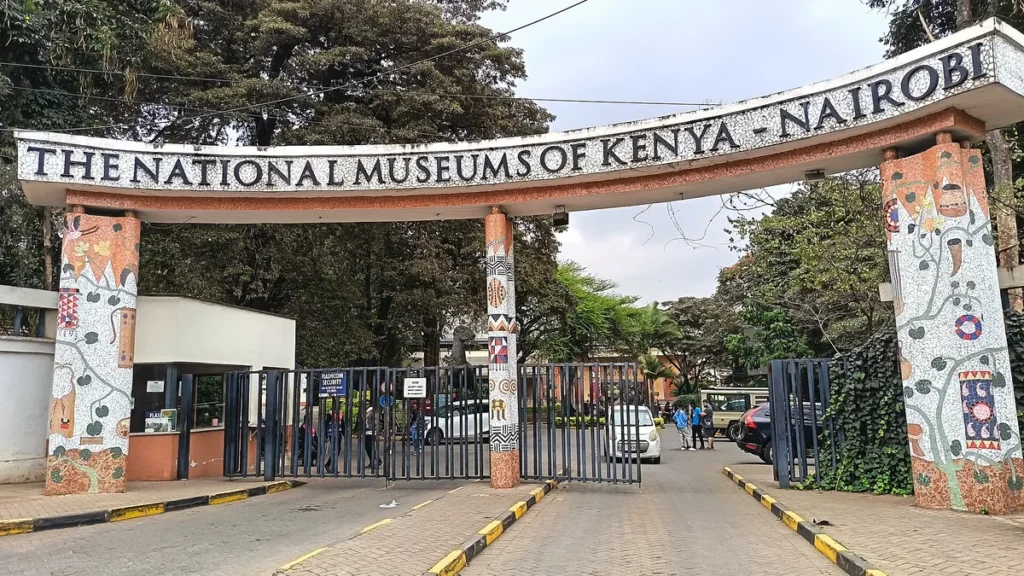
The Nairobi National Museum stands as Kenya’s foremost public institution for natural history, archaeology, and cultural heritage. Situated on Museum Hill, a short distance from the city centre, it draws together the deep geological, biological, and human story of East Africa under one roof — making it an essential stop for anyone seeking to understand the region beyond its safari landscapes and urban energy.
The museum’s origins trace to 1910, when the East Africa and Uganda Natural History Society began collecting specimens in colonial Nairobi. A permanent building followed in 1929, funded partly by public subscription and partly by colonial administration, reflecting the era’s twin impulses of scientific curiosity and imperial documentation. For decades it operated under the name the Coryndon Museum, honouring Sir Robert Coryndon, a former Governor of Kenya — a designation that was retired after independence in favour of the present name.
Among the figures who shaped the museum’s intellectual character, Louis Leakey stands out most prominently. As curator from the 1940s and a towering presence in paleoanthropology, Leakey used the museum as a base for fieldwork that would eventually reframe scientific understanding of human origins. The institution’s current building, substantially expanded and modernised, was inaugurated in 2008 following a major redevelopment that transformed both its physical footprint and its interpretive ambition.
Country and city context
Kenya occupies a pivotal position in East Africa — ecologically diverse, historically layered, and home to more than 40 distinct ethnic communities whose traditions span pastoralism, agriculture, and coastal trade networks stretching back centuries. Nairobi, the capital, is simultaneously one of Africa’s fastest-growing cities and a regional hub for diplomacy, finance, and technology. Founded as a railway depot in 1899, it has grown into a metropolis of over four million people, where glass towers and informal markets coexist a short drive from one of the world’s few national parks bordering an urban centre. That tension between rapid modernity and deep heritage is precisely what the Nairobi National Museum attempts to hold in productive conversation. → Read the Kenya expert briefing
Collection highlights
The museum’s holdings are broad and, in places, genuinely remarkable. Among the most significant:
- Homo rudolfensis skull (KNM-ER 1470) — a cast of one of paleoanthropology’s most debated specimens, discovered at Lake Turkana and central to arguments about early human diversity.
- Ahmed the Elephant — a life-size replica of the famous bull elephant from Marsabit, placed under presidential protection during his lifetime; the original skeleton is preserved on site.
- Cradle of Humankind gallery — a dedicated permanent exhibition tracing human evolution in East Africa, anchored by fossil evidence from Kenyan sites.
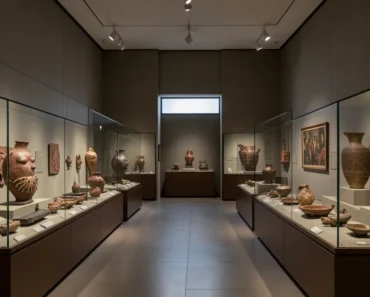
- Cycles of Life gallery — an ethnographic survey of Kenya’s major communities, presenting material culture, ceremonial objects, and everyday artefacts across regions.
- Natural history halls — extensive bird, mammal, and reptile collections built up over more than a century of East African fieldwork, with specimens dating to the early colonial period.
- Geology and ecology displays — covering Kenya’s Rift Valley formation, a process that shaped both landscape and the conditions for early human habitation.
Architecture and building
The original 1929 structure was a modest colonial-era building typical of institutional architecture across British East Africa. The transformation came with a comprehensive redevelopment completed in 2008, overseen by the National Museums of Kenya with support from international partners. The expanded complex introduced new gallery wings, improved climate control for collections storage, landscaped grounds, and a more coherent visitor circulation. The result is a building that reads as contemporary without entirely erasing its historical layers — the older core remains legible within the broader structure. Architect attribution for the 2008 work is not widely documented in public sources.
Visiting practical
The museum is open daily, including weekends and most public holidays, typically from morning through late afternoon — visitors should confirm current hours directly with the National Museums of Kenya before travelling, as seasonal adjustments apply. Admission falls into a budget-to-mid range by international standards, with separate pricing tiers for Kenyan citizens, East African residents, and international visitors; children and students generally qualify for reduced rates. The museum is located on Museum Hill Road, roughly two kilometres northwest of Nairobi’s central business district, accessible by matatu, taxi, and ride-hailing services. The 2008 redevelopment included improved ramp access and facilities, though visitors with specific mobility requirements are advised to contact the museum in advance to confirm current accessibility provisions.
Repatriation and debates
As an institution that grew substantially during the colonial period, the Nairobi National Museum occupies a nuanced position in repatriation conversations — it is as often a potential recipient of returned objects as it is a holder of contested material. Kenyan artefacts, human remains, and ethnographic objects collected by British institutions during the colonial era remain subjects of ongoing negotiation between the National Museums of Kenya and counterparts in the United Kingdom and elsewhere. The museum has publicly supported the broader principle of repatriation and has been involved in diplomatic-level discussions, though specific agreements have moved slowly. Domestically, questions about the representation of particular communities within the ethnographic galleries — who curates, who is consulted, whose objects are displayed and how — continue to generate internal and public debate. These are live conversations, not settled ones, and they reflect wider tensions across African museum practice about ownership, interpretation, and the colonial inheritance embedded in many collections.
Recent developments
In the period from 2023 to 2025, the National Museums of Kenya — the umbrella body under which the Nairobi National Museum operates — has continued to pursue digitisation initiatives aimed at making collection records more accessible to researchers internationally. There has been renewed public programming around the museum’s paleoanthropology holdings, coinciding with broader international interest in East African fossil discoveries. Temporary exhibition programming has addressed contemporary Kenyan art and photography alongside the permanent scientific galleries, reflecting an effort to broaden the museum’s audience beyond heritage tourism. Specific leadership appointments and major structural changes during this window have not been widely reported in verifiable public sources at the time of writing.