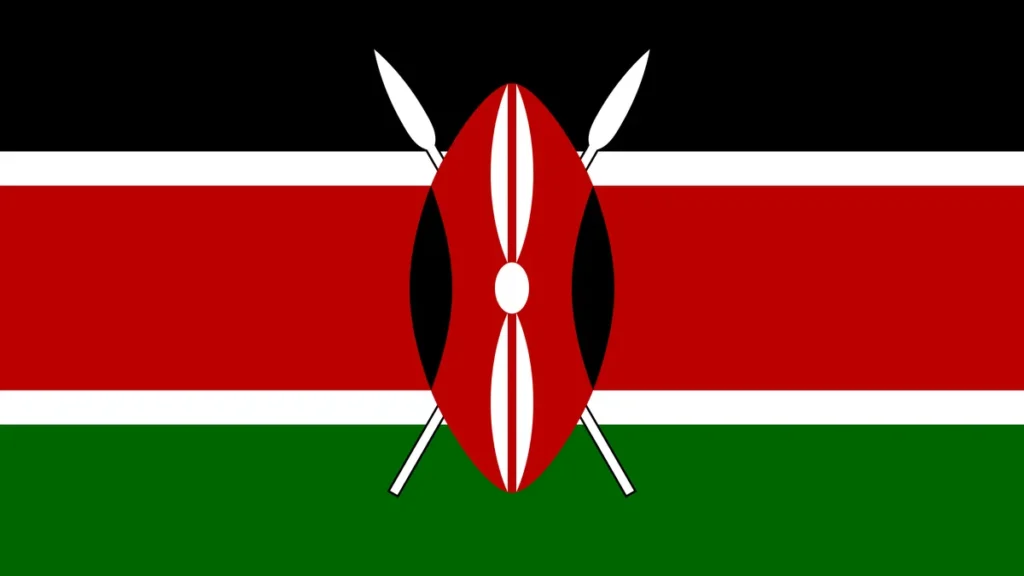
Kenya — Expert Briefing
Kenya at a glance: East Africa’s most diversified economy and a continental bellwether for democratic stress-testing, digital finance, and climate vulnerability — all at once.
Overview
Capital: Nairobi (seat of government and commercial hub; Mombasa serves as the principal coastal city). Population: approximately 57 million (World Bank 2025 estimate), making Kenya the seventh most populous country in Africa. Official languages: Swahili (Kiswahili) and English, both used in government, courts, and formal education; Swahili functions as the dominant lingua franca across the country’s more than 40 ethnic language communities. Currency: Kenyan shilling (KES). GDP per capita: Kenya sits in the lower-middle-income band, with the World Bank placing it at roughly USD 2,100–2,300 in nominal terms (2024 estimate), though purchasing-power-adjusted figures are considerably higher. Kenya matters in 2026 for two compounding reasons: it remains the financial, logistics, and technology gateway for the broader East African Community (EAC) bloc — a market of more than 300 million people — and it is simultaneously navigating one of the most consequential cycles of political and fiscal turbulence in a generation, the outcome of which will shape investor confidence and democratic norms across the sub-region for years to come.
Government and Politics
Kenya is a presidential republic operating under the Constitution of Kenya 2010, which remains the foundational legal document and one of the most progressive constitutional frameworks on the continent. The president is both head of state and head of government, elected by popular vote to a maximum of two five-year terms. The current head of state is President William Samoei Ruto, who took office in September 2022 after a narrow and legally contested victory over opposition leader Raila Odinga; Ruto, a former deputy president under Uhuru Kenyatta, ran on a self-styled “hustler nation” platform oriented toward small traders and the rural poor. The legislature is bicameral: the National Assembly (350 seats, including 47 women’s representatives and 12 nominated members) and the Senate (67 seats, representing Kenya’s 47 counties). The last general election was held in August 2022; the next is scheduled for August 2027. No formal constitutional amendments have been enacted since 2010, though the government’s proposed “broad-based” political arrangement — effectively a power-sharing deal struck in mid-2024 between Ruto and Odinga following deadly anti-government protests — has raised questions among constitutional scholars about the boundaries of executive authority and the integrity of parliamentary opposition. The protests, led largely by Generation Z activists mobilised through social media, resulted in the storming of parliament in June 2024 and the withdrawal of a controversial Finance Bill; they represent the most significant episode of civic unrest since the post-election violence of 2007–08 and have permanently altered the political calculus for the Ruto administration.
Economy
Kenya’s GDP stood at approximately USD 110–115 billion in nominal terms in 2024 (IMF/World Bank estimates), making it the third-largest economy in sub-Saharan Africa after Nigeria and South Africa, and the largest in East Africa. Growth has moderated to around 5 percent annually — robust by global standards but below the 7–8 percent needed to meaningfully reduce unemployment among a young and rapidly expanding population. The economy’s primary sectors are services (contributing roughly 55 percent of GDP), agriculture (around 22 percent), and industry. Key exports include tea (Kenya is the world’s largest exporter of black CTC tea), cut flowers (the country supplies an estimated 35–40 percent of EU flower imports), coffee, horticulture, and increasingly, services — particularly financial technology and business process outsourcing. Tourism is a critical foreign-exchange earner, recovering strongly post-pandemic. The Kenyan shilling experienced severe depreciation pressure through 2023, at one point trading above KES 160 to the US dollar, before recovering to the KES 128–132 range through 2024–25 following a successful Eurobond refinancing and IMF programme disbursements. Kenya’s public debt position remains a central concern: the debt-to-GDP ratio reached approximately 68–70 percent at its peak, and debt service obligations have consumed more than 60 percent of government revenue in recent fiscal years, severely constraining public spending on health, education, and infrastructure. The single most consequential economic story of the past 24 months is the collapse of the Finance Bill 2024. Proposed tax measures — including levies on bread, cooking oil, and financial transactions — triggered the June 2024 protests; the bill’s withdrawal left a KES 346 billion hole in the budget and forced the government into emergency IMF negotiations, spending cuts, and a politically damaging search for alternative revenue, reshaping the entire medium-term fiscal framework.
Demographics and Society
Kenya’s population of approximately 57 million is young — the median age is around 20 years — and growing at roughly 2.2 percent annually, placing significant pressure on employment markets, urban infrastructure, and public services. Urbanisation is accelerating: approximately 30 percent of the population currently lives in urban areas, but that figure is rising steadily, with Nairobi’s metropolitan population estimated at 5–6 million and secondary cities such as Mombasa, Kisumu, Nakuru, and Eldoret expanding rapidly. Kenya is ethnically and linguistically diverse, with more than 40 recognised ethnic communities. The four largest — Kikuyu, Luhya, Kalenjin, and Luo — together account for roughly 60 percent of the population and have historically dominated national political competition, often along ethnic coalition lines. Religiously, Kenya is predominantly Christian (approximately 85 percent, spanning Protestant, Catholic, and Pentecostal denominations), with a Muslim minority of around 11 percent concentrated in the Coast and North Eastern regions. The defining social trend of the current moment is generational: the cohort that led the 2024 anti-government protests — digitally connected, politically unaffiliated with the ethnic patronage networks of older parties, and economically frustrated — has emerged as a distinct civic force. This “Gen Z” mobilisation, organised almost entirely via TikTok, X (formerly Twitter), and WhatsApp, signals a structural shift in how political accountability is demanded in Kenya and is being watched closely by governments and civil society organisations across the continent.
Key Issues Right Now
Fiscal consolidation and the IMF programme. Kenya is operating under an IMF Extended Fund Facility and Extended Credit Facility arrangement, with programme reviews closely watched by bond markets and bilateral creditors. The government’s ability to meet revenue targets without triggering further social unrest — given the political toxicity of new taxation after 2024 — is the central policy dilemma of the Ruto administration’s second half. Spending cuts to the public sector wage bill and infrastructure projects have downstream effects on employment and contractor networks that ripple through the broader economy.
Security in the north and the Somalia nexus. Al-Shabaab continues to conduct periodic attacks in Kenya’s North Eastern counties and, less frequently, in Nairobi and the Coast region. Kenya Defence Forces remain deployed in Somalia as part of the African Union Transition Mission (ATMIS), and Kenya plays a central diplomatic role in Somali stabilisation efforts. Domestically, intercommunal violence in the Rift Valley and cattle-rustling conflicts in Turkana and Marsabit counties persist as low-intensity but chronic security challenges that divert police resources and deter investment in the north.
Climate stress and the agriculture-water nexus. Kenya experienced devastating floods in April–May 2024, killing more than 200 people and displacing hundreds of thousands — events that followed years of severe drought across the Horn of Africa. The juxtaposition of extreme drought and extreme flooding within a single 18-month window has sharpened policy attention on climate adaptation, particularly for the smallholder agricultural sector on which the majority of Kenyans depend. The government’s “Bottom-Up Economic Transformation Agenda” explicitly links climate resilience to food security, but implementation capacity and financing remain constrained. Kenya is also a significant voice in global climate negotiations, having hosted the Africa Climate Summit in 2023 and positioning itself as a leader on carbon markets and green finance.
Travel and Connectivity
Kenya’s principal international gateway is Jomo Kenyatta International Airport (JKIA) in Nairobi, one of the busiest airports in sub-Saharan Africa and a major hub for Kenya Airways, which operates an extensive pan-African network. Moi International Airport in Mombasa handles significant charter and scheduled traffic, particularly for beach tourism. Wilson Airport in Nairobi serves domestic routes and light aircraft. Principal cities beyond Nairobi and Mombasa include Kisumu (on Lake Victoria, the commercial hub of western Kenya), Nakuru, Eldoret, and Thika. Kenya’s tourism profile is anchored by wildlife safaris — the Maasai Mara, Amboseli, Tsavo, and Samburu ecosystems are world-class — alongside Indian Ocean beach tourism at Diani, Malindi, and Lamu, the latter a UNESCO World Heritage Site. Cultural and business tourism to Nairobi is growing. Internet penetration stands at approximately 40–45 percent of the population (ITU estimates), with mobile broadband the dominant access mode; fixed broadband remains limited outside major urban centres. Kenya is, however, a global leader in mobile money: M-Pesa, operated by Safaricom, processes transactions equivalent to a significant share of GDP annually and has been adopted by more than 30 million active users in Kenya alone, making it the most mature mobile financial ecosystem in Africa and a reference model for digital finance worldwide.
Further Research
Analysts, journalists, and investors seeking to deepen their understanding of Kenya should consult the following institutions and resources. The Kenya National Bureau of Statistics (KNBS) publishes GDP releases, the Kenya Integrated Household Budget Survey, and demographic data — it is the authoritative source for domestic economic and social statistics. The Central Bank of Kenya (CBK) publishes monetary policy statements, financial stability reports, and balance-of-payments data, and its governor’s communications are closely followed by currency and bond markets. The World Bank Kenya country page provides project documentation, poverty assessments, and the Kenya Economic Update series, which offers rigorous biannual analysis of macroeconomic trends. The Africa Center for Strategic Studies (based in Washington, D.C.) produces security-focused briefings on al-Shabaab, ATMIS, and the broader Horn of Africa security architecture relevant to Kenya’s external environment. The Institute of Economic Affairs Kenya (IEA-Kenya) is an independent Nairobi-based think tank that publishes budget analyses, public finance monitoring, and policy briefs with a strong domestic perspective. Finally, the Rift Valley Institute, with its focus on the Horn of Africa and Great Lakes region, provides contextually rich research on cross-border dynamics, pastoralist communities, and conflict systems that shape Kenya’s northern and western borderlands.