Théodore Monod African Art Museum (IFAN)
Théodore Monod African Art Museum (IFAN)
About
The Théodore Monod African Art Museum — formally housed within the Institut Fondamental d’Afrique Noire (IFAN) at Cheikh Anta Diop University in Dakar — stands as one of the oldest and most significant ethnographic museums on the African continent. Named in honour of the French naturalist and humanist Théodore Monod, who directed IFAN for many years, the museum holds a collection that spans centuries of West African material culture and remains an essential reference point for scholars, students, and culturally curious travellers alike.
IFAN was established in 1936 during the French colonial period, originally conceived as a research institute to document the peoples, languages, and natural environments of French West Africa. From its earliest years, the institute accumulated ethnographic objects, masks, statuary, jewellery, textiles, and musical instruments drawn from across the region. The museum component grew alongside the research mission, eventually becoming a public-facing institution of genuine scholarly weight.
Théodore Monod himself directed IFAN from 1938 to 1965, shaping both its scientific character and its collecting philosophy. Subsequent directors and curators worked to reframe the collection within an African intellectual context — a process that accelerated after Senegalese independence in 1960, when the institute was integrated into what would become Cheikh Anta Diop University. The museum’s renaming in Monod’s honour reflects a complicated but genuine respect for a figure who, unlike many of his contemporaries, advocated for African cultures on their own terms.
Country and city context
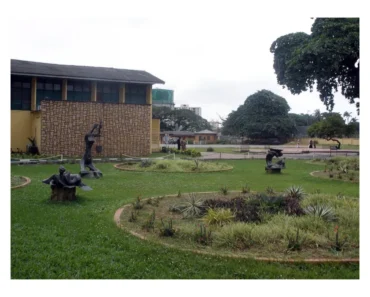
Senegal occupies a distinctive position in West Africa as a country of long democratic tradition, vibrant artistic production, and deep Sufi Islamic heritage. Dakar, the capital, sits on the Cap-Vert peninsula — the westernmost point of the African mainland — and functions as a regional hub for culture, commerce, and education. The city’s intellectual life is dense: universities, galleries, the biennial Dak’Art contemporary art festival, and institutions like IFAN itself make Dakar one of the continent’s most stimulating destinations for anyone interested in African history and creativity. The museum sits within the university campus in the Fann district, a short distance from the city centre, embedded in a neighbourhood that hums with student life and academic energy. → Read the Senegal expert briefing
Collection highlights
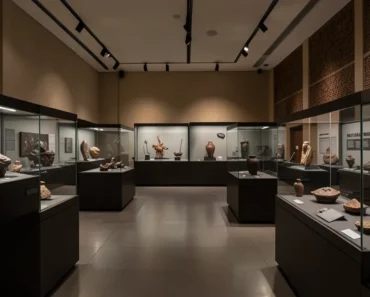
The museum’s holdings are broad and uneven in the way that colonial-era collections often are, but several areas stand out as genuinely exceptional.
- Senegambian gold and silver jewellery: Elaborate ornamental pieces from Wolof and Toucouleur traditions, demonstrating sophisticated metalworking lineages that predate European contact.
- Dan and Baga masks (Guinea and Côte d’Ivoire): Ceremonial face masks with documented ritual functions, among the most visually arresting objects in the collection.
- Dogon figurative sculpture: Wooden ancestor figures from the Bandiagara escarpment region of Mali, representing one of the most studied sculptural traditions in African art history.
- Musical instruments gallery: A cross-regional survey of percussion, string, and wind instruments that doubles as an acoustic map of West African cultural geography.
- Textiles and woven cloth: Samples of kente-adjacent strip-weaving traditions alongside bogolanfini (mud cloth) and other dyed fabrics illustrating regional variation in textile arts.
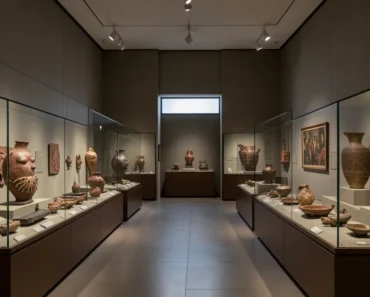
- Everyday material culture: Domestic objects — calabashes, pottery, agricultural tools — that ground the collection in lived experience rather than purely ceremonial display.
Architecture and building
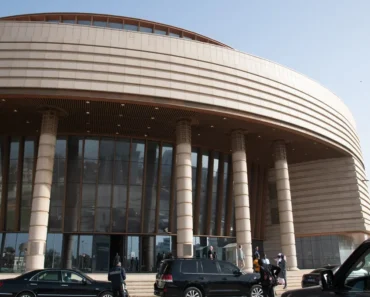
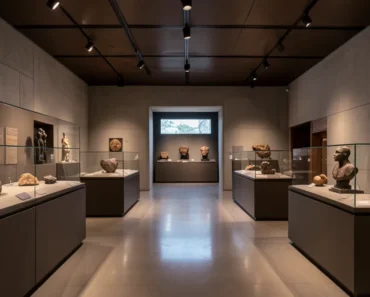
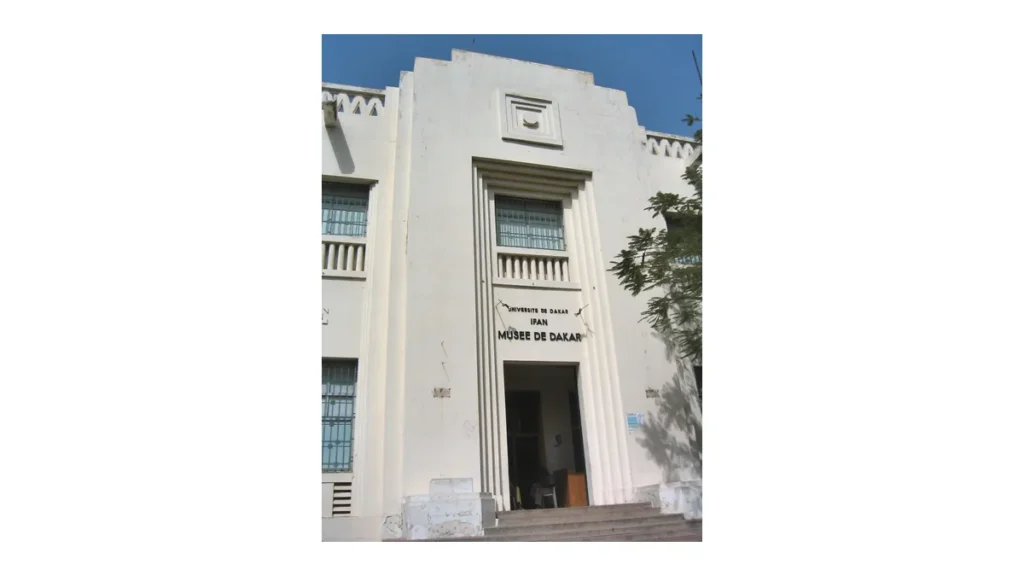
The museum occupies a mid-century building on the Cheikh Anta Diop University campus, constructed in a functional colonial administrative style typical of French West Africa’s institutional architecture of the 1930s and 1940s. The structure is not architecturally celebrated in the way that some purpose-built African museums are, but its solidity and campus setting give it an appropriate gravitas. The building has undergone periodic maintenance and partial renovation over the decades, though it has not received the kind of comprehensive modernisation that would bring it fully in line with contemporary museum infrastructure standards. Display cases and lighting in some galleries reflect earlier eras of museological practice, which some visitors find charmingly archival and others find limiting.
Visiting practical
The museum is generally open Tuesday through Saturday, with reduced or no public access on Sundays and Mondays, though hours can vary and it is advisable to confirm directly before visiting. Admission falls into the low-cost band typical of West African public museums — expect fees in the range of a few hundred to a few thousand CFA francs, with reductions commonly available for students and researchers presenting institutional identification. The museum is located on the Cheikh Anta Diop University campus in the Fann district of Dakar, accessible by taxi, dakar dem dikk bus, or on foot from the Fann-Résidence neighbourhood. Wheelchair access within the building is limited by the age of the structure; visitors with mobility requirements should contact the museum in advance to discuss practical arrangements.
Repatriation and debates
As an ethnographic collection assembled substantially during the French colonial period, the IFAN museum exists within the same contested landscape as institutions across Europe and Africa grappling with questions of provenance and ownership. Senegal has been an active voice in continental and international repatriation conversations: the 2018 Sarr-Savoy report, commissioned by French President Emmanuel Macron and co-authored by Senegalese economist Felwine Sarr, directly called for the large-scale return of African cultural objects held in French public collections. While that report focused primarily on French institutions, its arguments apply with equal force to objects that passed through colonial networks and ended up in collections worldwide. The IFAN museum occupies an unusual position in this debate — it is itself an African institution, yet one whose collection was shaped by colonial collecting practices. Ongoing scholarly discussion concerns not only which objects should be returned from Europe to Africa, but also how African museums like IFAN should interpret, contextualise, and govern the objects already in their care. These are live, unresolved questions, and the museum’s future development will likely be shaped by how Senegal and its academic institutions choose to engage with them.
Recent developments
Confirmed specific exhibition programming and leadership changes at the Théodore Monod Museum within the past 24 months are not reliably documented in publicly available sources at the time of writing, and africa-research.org does not publish unverified institutional claims. What is broadly observable is that Cheikh Anta Diop University and Senegalese cultural institutions have continued to engage with international partners on digitisation initiatives and scholarly exchange programmes. Dakar’s broader cultural calendar — including the Dak’Art biennial and various pan-African academic conferences — periodically draws renewed attention to IFAN’s holdings. Readers seeking current programming should consult the university’s official communications or contact the museum directly, as institutional websites for West African museums are not always maintained in real time.