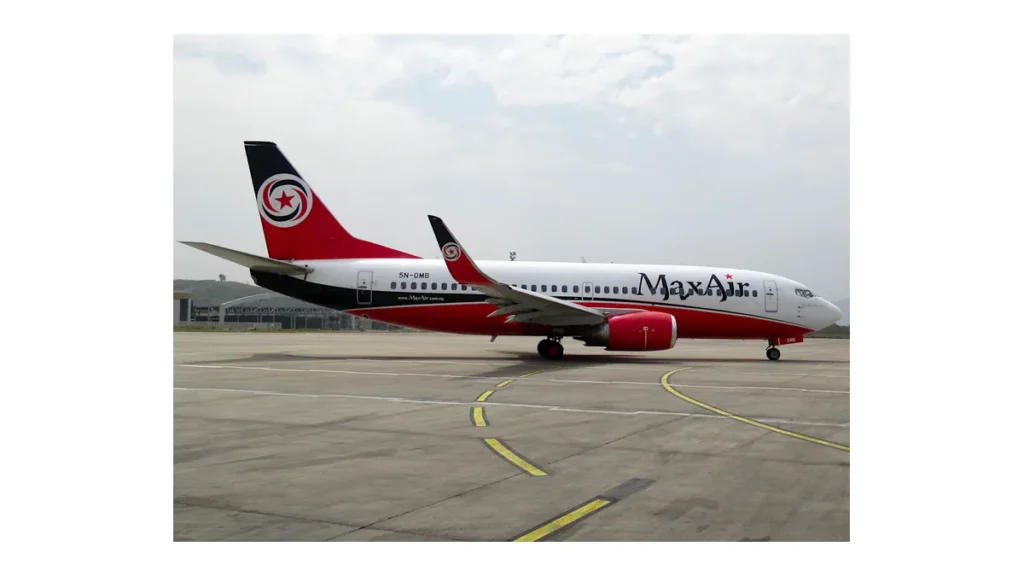
Max Air
Max Air
About
Max Air is a Nigerian privately held carrier operating scheduled passenger services from its principal hub at Mallam Aminu Kano International Airport (KAN), positioning itself as one of the more established regional operators in Nigeria’s competitive and often turbulent domestic aviation market. Assigned IATA code VM and ICAO designator MAX, the airline occupies a distinct niche: a northern-Nigeria-anchored carrier serving a population corridor that larger Lagos-centric competitors have historically underserved.
Max Air was founded in the early 2000s and initially built its reputation operating Hajj charter flights — a commercially significant segment in Nigeria, which sends one of the largest Muslim pilgrim delegations in the world to Saudi Arabia each year. That charter heritage gave the airline operational experience on long-haul and high-density routes before it transitioned toward scheduled services, a trajectory that mirrors several other African carriers that grew from religious or VIP charter roots into broader commercial operations.
The airline is privately owned, with its ownership structure linked to northern Nigerian business interests. It holds an Air Operator Certificate issued by the Nigerian Civil Aviation Authority (NCAA), which governs its scheduled operations. In recent years, Max Air has pursued a measured expansion of its scheduled network, seeking to reduce its historical dependence on seasonal Hajj revenues and build a more resilient year-round revenue base.
Bases and Hubs
Mallam Aminu Kano International Airport (KAN), Kano — Primary Hub: Max Air’s operational heartland, giving the airline a structural advantage in serving Nigeria’s predominantly Muslim north and connecting onward to the Middle East for Hajj and Umrah traffic.
Nnamdi Azikiwe International Airport (ABV), Abuja — Focus City: Nigeria’s federal capital serves as a key secondary point, enabling the airline to tap government, diplomatic, and business traveller demand on the Abuja–Kano corridor and beyond.
Murtala Muhammed International Airport (LOS), Lagos — Focus City: Lagos operations allow Max Air to compete on Nigeria’s highest-frequency domestic trunk route and access connecting international passengers transiting through the country’s busiest gateway.
Fleet
Max Air has historically operated wide-body Boeing 747 aircraft — a relatively unusual choice for a domestic African carrier, reflecting the airline’s origins in high-density Hajj charter operations where the type’s passenger capacity is a commercial asset. According to publicly disclosed fleet data and industry tracking sources, the airline has also operated Boeing 737 series narrowbodies to serve its scheduled domestic network, where the 747’s economics are less suited to shorter sectors and thinner load factors.
Industry estimates suggest the airline maintains a modest fleet by the standards of pan-African majors, consistent with its focused network strategy. Any fleet renewal or reconfiguration activity in the 2024–2026 period should be verified against NCAA registry disclosures and the airline’s own communications, as African carrier fleet compositions can shift materially within short windows due to leasing arrangements and regulatory requirements.
Destinations
Max Air’s network is primarily shaped around domestic Nigerian routes, with Kano as the originating hub. Key intra-Nigeria services connect KAN with Abuja (ABV) and Lagos (LOS), the two most commercially important city pairs in the country. The airline also serves additional domestic points consistent with NCAA-approved scheduled service rights.
Internationally, Max Air’s most strategically significant routes are those connecting Nigeria to Saudi Arabia — specifically Jeddah (JED) and Medina (MED) — operated intensively during the Hajj and Umrah seasons. These services represent a core revenue pillar and differentiate the airline from purely domestic competitors. Broader intra-African or intercontinental scheduled expansion beyond the Gulf corridor remains limited as of 2026, though the airline’s long-haul aircraft capability provides optionality should commercial conditions support it.
Codeshare and Alliance
Max Air is not a member of any of the three major global airline alliances — Star Alliance, SkyTeam, or oneworld. No confirmed codeshare agreements with major international carriers are on the public record as of the time of writing. The airline operates independently, which is consistent with the profile of most sub-regional African carriers at its stage of network development. Investors and partners evaluating interline or codeshare potential should conduct direct due diligence with the airline’s commercial team, as bilateral arrangements in the Nigerian market are not always publicly disclosed.
Notable Incidents
No major safety incidents attributable to Max Air appear prominently in publicly available aviation safety databases or credible industry reporting in recent years. Researchers and journalists requiring a comprehensive safety history should consult the Aviation Safety Network (ASN), the Nigerian Accident Investigation Bureau (AIB), and NCAA records directly, as these represent the authoritative sources for the Nigerian register.
Financial and Operational Situation
Max Air operates in one of Africa’s most challenging aviation environments. Nigeria’s airline sector has been persistently pressured by naira depreciation, high jet fuel costs denominated in or linked to foreign currency, and infrastructure constraints at key airports. These macroeconomic headwinds affect all Nigerian carriers, and Max Air is not insulated from them. The airline’s financial position is not publicly disclosed in detail, as it is privately held and not listed on any stock exchange.
Qualitatively, the airline’s dual revenue model — combining year-round scheduled domestic services with high-yield seasonal Hajj charter operations — provides a degree of diversification that purely domestic carriers lack. Industry observers note that Hajj contracts, often partially underwritten or coordinated through Nigeria’s National Hajj Commission (NAHCON), can offer more predictable revenue visibility than open-market scheduled services in a volatile currency environment. Whether this model generates sustainable profitability at the operating level is not determinable from public information alone.
Recent Developments
In the 2024–2026 period, Max Air has continued to navigate the post-pandemic normalisation of Nigerian aviation demand alongside the broader sector challenge of foreign exchange scarcity, which has complicated aircraft lease payments and spare parts procurement for virtually all carriers on the Nigerian register. The NCAA has maintained active oversight of all domestic operators during this period, and Max Air’s continued operation of scheduled services indicates it has met ongoing airworthiness and financial fitness requirements.
Stakeholders tracking the airline should monitor NCAA bulletins, NAHCON Hajj carrier allocation announcements — which directly affect Max Air’s most commercially significant flying season — and any Nigerian government policy shifts on domestic aviation support, slot allocation, or bilateral air services agreements with Gulf states, all of which have material implications for the airline’s network and revenue outlook.