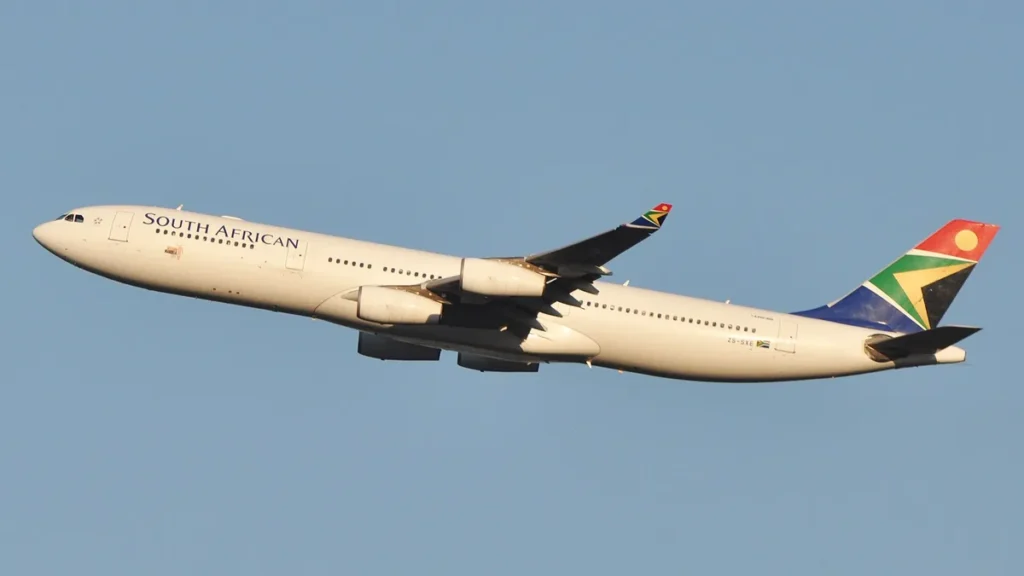
South African Airways
South African Airways
About
South African Airways (IATA: SA / ICAO: SAA) is the flag carrier of the Republic of South Africa and, by network reach and brand recognition, one of the most consequential airlines on the African continent. Operating scheduled passenger and cargo services from its principal hub at O.R. Tambo International Airport in Johannesburg (JNB), SAA connects sub-Saharan Africa to global markets and serves as a bellwether for the health of state-owned aviation across the region.
The airline traces its origins to 1934, when it was established as a state carrier under the South African government. For much of the twentieth century it operated as a fully government-owned enterprise, building a reputation for long-haul service to Europe and a dense intra-African network. Ownership has remained predominantly with the South African state, though the restructuring process that began in earnest around 2020 introduced a private-sector equity partner — the Takatso Consortium — in a deal that attracted sustained scrutiny from investors and aviation analysts regarding its terms and implementation timeline.
SAA entered voluntary business rescue in December 2019 following years of financial losses, government bailouts, and governance challenges. It emerged from that process in 2021 under a revised operating model, with a leaner cost structure and a reduced but more focused network. The airline’s post-rescue trajectory has been closely watched as a test case for whether African state carriers can be commercially rehabilitated without full privatisation.
Bases and Hubs
O.R. Tambo International Airport, Johannesburg (JNB) — SAA’s primary hub and the busiest airport in Africa by passenger throughput, serving as the airline’s main connecting point for both regional and intercontinental traffic.
Cape Town International Airport (CPT) — A key domestic focus city and secondary base, supporting high-frequency services on the Johannesburg–Cape Town trunk route, one of the busiest air corridors in Africa.
King Shaka International Airport, Durban (DUR) — A domestic focus city serving South Africa’s third-largest metropolitan economy, with connections feeding into SAA’s JNB hub.
Fleet
According to publicly disclosed fleet data and industry tracking sources, SAA operates a mixed narrowbody and widebody fleet. The airline has historically relied on Airbus equipment across its network, with the Airbus A320 family forming the backbone of domestic and regional operations, and Airbus A330 widebody aircraft deployed on longer intra-African and intercontinental routes. Following the business rescue process, the fleet was significantly reduced in size compared to pre-2019 levels, with the airline adopting a more disciplined approach to aircraft utilisation.
Industry estimates suggest SAA has been evaluating fleet renewal options as part of its medium-term recovery plan, with interest in more fuel-efficient variants consistent with broader African carrier trends toward the Airbus A320neo family and next-generation widebody types. No firm public order had been confirmed at the time of writing, though the airline’s strategic plan has referenced the need to modernise its assets to remain cost-competitive.
Destinations
SAA’s network is structured around three broad tiers. Domestically, the airline serves South Africa’s major city pairs, with the Johannesburg–Cape Town and Johannesburg–Durban routes representing its highest-frequency operations. Regionally within Africa, SAA has historically maintained one of the continent’s most extensive intra-African networks, with services to destinations including Nairobi (NBO), Lagos (LOS), Lusaka (LUN), Harare (HRE), Maputo (MPM), and Accra (ACC), among others — though the post-rescue network has been subject to ongoing review and rationalisation.
On intercontinental routes, SAA has operated services to key European gateways — most notably London Heathrow (LHR) and Frankfurt (FRA) — as well as transatlantic services to New York (JFK) and connections into the Asia-Pacific region. The precise intercontinental schedule has fluctuated during the recovery period, and travellers and analysts are advised to consult current published schedules for confirmed route availability.
Codeshare and Alliance
South African Airways is a member of the Star Alliance, the world’s largest airline alliance by member count, providing SAA passengers with connectivity across a global network of partner carriers and reciprocal frequent-flyer benefits. Star Alliance membership has been a consistent element of SAA’s commercial positioning even through the business rescue period, though the practical depth of interline and codeshare activity contracted alongside the airline’s reduced network.
Notable codeshare partners have historically included United Airlines, Lufthansa, Singapore Airlines, and Air China, consistent with SAA’s Star Alliance affiliations. Regional codeshare arrangements with African carriers have also formed part of the airline’s connectivity strategy, supporting feed into the JNB hub from markets where SAA does not operate its own metal.
Notable Incidents
SAA has no major hull-loss or fatal accident on its public safety record in recent years. The airline maintains a safety certification under the South African Civil Aviation Authority (SACAA) and has historically held a strong operational safety reputation. Researchers and journalists seeking historical incident data are directed to the Aviation Safety Network and the SACAA’s published records for fully verified documentation.
Financial and Operational Situation
SAA’s financial profile remains one of the most scrutinised in African aviation. The airline accumulated substantial losses over the decade preceding its 2019 business rescue, requiring repeated recapitalisation from the South African government. The rescue process restructured its debt obligations and reduced its workforce and fleet, creating a leaner operational base from which the airline has sought to rebuild revenue.
The proposed equity partnership with the Takatso Consortium — which was intended to bring in private capital and management expertise — has been subject to prolonged regulatory and due-diligence processes, and its ultimate structure and timeline have remained subjects of public and parliamentary debate in South Africa. Industry observers note that SAA’s path to sustained profitability is contingent on resolving its ownership structure, securing fleet investment, and competing effectively against well-capitalised rivals including Ethiopian Airlines, Kenya Airways, and domestic low-cost carriers such as FlySafair and Airlink on key South African routes.
Recent Developments
In the 24 months to mid-2026, SAA’s most significant developments have centred on its ownership negotiations, network rebuilding, and efforts to restore commercial partnerships. The Takatso deal continued to generate political and financial commentary in South Africa, with the government’s Department of Public Enterprises and, subsequently, the Department of Transport, fielding questions in parliament about the transaction’s progress and the state’s ongoing financial exposure to the carrier.
On the commercial side, SAA has worked to restore and expand its intra-African route network, recognising that regional connectivity represents both a competitive differentiator and a revenue opportunity as African air travel demand continues its structural growth trajectory. The airline has also sought to re-engage with its Star Alliance partners on codeshare depth and has participated in industry discussions around the Single African Air Transport Market (SAATM) framework, which aims to liberalise intra-African aviation. Fleet planning conversations, including the potential acquisition or lease of more fuel-efficient narrowbody aircraft, have been reported in South African aviation and business media, though no binding commitments had been publicly confirmed at the time of writing.