Arik Air
Arik Air
About
Arik Air occupies a distinctive and contested position in African aviation: founded with ambitions to become the continent’s premier privately owned carrier, it remains one of Nigeria’s most recognisable airline brands despite years of financial turbulence, regulatory intervention, and the structural headwinds that have long challenged commercial aviation across West Africa. Operating under IATA code W3 and ICAO designator ARA, and registered in Nigeria, Arik Air connects the continent’s most populous nation to regional and international destinations from its principal hub at Murtala Muhammed International Airport in Lagos (LOS).
The airline was founded in 2002 and commenced commercial operations in 2006, established by Sir Joseph Arumemi-Ikhide with a stated mission to deliver a full-service, internationally competitive airline from Nigerian soil. In its early years, Arik Air expanded rapidly, acquiring a mixed fleet of narrowbody and widebody aircraft and launching routes to London Heathrow and New York JFK — an ambition that few African privately held carriers had matched at the time.
Ownership and control of the airline shifted significantly in 2017 when the Asset Management Corporation of Nigeria (AMCON), a federal government debt-recovery body, took over management of Arik Air following the accumulation of substantial liabilities. That intervention effectively placed the airline under a form of state stewardship, though its long-term ownership resolution has remained a subject of ongoing negotiation and legal proceedings. Industry observers continue to monitor whether a restructured private sale, recapitalisation, or deeper state integration will define the airline’s next chapter.
Bases and Hubs
Lagos – Murtala Muhammed International Airport (LOS): Arik Air’s primary hub and operational centre, handling the majority of the airline’s domestic, regional, and international departures.
Abuja – Nnamdi Azikiwe International Airport (ABV): A key secondary base serving Nigeria’s federal capital, with connections to domestic points and select regional routes.
Port Harcourt International Airport (PHC): A focus city serving Nigeria’s oil-industry heartland in the Niger Delta, important for corporate and energy-sector travellers.
Fleet
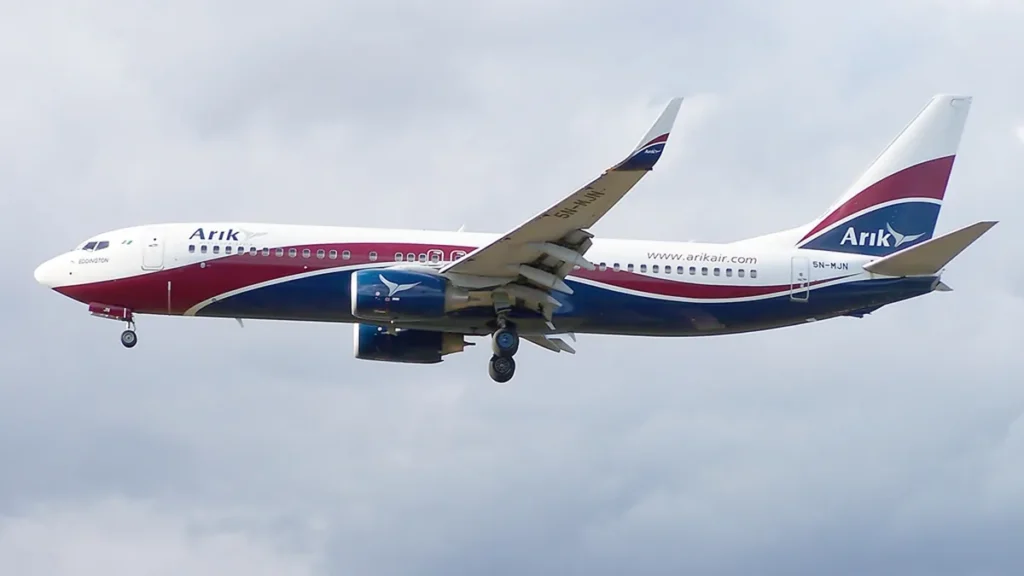
According to publicly disclosed fleet data and industry tracking sources, Arik Air has historically operated a mixed fleet drawing from Boeing and Bombardier families, including Boeing 737 narrowbodies for domestic and short-haul regional services and, at various points in its history, Boeing 737-800 and widebody types for longer intercontinental routes. The airline has also operated Bombardier CRJ900 regional jets, which proved well-suited to thinner domestic Nigerian routes where smaller capacity and operational flexibility are commercially advantageous. Industry estimates suggest the active fleet has contracted from its peak years, reflecting both the financial restructuring period and the broader challenge of aircraft financing in the Nigerian market. Any fleet renewal programme or new aircraft orders as of 2026 should be verified against current AMCON disclosures and the Nigerian Civil Aviation Authority (NCAA) registry, as the composition of the active fleet has been subject to change.
Destinations
Arik Air’s network is built around a dense domestic Nigerian spine, connecting Lagos and Abuja to secondary cities including Kano, Enugu, Calabar, Uyo, and Port Harcourt. This domestic footprint has historically made Arik one of the most visible carriers inside Nigeria’s large but infrastructure-constrained internal market. Regionally, the airline has served West and Central African destinations, with routes to Accra (ACC) in Ghana, Freetown (FNA) in Sierra Leone, Monrovia (ROB) in Liberia, and Douala (DLA) in Cameroon forming part of its intra-African network. At its commercial peak, Arik Air operated intercontinental services to London Heathrow (LHR) and New York JFK — routes that positioned it as a flag-carrier-level competitor — though the status of long-haul operations should be confirmed against current schedules, as intercontinental services have been subject to suspension and reinstatement over the restructuring period.
Codeshare and Alliance
Arik Air is not a member of any of the three major global airline alliances — Star Alliance, SkyTeam, or oneworld. The airline has historically pursued bilateral codeshare arrangements rather than full alliance integration. Past codeshare relationships have been reported with carriers including Delta Air Lines, which at one point supported connectivity on transatlantic itineraries. The current status of any active codeshare agreements should be verified directly with the airline or through IATA partner databases, as commercial partnerships have shifted during the AMCON administration period.
Notable Incidents
Arik Air has not recorded a major fatal accident on its public safety record in recent years, and the airline holds a history of operations under Nigerian Civil Aviation Authority oversight. Researchers and journalists requiring a comprehensive safety audit should consult the Aviation Safety Network database and NCAA records directly, as this profile does not substitute for primary regulatory documentation.
Financial and Operational Situation
Arik Air’s financial position has been defined by the consequences of its 2017 AMCON takeover, which followed a period of significant debt accumulation, foreign exchange pressures, and operational disruption. The Nigerian naira’s sustained volatility has compounded the airline’s challenges, given that aviation costs — including fuel, leases, and maintenance — are predominantly dollar-denominated while revenues are substantially naira-denominated. Industry observers characterise the airline as operationally active but financially fragile, with profitability contingent on resolution of its ownership structure and access to fresh capital. No independently audited financial results have been publicly disclosed in a form that would support precise revenue or margin characterisation; qualitative assessments from aviation analysts suggest the airline continues to operate at a scale well below its pre-2017 peak.
Recent Developments
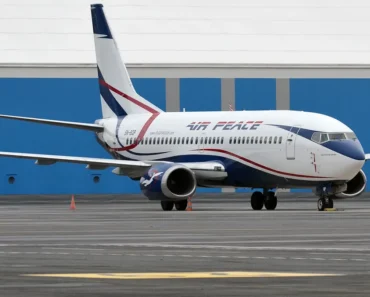
In the period leading into 2026, Arik Air’s most consequential developments have centred on the unresolved question of its privatisation or recapitalisation under AMCON stewardship. Nigerian aviation sector observers have noted renewed government interest in rationalising state-linked aviation assets, which could affect Arik’s corporate trajectory. The airline has also operated within a domestic market that has seen significant competitive pressure from carriers including Air Peace, which has grown aggressively on both domestic and regional routes. Regulatory engagement with the NCAA and the Nigerian government’s broader aviation reform agenda — including infrastructure investment at Lagos and Abuja airports — will shape the operating environment Arik faces in the near term. Travellers and investors should monitor official NCAA bulletins and AMCON communications for the most current route and operational status.