Lesotho — Expert Briefing
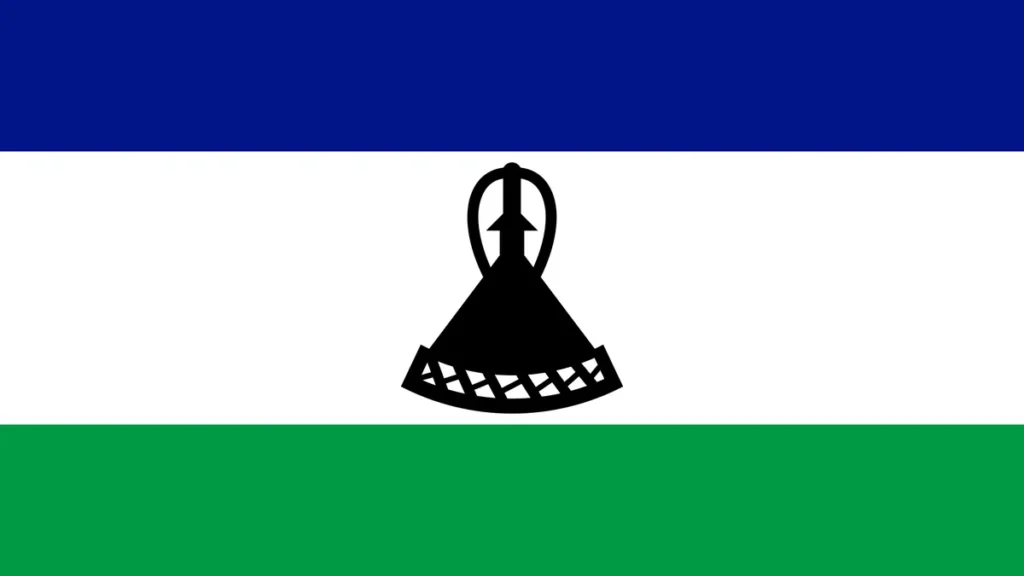
Lesotho at a glance: A landlocked constitutional monarchy entirely surrounded by South Africa, Lesotho occupies a strategically marginal but symbolically significant position in Southern Africa — navigating chronic political instability, deep poverty, and climate vulnerability while leveraging its water resources and textile exports to maintain economic relevance.
Overview
Lesotho’s capital is Maseru, situated on the western lowlands near the South African border. The country’s population is estimated at approximately 2.3 million (World Bank, 2024 estimate), making it one of the smaller nations in sub-Saharan Africa by headcount. The official languages are Sesotho and English, both used in government, education, and formal commerce. The national currency is the Lesotho loti (LSL), pegged at parity to the South African rand through the Common Monetary Area — a structural arrangement that ties Lesotho’s monetary conditions directly to South African macroeconomic policy. GDP per capita sits in the lower-middle-income band, estimated at roughly USD 1,000–1,100 in current terms, placing Lesotho among the poorer economies on the continent despite a Human Development Index score that reflects relatively broad access to basic education. In 2026, Lesotho matters for two interconnected reasons: its Lesotho Highlands Water Project remains one of Africa’s most consequential transboundary water infrastructure programmes, supplying water to South Africa’s Gauteng province while generating hydroelectric revenue for Maseru; and the country’s fragile democratic institutions are undergoing a constitutional reform process whose outcome will determine whether Lesotho can break a decades-long cycle of military interference and governmental collapse.
Government and Politics
Lesotho is a constitutional monarchy with a parliamentary system of government. Executive authority is vested in the Prime Minister, while the monarch — King Letsie III, who has reigned since 1996 — serves as a ceremonial head of state bound by constitutional convention from active political participation. The legislature is bicameral, comprising the National Assembly (120 seats, elected by a mixed-member proportional system combining constituency seats and proportional representation) and the Senate (33 seats, including 22 principal chiefs and 11 nominated members). The current Prime Minister is Samuel Matekane, leader of the Revolution for Prosperity (RFP) party, who came to power following the October 2022 general elections — the most recent national poll. Matekane, a businessman and mining entrepreneur, led the RFP to a plurality in those elections, forming a coalition government that has since faced persistent internal tensions. The next general elections are constitutionally due by 2027. The most consequential political development of recent years has been the multi-year constitutional reform process, driven in part by recommendations from the Southern African Development Community (SADC) following repeated governmental crises and military interventions. The reform agenda — which seeks to restructure the electoral system, clarify civil-military relations, and strengthen judicial independence — has moved slowly through parliament and civil society consultation, with key provisions still unresolved as of early 2026. Lesotho has experienced at least four changes of government since 2012, several involving military pressure or interference, and the reform process is widely regarded by regional observers as the country’s best near-term opportunity to stabilise its democratic institutions.
Economy
Lesotho’s GDP is estimated at approximately USD 2.5–2.7 billion in current prices (World Bank, 2024), a figure that understates the country’s dependence on remittances from Basotho workers employed in South African mines and farms — transfers that historically represent a substantial share of household income. The economy rests on four principal pillars: water export revenues from the Lesotho Highlands Water Project (LHWP), the garment and textile manufacturing sector (which accounts for the majority of formal export earnings and employs a significant share of the urban wage workforce), diamond mining (Lesotho produces high-value gem-quality diamonds, notably from the Letšeng mine operated by Gem Diamonds), and subsistence agriculture, which occupies the majority of the rural population despite chronic land degradation and erratic rainfall. The loti’s peg to the rand means that South African monetary tightening transmits directly into Lesotho’s domestic credit conditions, limiting the Central Bank of Lesotho’s policy autonomy. Public debt has risen to levels that the IMF has flagged as requiring careful management, with the government relying heavily on budget support from multilateral creditors and Southern African Customs Union (SACU) revenue transfers. The single most consequential economic story of the past 24 months has been the advancement of Phase II of the Lesotho Highlands Water Project. The Polihali Dam and associated tunnel infrastructure — representing the largest capital investment in the country’s history — moved into active construction and commissioning phases, attracting significant Chinese and South African contractor involvement. When fully operational, Phase II is expected to substantially increase water transfer revenues to the Lesotho Highlands Development Authority (LHDA) and generate additional hydroelectric capacity, offering a rare structural boost to a budget under sustained fiscal pressure.
Demographics and Society
Lesotho’s population of approximately 2.3 million is ethnically and linguistically among the most homogeneous in Africa: the Basotho people, speaking Sesotho, constitute the overwhelming majority — estimated at over 99 percent of the population. Small communities of South Asians and Europeans are present primarily in Maseru and the commercial sector. Christianity is the dominant religion, with Roman Catholic, Lesotho Evangelical Church, and Anglican denominations historically prominent; Pentecostal and charismatic movements have grown substantially in recent decades. Urbanisation is advancing but remains relatively low by regional standards, with roughly 30–35 percent of the population living in urban areas, concentrated in Maseru and secondary towns such as Teyateyaneng, Mafeteng, and Mohale’s Hoek. The country has one of the highest HIV/AIDS prevalence rates in the world — consistently among the top three globally — with adult prevalence estimated at approximately 20–22 percent. This epidemic has had profound demographic consequences, including elevated mortality among working-age adults, a large population of orphaned children, and sustained pressure on the health system. The defining social trend of the current period is the feminisation of the formal labour force in urban areas: the garment sector employs predominantly women, shifting household economic dynamics in lowland towns while rural areas continue to experience male out-migration to South African labour markets. Youth unemployment remains structurally high, feeding both urban drift and periodic social discontent.
Key Issues Right Now
Constitutional reform and civil-military relations. The unfinished constitutional reform process remains the defining political fault line in Lesotho. SADC-brokered reform recommendations have been partially legislated but core provisions — including changes to the electoral formula, the role of the security forces, and mechanisms for removing a sitting prime minister — remain contested between coalition partners and between parliament and civil society. The Lesotho Defence Force has intervened in politics on multiple occasions since the 1990s, and civilian oversight of the military remains institutionally weak. Whether the Matekane government can consolidate sufficient parliamentary support to pass substantive reform legislation before the next election cycle will be closely watched by regional bodies and bilateral partners alike.
Climate stress and food insecurity. Lesotho is acutely exposed to climate variability. As a highland nation — more than 80 percent of its territory lies above 1,800 metres — it is subject to severe winters, erratic summer rainfall, and increasing incidence of drought and hailstorms that devastate subsistence crops. The World Food Programme has maintained a sustained presence in the country, responding to recurring food crises that affect a significant minority of the rural population. Soil erosion, driven by overgrazing and deforestation, has reduced agricultural productivity over decades. Climate projections suggest increasing rainfall unpredictability across Southern Africa, which will compound existing vulnerabilities. The government’s capacity to invest in climate adaptation — terracing, irrigation, improved seed varieties — is constrained by fiscal pressures, making external climate finance a critical variable.
Dependence on South Africa and SACU revenue volatility. Lesotho’s economic sovereignty is structurally circumscribed by its total geographic enclosure within South Africa. SACU revenue transfers — distributed to smaller member states including Lesotho, Eswatini, Botswana, and Namibia based on a formula tied to intra-SACU trade — have historically funded a substantial share of the Lesotho government’s recurrent budget. These transfers are volatile, fluctuating with South African import volumes and periodic formula renegotiations. South Africa’s own economic difficulties — slow growth, high unemployment, and energy infrastructure failures — have downstream effects on Basotho migrant remittances, SACU distributions, and demand for Lesotho’s water and electricity. Diversifying economic relationships, including through the African Continental Free Trade Area (AfCFTA), is a stated policy priority but remains nascent in practice.
Travel and Connectivity
Lesotho’s principal international gateway is Moshoeshoe I International Airport, located approximately 18 kilometres south of Maseru, handling scheduled regional services primarily to Johannesburg’s OR Tambo International Airport. Given the country’s encirclement by South Africa, the majority of visitors enter overland through one of several border posts, the busiest being Maseru Bridge. Principal cities beyond the capital include Teyateyaneng (known locally as TY), Mafeteng, Leribe (Hlotse), and Butha-Buthe in the northern highlands. Tourism is a modest but growing sector, anchored by the country’s dramatic highland scenery, pony trekking in the Maluti and Drakensberg ranges, and ski facilities at Afriski Mountain Resort — one of only two ski resorts in sub-Saharan Africa. Lesotho markets itself as the “Kingdom in the Sky” and attracts adventure tourists, primarily from South Africa. Internet penetration stands in the 35–45 percent range, with mobile internet the dominant mode of access; fixed broadband infrastructure is limited outside Maseru. Mobile money adoption has grown substantially, with services operating through the major telecoms providers (Vodacom Lesotho and Econet Telecom Lesotho) enabling peer-to-peer transfers, utility payments, and remittance receipt — the latter particularly important given the volume of cross-border transfers from South Africa. The Central Bank of Lesotho has been developing a regulatory framework for expanded digital financial services as part of broader financial inclusion objectives.
Further Research
Analysts, journalists, and investors seeking to deepen their understanding of Lesotho should consult the following institutions and resources. The Central Bank of Lesotho publishes quarterly economic reviews, monetary policy statements, and financial stability reports that provide the most reliable domestic macroeconomic data. The Lesotho Bureau of Statistics (BOS) is the primary source for census data, household income surveys, and trade statistics. The World Bank Lesotho country page aggregates development indicators, project documentation for active lending operations, and country economic memoranda. The Lesotho Highlands Development Authority (LHDA) publishes project progress reports and environmental monitoring data for the Highlands Water Project — essential reading for anyone tracking the country’s most significant infrastructure programme. The Africa Center for Strategic Studies (Washington DC) produces security-focused briefings on Southern Africa that regularly address Lesotho’s civil-military dynamics and regional stability. Finally, the Southern African Development Community (SADC) Secretariat maintains documentation on the Lesotho reform process, including reports from the SADC Oversight Committee on Lesotho, which has been the principal regional mechanism for monitoring constitutional and security sector reform since 2014.