Juba International Airport
Juba International Airport
About
Juba International Airport (IATA: JUB | ICAO: HSSJ) serves as the principal gateway to South Sudan and occupies a singular position in East and Central African aviation. For aid workers, diplomats, journalists, and business travellers, it is not merely a transit point but often the first and most consequential encounter with one of the world’s youngest nations. In a region where air connectivity can determine whether a humanitarian mission succeeds or a commercial deal closes, JUB functions as a lifeline airport — one whose operational rhythm is inseparable from the political and economic pulse of the country it serves.
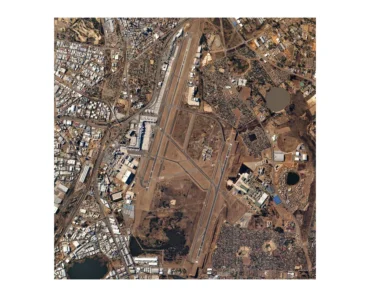
The airport occupies a site on the western edge of Juba, the national capital, and has roots in infrastructure developed during the Anglo-Egyptian Condominium era and subsequently expanded under successive administrations. It gained renewed strategic importance following the Comprehensive Peace Agreement of 2005, which set South Sudan on the path to independence, and it formally became an international airport serving a sovereign state when South Sudan declared independence on 9 July 2011. Ownership and oversight rest with the Government of South Sudan, with the South Sudan Civil Aviation Authority (SSCAA) serving as the primary regulatory and operational authority.
Since independence, the airport has undergone incremental improvements to its terminal building, apron, and navigational infrastructure, supported in part by international development partners. Expansion has been constrained by the country’s prolonged internal conflict and fiscal pressures, but periodic rehabilitation works — including improvements to the passenger terminal and airside lighting systems — have kept the airport functional for international operations. Further modernisation efforts have been discussed at the policy level, though the scope and financing of any major capital programme remain subject to publicly available government disclosures and donor announcements rather than confirmed construction timelines.
Country
South Sudan is a landlocked nation in northeastern sub-Saharan Africa, bordered by Sudan to the north, Ethiopia to the east, Kenya and Uganda to the south, the Democratic Republic of Congo to the southwest, and the Central African Republic to the west. Juba is the national capital and by far the largest urban centre. The country’s population is estimated at tens of millions — precise figures are contested given the absence of a recent comprehensive census — and it remains one of the least developed economies on the continent, heavily dependent on oil revenues and international humanitarian assistance. Its geographic position at the crossroads of East Africa, the Horn, and Central Africa gives it latent strategic importance for regional trade and connectivity that its aviation infrastructure is only beginning to reflect. → Read the South Sudan expert briefing
Airlines Based Here
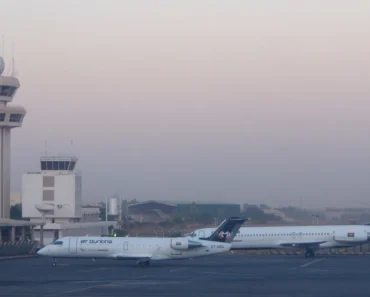
Juba International Airport does not host a large legacy home carrier in the conventional sense. South Sudan does not currently operate a well-established national airline with a broad international network, though smaller domestic and charter operators have been registered under South Sudanese aviation authority oversight at various points. The airport’s scheduled international traffic is therefore driven primarily by visiting foreign carriers that treat JUB as a spoke destination rather than a hub. Among the most consistently present operators, Ethiopian Airlines has maintained scheduled service to Juba and represents one of the most reliable connectivity links for onward travel via Addis Ababa Bole International Airport. Kenya Airways has operated routes connecting Juba to Nairobi’s Jomo Kenyatta International Airport, providing access to one of East Africa’s most important aviation hubs. Egypt Air has at times offered connections northward to Cairo. Regional carriers and charter operators — including those serving the humanitarian and NGO sector — also make significant use of the airport’s apron capacity, and their presence can at times rival that of scheduled commercial airlines in terms of movements.
Flights and Destinations
The route network at Juba International Airport is modest by continental standards but strategically oriented toward the regional hubs that matter most to its primary user groups. Scheduled and semi-regular services connect Juba to a representative set of destinations that reflect both commercial demand and humanitarian logistics. Addis Ababa (Ethiopia) is among the most frequently served, offering passengers onward connections across Africa, the Middle East, Europe, and beyond via Ethiopian Airlines’ hub. Nairobi (Kenya) provides a second major hub connection, with Kenya Airways linking Juba into a broader East African and intercontinental network. Cairo (Egypt) has featured as a northward connection, serving travellers moving between South Sudan and North Africa or the Middle East. Entebbe (Uganda) and Khartoum (Sudan) have historically appeared in the network, reflecting the close geographic and economic ties between South Sudan and its immediate neighbours, though service frequency on these routes is subject to political and operational conditions. Kampala, Dubai, and Doha have at various times been accessible via one-stop itineraries routed through regional hubs. Domestic connectivity within South Sudan — to towns such as Malakal, Wau, and Rumbek — has been served by smaller operators, though domestic scheduled services remain irregular and are heavily influenced by security conditions on the ground.
Facilities and Capacity
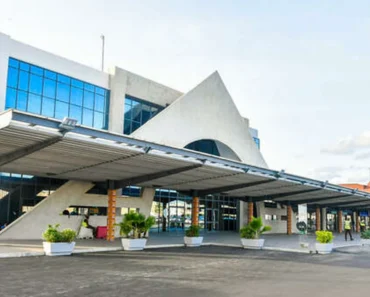
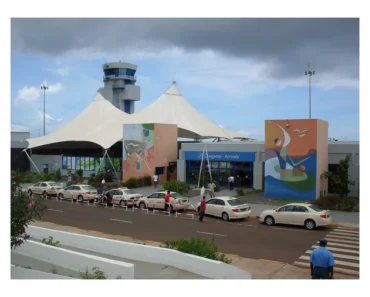
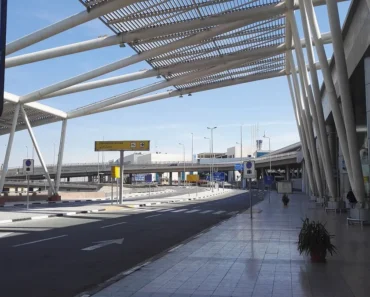
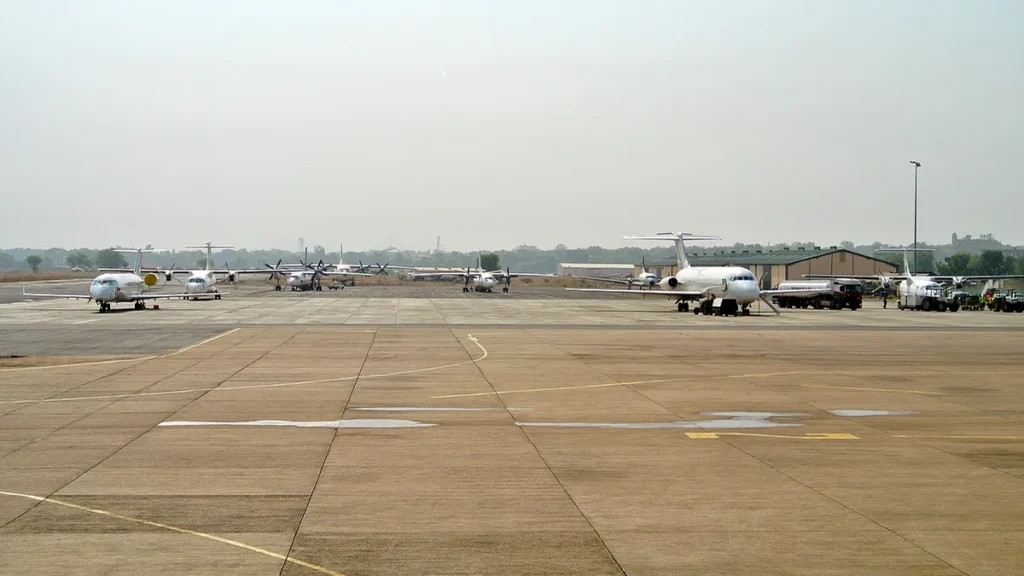
Juba International Airport operates a single passenger terminal building that handles both arriving and departing international and domestic traffic. The terminal’s capacity is limited relative to the demand peaks generated by humanitarian surges, diplomatic missions, and election-related travel, and congestion at immigration and check-in areas has been a recurring operational challenge noted by frequent users. The airport is served by a single primary runway, oriented to accommodate the prevailing wind conditions of the Upper Nile basin, and capable of handling narrow-body and, under appropriate load conditions, wide-body jet aircraft. Apron space accommodates a mix of commercial jets, turboprops, and light aircraft simultaneously, reflecting the airport’s role as a base for NGO and charter aviation alongside scheduled services. Cargo facilities exist but are basic; the airport handles freight — including humanitarian aid consignments — though dedicated cargo infrastructure is limited compared to regional peers such as Nairobi or Addis Ababa. By standard industry classification, Juba International Airport is considered a small-to-medium international hub, with annual passenger throughput that, according to publicly disclosed traffic data where available, places it well below the major African gateway airports. Planned expansion works have been referenced in government and donor communications, but confirmed project scopes and completion dates should be verified against current SSCAA and government announcements.
Visa Regulations
Travellers arriving at Juba International Airport are subject to South Sudan’s visa regime, which as of the most recently available policy guidance requires most foreign nationals to obtain a visa prior to travel. Citizens of the United States, the United Kingdom, and European Union member states are generally required to hold a visa, which has historically been obtainable through South Sudanese embassies and consulates abroad. Visa on arrival has been available under certain conditions, though its consistent application has varied and travellers are strongly advised to confirm current arrangements before departure. An eVisa system has been discussed and partially implemented at various stages, but the reliability and scope of online applications should be verified directly with the South Sudan embassy or consulate relevant to the applicant’s country of residence. For regional African passport holders, bilateral agreements and the broader aspirations of the African Continental Free Trade Area framework have influenced discussions around eased movement, but South Sudan’s visa-free or visa-on-arrival access for African Union member state citizens is not uniformly applied. Visa rules change frequently and without extensive public notice in South Sudan’s policy environment. For the most current and source-verified entry requirements, consult the live lookup tool: → Check current visa requirements
Recent Developments
In the approximately twenty-four months leading into 2026, Juba International Airport has continued to navigate the intersection of operational improvement and the broader instabilities that characterise South Sudan’s political economy. Industry estimates suggest that post-pandemic traffic recovery has been gradual, with humanitarian and diplomatic travel providing a more stable baseline than leisure or business tourism. Ethiopian Airlines has remained among the most active commercial operators at the airport during this period, and discussions around additional regional connectivity — including potential new or resumed services from East African carriers — have been reported in aviation trade media. The South Sudan Civil Aviation Authority has engaged with ICAO’s regional office on safety oversight and compliance matters, a process that carries implications for the airport’s international operational standing. Airside infrastructure works, including improvements to lighting and navigational aids, have been referenced in official communications, though the pace of physical upgrades has been constrained by financing conditions. The airport has also continued to serve as a critical logistics node for United Nations Mission in South Sudan (UNMISS) operations and the broader humanitarian community, a function that shapes its operational priorities in ways that distinguish it from purely commercial airports.
News and Reports
Researchers, journalists, and aviation analysts seeking current operational intelligence on Juba International Airport should consult a layered set of sources. The South Sudan Civil Aviation Authority is the primary official body and periodically issues regulatory notices and operational updates through its official channels. The airport authority itself may release statements on infrastructure and service changes. At the continental level, IATA’s Africa regional office publishes periodic reports on African aviation market conditions that contextualise JUB within broader trends. ICAO’s Eastern and Southern African Regional Office (ESAF), based in Nairobi, is the relevant body for safety oversight and compliance reporting. International aviation trade publications — including Aviation Week, ch-aviation, and The Air Current — cover African route developments and carrier decisions that affect Juba’s network. For humanitarian logistics intelligence, the UN Office for the Coordination of Humanitarian Affairs (OCHA) and the Logistics Cluster publish operational updates that frequently reference Juba’s air access conditions. Researchers are advised to cross-reference multiple sources given the variability of official disclosure in South Sudan’s operating environment.