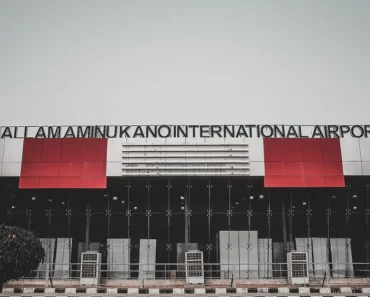
Kilimanjaro International Airport
Kilimanjaro International Airport
About
Kilimanjaro International Airport (IATA: JRO / ICAO: HTKJ) occupies a singular position in East African aviation: it is the primary gateway to Tanzania’s northern safari circuit and to the continent’s highest peak, Mount Kilimanjaro, yet it operates at a scale that rewards careful attention from analysts who might otherwise overlook it in favour of Dar es Salaam’s Julius Nyerere International. Positioned between the cities of Arusha and Moshi in the Kilimanjaro Region, JRO functions as a dedicated tourism hub, channelling international leisure travellers directly into the Serengeti, Ngorongoro Crater, Amboseli approaches, and the mountain’s own trekking routes without the congestion of Tanzania’s commercial capital. For aviation researchers, that specialisation makes it a useful case study in demand-driven airport development in sub-Saharan Africa.
The airport was inaugurated in 1971, constructed as a joint infrastructure project between Tanzania and Kenya during a period of closer East African Community cooperation. It was designed from the outset to handle wide-body international traffic, a forward-looking decision that has allowed it to accommodate modern long-haul aircraft without the runway constraints that limit some regional peers. Ownership and operational oversight rests with the Tanzania Airports Authority (TAA), the government body responsible for the country’s principal airports, under the policy framework of the Tanzania Civil Aviation Authority (TCAA).
The airport has undergone incremental modernisation since its opening, with notable terminal rehabilitation works carried out in successive phases. Expansion efforts have focused on improving passenger processing capacity, airside retail, and ground handling infrastructure to meet the sustained growth in Tanzania’s tourism sector. Industry observers have noted that investment cycles at JRO tend to track closely with national tourism master plans and with Tanzania’s broader engagement with international development finance institutions, though specific budget figures for ongoing projects should be verified against official TAA and government budget disclosures rather than secondary estimates.
Country
Tanzania is a sovereign republic in East Africa, bordered by Kenya and Uganda to the north, Rwanda, Burundi, and the Democratic Republic of Congo to the west, and Zambia, Malawi, and Mozambique to the south. Its capital for government functions is Dodoma, while Dar es Salaam remains the country’s largest city and principal commercial centre. With a population estimated in the tens of millions and growing — placing it among the more populous nations on the continent — Tanzania holds significant regional weight within the East African Community (EAC) and the African Union. Its economy is substantially underpinned by tourism, agriculture, and an expanding extractive sector, with the northern wildlife circuit served by JRO representing one of the highest-value tourism corridors on the African continent.
→ Read the Tanzania expert briefing
Airlines Based Here
Kilimanjaro International does not function as a primary hub for any single carrier in the way that a major network airport would, but several airlines treat it as a significant focus city. Air Tanzania, the national flag carrier, operates scheduled services through JRO as part of its domestic and regional network, connecting the airport to Dar es Salaam, Zanzibar, and select regional points. Precision Air, Tanzania’s longest-established private carrier, has historically maintained a meaningful presence at JRO on domestic trunk routes. On the international side, the airport is served by visiting carriers rather than home-based international airlines: KLM Royal Dutch Airlines has operated a long-haul service to JRO, making it one of the few airports in Tanzania with a direct European connection of that range. Ethiopian Airlines, operating one of the most extensive intra-African and intercontinental networks on the continent, serves JRO as part of its East African spoke system. Kenya Airways connects the airport to Nairobi’s Jomo Kenyatta International, providing an important onward connection hub for passengers arriving from points across the KQ network.
Flights and Destinations
The route network at JRO reflects its tourism mandate clearly. Intercontinental services link the airport to Amsterdam (served by KLM), providing European travellers with a one-stop or direct option into the northern safari circuit. Addis Ababa functions as a critical connecting hub, with Ethiopian Airlines routing passengers from Europe, North America, and Asia through its Bole International hub before onward service to JRO. Within Africa, Nairobi is the single most important connecting point, with Kenya Airways and occasionally other operators providing short-haul links that feed the broader East African travel market. Domestic connections to Julius Nyerere International Airport in Dar es Salaam and to Zanzibar’s Abeid Amani Karume International Airport are maintained by Air Tanzania and Precision Air, ensuring JRO is integrated into the national network. Regionally, connections to Entebbe (Uganda) and Kigali (Rwanda) have featured in the network at various points, supporting the broader East African tourism corridor. Charter operations — particularly from European markets during peak safari and climbing seasons — supplement the scheduled network significantly and represent a material share of total passenger movements at the airport.
Facilities and Capacity
Kilimanjaro International Airport operates a single terminal building handling both international and domestic passengers, with processing flows separated airside. The terminal has been subject to phased refurbishment works intended to improve check-in hall capacity, immigration processing lanes, and the quality of airside passenger amenities including retail and food and beverage concessions. The airport is served by a single primary runway — runway 09/27 — which, at a published length sufficient to accommodate wide-body aircraft including the Boeing 767 and comparable types, has been a structural advantage since the airport’s original construction. Cargo handling facilities are present on site, serving the export of perishables and the import of tourism-related goods, though JRO is not classified as a major cargo hub by regional standards. By passenger throughput, the airport is best characterised as a medium-small international hub: larger than many regional tourism airports on the continent, but operating well below the volumes of East Africa’s primary gateway airports. According to publicly disclosed traffic data from the Tanzania Airports Authority, passenger numbers fluctuate in close correlation with Tanzania’s annual tourism performance, making the airport a useful leading indicator for the health of the northern circuit.
Visa Regulations
Travellers arriving at Kilimanjaro International Airport are subject to Tanzania’s national visa regime, which has evolved in recent years toward greater use of electronic pre-authorisation. As of the time of writing, Tanzania operates an eVisa system that allows nationals of many countries — including the United States, the United Kingdom, and European Union member states — to apply for a tourist visa online prior to travel, with the approved visa presented on arrival. Visa on arrival has also been available for a broad range of nationalities, though travellers are strongly advised to confirm current arrangements before departure, as processing conditions and eligible nationalities are subject to change. Citizens of several East African Community member states benefit from preferential or visa-free arrangements under regional integration agreements, though the precise scope of these exemptions should be verified against current bilateral and multilateral agreements. Visa fees, validity periods, and permitted activities (including the single-entry versus multiple-entry distinction relevant to travellers combining Tanzania with Kenya or Uganda) vary and are updated periodically by the Tanzanian immigration authorities. For a current, country-by-country visa lookup, see the live reference tool on this site.
→ Check current visa requirements for Tanzania
Recent Developments
In the period leading into 2026, Kilimanjaro International Airport has seen a number of operationally significant developments. The recovery of international tourism to Tanzania following the disruptions of the early 2020s has driven renewed interest from carriers in the JRO market, with industry estimates suggesting that seat capacity on routes serving the airport has trended upward in line with broader East African aviation recovery. Air Tanzania’s fleet and network expansion programme — which has included the addition of newer wide-body and narrow-body aircraft to its fleet — has had downstream effects on JRO’s domestic connectivity and on the airline’s ability to feed international traffic through the airport. Terminal improvement works, referenced in TAA communications, have continued to address passenger processing bottlenecks identified during peak season operations. On the regulatory side, Tanzania’s Civil Aviation Authority has remained engaged with ICAO safety oversight processes, and the country’s aviation sector has been subject to the standard cycle of ICAO Universal Safety Oversight Audit Programme (USOAP) review applicable to all contracting states. New route announcements and charter programme expansions for the 2025–2026 northern hemisphere winter season have been reported in regional aviation trade media, reflecting continued confidence among tour operators in the northern Tanzania product.
News and Reports
Researchers and journalists tracking developments at Kilimanjaro International Airport should consult several authoritative source categories. The Tanzania Airports Authority publishes operational announcements and, periodically, traffic summary data through its official communications channels. The Tanzania Civil Aviation Authority (TCAA) is the relevant regulatory body for safety oversight, licensing, and airspace management, and its publications are the primary source for regulatory developments affecting JRO. At the continental level, IATA’s Africa regional office produces periodic market analysis reports covering East African aviation trends, seat capacity data, and airline financial performance, which contextualise JRO’s performance within the broader regional picture. The ICAO Eastern and Southern African Regional Office (ESAF), based in Nairobi, covers Tanzania within its oversight remit and publishes documentation relevant to safety and infrastructure standards. Regional aviation trade publications — including those covering African aviation specifically — provide timely reporting on new route launches, airline commercial decisions, and airport infrastructure announcements. For academic and policy research, the African Development Bank and World Bank both maintain project documentation relevant to aviation infrastructure investment in Tanzania that may reference JRO directly.
Related Research
- Tanzania Expert Briefing — in-depth country analysis for researchers and investors
- Tanzania Statistics — key economic, demographic, and sectoral data
- African Airports — comparative profiles across the continent
- African Airlines — carrier profiles, networks, and fleet data
- Visa Requirements — live country-by-country visa lookup tool
- Country Comparison — benchmark Tanzania against regional peers